The rituals people perform, the choices they make, the behaviors they don't even think about reveal exactly where they fall on the economic spectrum.

Add VegOut to your Google News feed. 
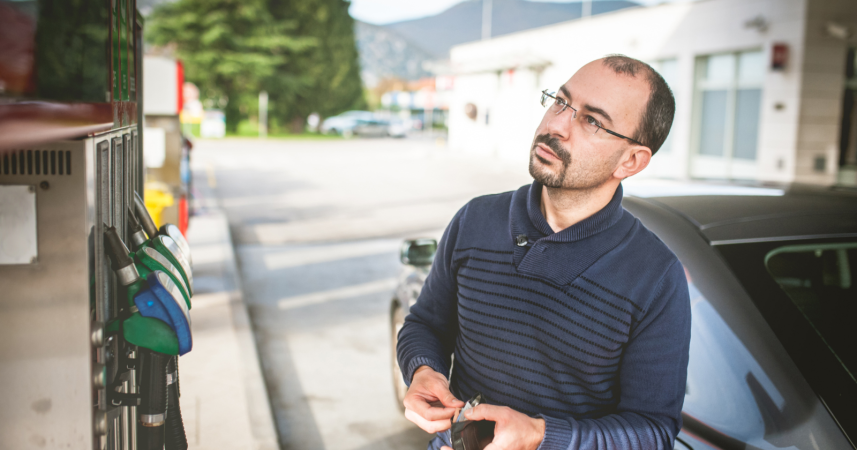
I was pumping gas last week when I caught myself doing the math. Watching the numbers climb, calculating exactly how much I could afford to put in before I hit my mental limit. Then I looked over and saw someone at the next pump filling their tank without even glancing at the total.
That's when it hit me. Gas stations are one of those everyday spaces where class differences play out in plain sight. The rituals people perform, the choices they make, the behaviors they don't even think about reveal exactly where they fall on the economic spectrum.
Growing up middle-class in Sacramento, I learned certain habits at gas stations that I still carry today. Not because they're necessary anymore, but because they're burned into my decision-making process. They're automatic.
And I've noticed that people from similar backgrounds share these same patterns, these small behaviors that mark us as people who've had to think carefully about money, even when we're not struggling anymore.
Here are eight things lower-middle-class people consistently do at gas stations that instantly reveal their background.
1) They never fill up the tank completely
Watch someone from a lower-middle-class background pump gas and you'll notice they stop before the tank is full. Maybe at $40. Maybe at half a tank. But rarely at completely full.
It's not always about money. Sometimes it's psychological. Filling up completely feels like committing too much cash at once, even if you'll need that gas eventually anyway. Breaking it into smaller purchases feels more manageable, more controlled.
I still do this sometimes. I'll stop at $35 even though I could easily afford to fill the tank. It's a habit left over from years when every dollar mattered and spreading out expenses made budgeting easier to manage mentally.
People who've never worried about money don't think this way. They fill up because an empty tank is inconvenient, not because they're budgeting by the gallon.
2) They shop around for the cheapest gas prices
Lower-middle-class people know which gas stations in their area are consistently cheaper. They'll drive an extra mile or two to save five cents per gallon. They have gas price apps on their phones or they just know from habit.
My parents used to drive across town for cheaper gas, and I absorbed that behavior without questioning it. Even now, I find myself routing trips to pass by the cheaper stations, saving maybe two or three dollars per tank.
Wealthier people don't do this. They pull into whatever gas station is convenient. The idea of driving out of your way to save a few dollars seems inefficient to them. Their time is worth more than the savings.
But when you grow up calculating every expense, those small savings feel meaningful. They represent control over your budget, proof that you're being smart with money.
3) They pay cash instead of card
This one's becoming less common, but you still see it. People paying inside with cash, often because some stations offer cash discounts or because using cash helps them stick to their budget.
When you pay with a card, money feels abstract. When you pay with cash, you feel the transaction physically. You hand over bills and you get less back. It makes the cost more real, more immediate.
I used to always pay cash at gas stations. It forced me to be aware of exactly how much I was spending and helped me avoid the creep of mindless card swipes. Now I use cards for convenience, but I understand why people stick with cash.
It's about maintaining control and awareness in a system that's designed to make spending feel frictionless.
4) They calculate the cost-per-gallon versus the total
Lower-middle-class people don't just watch the total dollar amount climbing. They watch the gallons. They calculate whether they're getting a good deal. They notice when prices jump twenty cents overnight.
This level of attention to detail comes from necessity. When your budget is tight, you need to understand exactly what you're getting for your money. You can't afford to be vague about costs.
I catch myself doing this constantly. Noting that gas went up from $4.29 to $4.49 per gallon, calculating how much more that'll cost me over the month, adjusting my mental budget accordingly.
People from wealthier backgrounds rarely know the cost per gallon. They might notice if it's dramatically different, but they're not tracking it week to week or calculating the impact on their monthly expenses.
5) They go inside to use rewards points or coupons
If there's a loyalty program or a grocery store partnership that gives gas discounts, lower-middle-class people are enrolled. They're tracking their points. They're maximizing their savings.
They'll go inside to make sure the clerk applies their rewards correctly. They'll ask questions about promotions. They're engaged with every opportunity to reduce costs.
This isn't about being cheap. It's about being strategic. When you've learned to make every dollar stretch, you don't leave savings on the table just because they require a little effort.
My partner finds this behavior baffling. They just pump gas and leave. But I'm in there making sure I got my grocery points applied, checking if there's a current promotion, optimizing the transaction.
6) They top off to reach an even number
Watch someone from a lower-middle-class background finish pumping and you'll often see them squeeze the handle a few more times to get the total to an even number. $30.00 instead of $29.87. $40.00 instead of $39.72.
This is purely psychological. It has no practical benefit. But there's something satisfying about round numbers when you're carefully managing money. It feels tidier, more controlled, more complete.
I do this every single time without thinking about it. I'll stand there clicking the pump trigger slowly to land exactly on $35.00, even though those extra thirteen cents make zero difference to anything.
It's a small behavior that marks you as someone who thinks about money in terms of exact amounts rather than rough estimates.
7) They skip the premium gas no matter what
Lower-middle-class people always choose regular unleaded. Always. Even if their car's manual suggests premium, even if they've heard it might help performance or longevity.
The price difference feels unjustifiable. Why pay an extra 50 cents per gallon for benefits you can't immediately see or feel? Regular works fine. Premium is for people with money to waste.
I drove the same car for years that technically called for premium fuel. I never once put premium in it. The car ran fine on regular, and spending the extra $8-10 per tank felt absurd when I could use that money for something more tangible.
People from wealthier backgrounds don't hesitate. If the manual says premium, they use premium. They're not weighing the cost-benefit analysis every time they fuel up.
8) They combine gas stops with other errands
Lower-middle-class people rarely make a trip just for gas. They're strategic about it. They fill up when they're already out running errands, when the gas station is on the route to somewhere else they need to be.
Making an extra trip just for gas feels wasteful. It's wasting time and actually wasting gas to get gas. Everything gets optimized, bundled, made as efficient as possible.
I plan my gas station stops around my other activities. I'll wait an extra day if I know I'll be driving past the cheaper station on my way to the farmers market on Saturday. I'm maximizing efficiency and minimizing waste.
Wealthier people stop for gas when they need gas. They're not playing this optimization game because the time and mental energy required isn't worth the minimal savings.
Conclusion
None of these behaviors are wrong or shameful. They're adaptations, smart strategies developed by people who've had to be thoughtful about money.
But they do mark you. They reveal your background to anyone paying attention. They show that you come from a place where every dollar mattered, where careful planning and small optimizations added up to financial survival.
I still carry most of these habits even though my financial situation has improved. They're deeply ingrained, automatic responses that feel responsible and smart rather than restrictive.
Maybe you recognize yourself in these behaviors. Maybe you've moved past them. Either way, they're part of the lower-middle-class experience, small rituals performed at gas stations across the country by people who learned early that attention to detail matters when resources are limited.
What’s Your Plant-Powered Archetype?
Ever wonder what your everyday habits say about your deeper purpose—and how they ripple out to impact the planet?
This 90-second quiz reveals the plant-powered role you’re here to play, and the tiny shift that makes it even more powerful.
12 fun questions. Instant results. Surprisingly accurate.