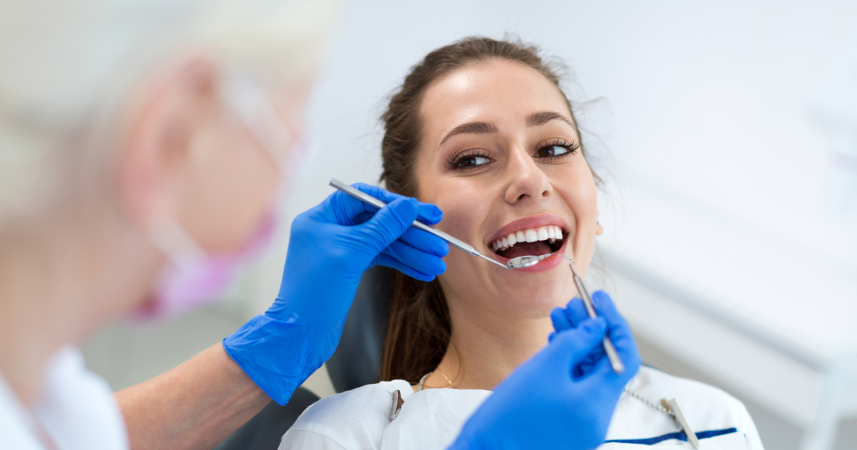
The upper-middle-class treats dental care as basic preventive maintenance, while everyone else treats it as something you deal with when there's a problem you can't ignore anymore.
I was at a dinner party when someone mentioned their biannual dental cleaning like it was the most normal thing in the world. "Just got back from the dentist," they said casually. "Six-month checkup."
I realized I hadn't been to the dentist in three years.
Not because I didn't care about my teeth, but because dental care kept sliding down my priority list behind more immediate expenses.
When you're freelancing and paying for your own insurance, a dental visit that costs $200 out of pocket feels less essential than rent or groceries.
That's when I understood the class divide around dental care.
For some people, certain dental habits are as automatic as brushing your teeth. For others, they're aspirational at best, completely out of reach at worst.
The upper-middle-class treats dental care as basic preventive maintenance. Everyone else treats it as something you deal with when there's a problem you can't ignore anymore.
Here are eight dental habits that reveal this divide more clearly than almost anything else.
1) Seeing the dentist twice a year for cleanings
Upper-middle-class people schedule dental cleanings every six months like clockwork. It's on their calendar. They get reminder calls and they actually go. They've been doing this since childhood and they'll do it until they die.
For everyone else, twice a year feels excessive. You go when something hurts or when you've noticed a problem developing. Maybe once a year if you're being responsible. But twice? That's money that could go toward other things.
The difference isn't just frequency. It's the entire mindset. Upper-middle-class people see dental visits as preventive. They're catching problems before they become expensive emergencies. Everyone else is playing defense, dealing with issues only when they can't be avoided anymore.
I finally got back on a regular schedule a few years ago, and the dentist found three small cavities that would have become major problems if I'd waited longer. Preventive care is cheaper in the long run, but it requires having money to spend on problems that don't exist yet.
2) Getting cavities filled immediately
When upper-middle-class people find out they have a cavity, they schedule the filling right away. Maybe the next week, maybe later that month, but soon. They don't wait.
People with less money do the calculation. How bad is it? Is it hurting yet? Can I wait a few months until I have more cash? Maybe it won't get worse that quickly.
This isn't irresponsible, it's practical. When you have limited resources, you prioritize immediate problems over potential future problems. A cavity that doesn't hurt yet gets bumped down the list behind car repairs and medical bills and everything else demanding your money right now.
The problem is that waiting makes everything worse and more expensive. That small cavity becomes a root canal. But when you're already stretched thin, paying $200 now to prevent a $2,000 problem later feels impossible.
3) Using electric toothbrushes
Walk into an upper-middle-class bathroom and you'll see electric toothbrushes charging on the counter. Oral-B or Sonicare, usually. They replace the heads every three months like you're supposed to.
Everyone else uses manual toothbrushes that cost $3 for a pack of four. Maybe you've thought about getting an electric one, but spending $100+ on a toothbrush feels absurd when manual brushes work fine.
Upper-middle-class people justify it as investment in dental health. Better cleaning means fewer problems down the line. But that requires thinking long-term and having money to spend on optimization rather than just adequacy.
My dentist kept suggesting I switch to an electric toothbrush. I finally did last year, and honestly, there is a difference. But I understand why that $120 purchase feels prohibitive when you're budgeting carefully.
4) Flossing every single day
This one kills me because floss is cheap. You can get it for a dollar. But somehow daily flossing is still a class marker.
Upper-middle-class people floss religiously. They were taught to as children and they never stopped. It's as automatic as brushing their teeth. They'd feel gross going to bed without flossing.
Everyone else flosses sporadically. Maybe when something's stuck in your teeth. Maybe the week before a dental appointment. Maybe when you're feeling particularly motivated about your health. But every single day? That level of consistency with preventive care is rare outside certain economic brackets.
It's not about the money. It's about the ingrained habits and the emphasis on prevention that comes with being raised with resources and security.
5) Considering orthodontics as routine
Upper-middle-class kids get braces if their teeth aren't perfect. It's not even a question. Crooked teeth? Braces. Overbite? Braces. The cost is just something parents budget for, like college savings.
For everyone else, braces are a major financial decision. They cost thousands of dollars. They're only pursued if the problem is severe or if parents are willing to make serious sacrifices. Slightly crooked teeth? You learn to live with it.
I never had braces as a kid because my teeth were "good enough" and the cost wasn't justifiable. Meanwhile, friends from wealthier families got braces for minor alignment issues I wouldn't have even noticed.
As an adult, orthodontics feels even more out of reach. Who has $5,000 sitting around to straighten teeth that work fine functionally? But upper-middle-class adults get Invisalign like it's nothing, because aesthetics matter when you have the resources to prioritize them.
6) Whitening their teeth regularly
Upper-middle-class people have notably white teeth. Not because they're genetically blessed, but because they invest in keeping them that way. Professional whitening treatments, expensive whitening toothpaste, at-home kits they actually use consistently.
Everyone else has teeth that look like teeth. Maybe a little yellowed from coffee or tea. Normal human teeth that haven't been cosmetically enhanced.
Teeth whitening is purely aesthetic. It doesn't improve your dental health. But it's a visible class marker, a signal that you have the money and the attention to detail to optimize your appearance beyond basic maintenance.
I've never whitened my teeth. It feels vain and expensive. But I notice the difference between my teeth and the teeth of people who clearly invest in cosmetic dental work.
7) Replacing toothbrushes every three months
Dentists recommend replacing your toothbrush or brush head every three months. Upper-middle-class people actually do this. They have it on their calendar or their subscription service sends new ones automatically.
Everyone else uses toothbrushes until the bristles are clearly worn down or splaying out. Three months feels arbitrary when the brush still seems fine. Why replace something that's still functional?
This is another preventive maintenance thing. Worn bristles don't clean as effectively. But seeing that decline requires paying attention and having the resources to replace things proactively rather than reactively.
8) Having dental insurance that actually covers things
Here's the real divider: upper-middle-class people have dental insurance through their jobs that covers most preventive care and a significant portion of major work. They pay small copays, not full price.
Everyone else either has no dental insurance or has insurance that barely covers anything. You pay premiums and then still pay most of the cost of procedures out of pocket. The insurance feels like a scam, but you keep it because at least it's something.
When you have good dental insurance, maintaining your dental health is relatively affordable. Without it, every dental visit is a financial calculation. Do I really need this? Can I afford this? What happens if I wait?
That's the fundamental difference. Upper-middle-class people can afford to be proactive about dental care. Everyone else is stuck being reactive, dealing with problems only when they can't be avoided, knowing the whole time that this approach is more expensive in the long run but having no better options.
Conclusion
Dental habits are one of those things that reveal class background instantly. You can fake a lot of things, but teeth tell the truth.
The upper-middle-class has straight, white, well-maintained teeth because they've had access to comprehensive dental care their entire lives. Everyone else has teeth that reflect a lifetime of treating dental care as conditional rather than essential.
None of this makes anyone better or worse as a person. But it does show how deeply inequality runs and how even basic health maintenance becomes a luxury when resources are limited.
If you recognize these patterns in your own life, you're not alone. Most people are doing the best they can with what they have. And if you've managed to prioritize dental care despite limited resources, that's genuinely impressive. It takes real effort to maintain preventive care when you're constantly in survival mode financially.
What’s Your Plant-Powered Archetype?
Ever wonder what your everyday habits say about your deeper purpose—and how they ripple out to impact the planet?
This 90-second quiz reveals the plant-powered role you’re here to play, and the tiny shift that makes it even more powerful.
12 fun questions. Instant results. Surprisingly accurate.