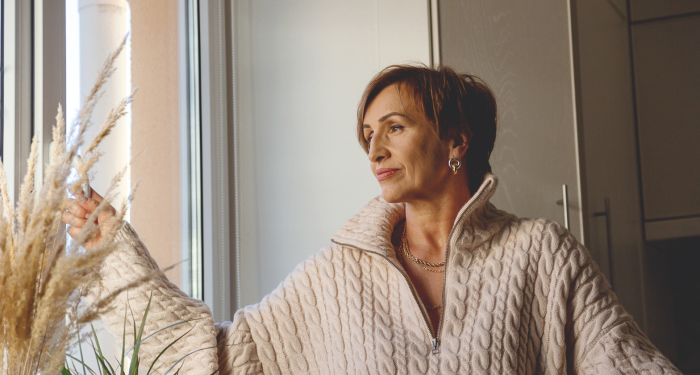
The message from the world of biohacking was clear: you don’t have to age like everyone else. With the right supplements, light exposure, peptides, and plasma treatments, you can “upgrade” your biology and stay younger for longer.
I’ve always been curious about how far people will go in the pursuit of health. For decades, I’ve followed the science of wellbeing and longevity — from mindfulness and movement to the latest neuroscience on how our brains can rewire themselves. But nothing quite prepared me for the world of biohacking.
Reading Sarah Berry’s feature in The Sydney Morning Herald about the Wanderlust Wellspring Biohacking and Longevity Summit on the Gold Coast — the biggest of its kind in the Southern Hemisphere — I was struck by both fascination and unease. More than 3000 people gathered to hear from the celebrities of self-optimization: Dave Asprey, the self-proclaimed “father of biohacking”; Harvard longevity researcher David Sinclair; Wim Hof, known as the “Iceman”; and Goop’s Dr Will Cole, who coined the term “shameflammation” to describe how emotional pain can trigger inflammation.
Their message was clear: you don’t have to age like everyone else. With the right supplements, light exposure, peptides, and plasma treatments, you can “upgrade” your biology and maybe even outsmart death.
It’s seductive. Who wouldn’t want to live longer, feel sharper, and have endless energy? But as I read on, I couldn’t help wondering whether this is really about living longer — or just fearing aging more.
The seductive promise of optimisation
Berry described the scene vividly: people sipping collagen ice blocks, lounging on beanbags, some hooked up to vitamin infusions while others listened to experts discuss the latest life-extension breakthroughs.
One attendee summed up the spirit of the event: “The concept is to stay as young as you can for as long as you can. We’re all going to die, but the aim is to do it as gracefully as possible.”
I can relate to that. I’ve spent much of my own life wanting to age well — to stay healthy and engaged, to keep learning, to have energy for the things that matter. But what struck me is how this desire has evolved into something almost competitive. Today’s wellness world doesn’t just celebrate vitality; it markets optimization — as if being human, in all our messy imperfection, isn’t quite enough.
And that’s where the psychology gets interesting. Neuroscience tells us that the human brain is wired for control and predictability. When we face uncertainty — and aging is the ultimate uncertainty — our stress response activates. We seek out anything that helps us regain a sense of agency. That’s part of what makes biohacking so appealing. It promises control in a world that constantly reminds us we don’t have it.
When wellness becomes performance
Among the speakers Berry mentioned was Kayla Barnes-Lentz, a wellness entrepreneur in her 30s who described “the barrage of tests she takes to keep her body and environment truly optimised.” She talked about using AI to predict menopause through blood biomarkers and even having 2½ litres of plasma removed and replaced with albumin to “detoxify” after Californian wildfires.
It’s an astonishing level of intervention — and, in many ways, a reflection of how wellness has shifted from being about feeling good to performing wellbeing.
Barnes-Lentz was also one of the few women featured at the summit, which Berry noted is still a largely male-dominated space. And yet, even her message revolved around measurement, tracking, and control — language that echoes Silicon Valley more than self-care.
As someone who’s lived through menopause and studied the neuroscience of transition, I found that both fascinating and troubling. For women, especially, there’s already immense social pressure to “manage” our bodies and defy age. When biohacking enters that conversation, it can amplify the message that we need constant fixing — instead of learning to trust our bodies’ natural intelligence.
The cost of chasing immortality
The financial side of this industry is staggering. Dave Asprey — who plans to live until he’s 180 — received a rock-star welcome when he walked on stage wearing his trademark yellow glasses (sold for $US149.99, he claims they “block toxic blue light”). He promised to teach attendees “how to operate the control panel of their minds” and offered a link to his $US16,000 five-day retreat.
“It’s about going from the old you with less energy to the new you with more energy,” he said. “Who wouldn’t want better energy?”
It’s a compelling pitch — and one that thrives on a mix of hope and fear. As Dr Brooke Nickel, a senior research fellow at the University of Sydney, told Berry, “It is important to remember that there are major financial interests at play here, and most of what is being discussed or promoted is not based on any or robust evidence.”
She adds, “It is really based on fearmongering — that if you don’t take this or do that, you won’t live your best and most optimally healthy life.”
Those words hit home. Because while I love exploring the science of wellbeing, I’ve also seen how quickly it can slide into obsession — or worse, into shame. When “health” becomes another standard we can fail at, we’ve missed the point entirely.
What the science actually supports
So what is backed by evidence? Ironically, it’s the simplest things — the habits many of us overlook because they’re not glamorous or new.
Nickel points out that the best-supported paths to wellness are profoundly ordinary: eating nutritious food, staying active, getting enough sleep, nurturing relationships, and having access to good healthcare.
From a neuroscience perspective, these habits regulate the nervous system, balance our hormones, and protect our cognitive health. Physical activity increases brain-derived neurotrophic factor (BDNF), which helps neurons grow and repair. Meaningful relationships strengthen our prefrontal cortex and dampen the stress response. And adequate sleep is the single most powerful longevity tool we have — far more potent than a peptide or a plasma swap.
As Berry observed, many of the people attending the summit were already relatively healthy but felt disillusioned with traditional medicine. They wanted something more holistic. And I understand that impulse completely. But perhaps what’s missing isn’t another supplement — it’s a sense of trust in the simple, steady rhythm of a well-lived life.
The deeper need underneath the obsession
What fascinated me most in Berry’s piece wasn’t the technology — it was the psychology. There seemed to be an “us versus them” mentality that fuels much of the modern wellness movement.
When we feel let down by conventional systems, we look for heroes — those who claim to have the secret that others are too blind or corrupt to see. It’s comforting to believe that they’re wrong, so we must be right.
From a neuroscience perspective, this taps into the brain’s reward circuitry. Taking action — buying the supplement, tracking the data, following the guru — gives us a dopamine hit, a feeling of progress and hope. But it’s a fragile form of control. And for some, it becomes addictive.
I think what people are really searching for isn’t eternal youth — it’s agency, belonging, and reassurance that they’re not powerless in the face of time.
Finding a calmer middle ground
By the end of Berry’s article, she admits she left the festival both relaxed and sceptical — soothed by the yoga and meditation sessions, but unconvinced that true wellbeing requires 35 supplements a day and a life of constant tracking.
I felt the same after reading it. I love that we’re learning more about how our bodies and brains work. But I also believe there’s wisdom in slowing down, listening inward, and simplifying.
The real path to longevity might be less about hacking and more about harmony — aligning with how our bodies are designed to thrive, not overriding them.
As Berry concludes, “If the only way to feel better is to take 35 supplements in the morning and 15 at night, remove all the plasma from your body, and track yourself within an inch of your life, then I’d rather not live until 180.”
We don’t need to live forever. We just need to live well — with presence, gratitude, and curiosity. The kind of longevity that matters most isn’t measured in years but in moments of calm clarity, connection, and joy.
Just launched: Laughing in the Face of Chaos by Rudá Iandê
Exhausted from trying to hold it all together?
You show up. You smile. You say the right things. But under the surface, something’s tightening. Maybe you don’t want to “stay positive” anymore. Maybe you’re done pretending everything’s fine.
This book is your permission slip to stop performing. To understand chaos at its root and all of your emotional layers.
In Laughing in the Face of Chaos, Brazilian shaman Rudá Iandê brings over 30 years of deep, one-on-one work helping people untangle from the roles they’ve been stuck in—so they can return to something real. He exposes the quiet pressure to be good, be successful, be spiritual—and shows how freedom often lives on the other side of that pressure.
This isn’t a book about becoming your best self. It’s about becoming your real self.