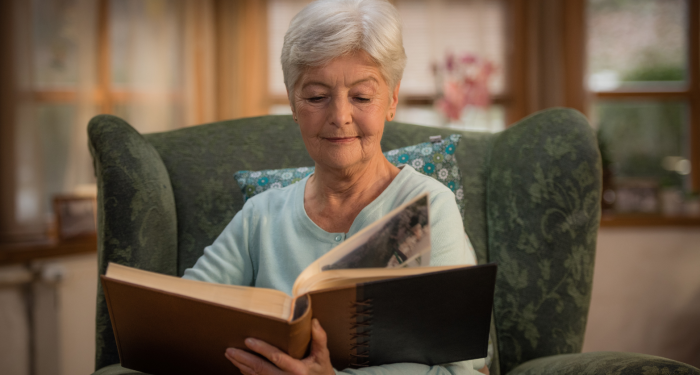
The people who feel most invisible in later life often aren't the ones who gave too little — they're the ones who gave so much that no one ever thought to ask who they were underneath all that generosity.

Add VegOut to your Google News feed. 
Add VegOut to your Google News feed.
There's a particular kind of loneliness that doesn't come from being alone. It comes from being surrounded by people who know exactly what you do for them but have no idea who you actually are. And the strange, painful irony is that the people most likely to experience this are the ones who spent decades making themselves indispensable — the helpers, the organizers, the ones who remembered everyone's birthday and showed up with a casserole before anyone thought to ask.
I explore this shift from contribution-based identity to simply being in a video I made about rethinking happiness and purpose in retirement—because this transition affects so many of us, whether we're retiring from formal work or from caregiving roles that once defined our days.
I've been sitting with this idea for months now, turning it over. Because it touches something I recognize in myself and in so many people I've worked with over the years. The feeling of having built an entire life around contribution — around being useful, dependable, generous — and then arriving at a point where the contributions slow down or stop, and discovering that without them, you're not quite sure anyone sees you at all.
The neuroscience of being unseen
What makes this experience so devastating isn't just emotional. It's neurological. Matthew Lieberman's groundbreaking work at UCLA demonstrated that social exclusion activates the same brain regions as physical pain — specifically the dorsal anterior cingulate cortex and the anterior insula. When we feel invisible, our brains don't distinguish it from being physically hurt. The body registers it as a wound.
And here's what makes it worse for lifelong givers: the brain adapts to patterns of social reinforcement. When you've spent forty or fifty years receiving recognition primarily through acts of service — being thanked, being needed, being the person others rely on — your neural pathways have literally been shaped around that loop. The dopamine response, the sense of social belonging, the feelings of self-worth: all of them became tethered to contribution.
Remove the contribution, and the brain scrambles. It's not melodrama. It's neuroscience.
When identity fuses with usefulness
There's a concept in psychology called identity fusion, originally studied by William Swann Jr. and colleagues at the University of Texas. While much of Swann's research focused on group identity, the underlying principle applies beautifully here: when your sense of self becomes so deeply merged with a role or a function that you can't separate who you are from what you do, losing the function feels like losing yourself.
I see this constantly in people navigating retirement transitions. Someone who was the one holding the department together, the one who mentored every junior hire, the one who organized the neighbourhood watch. They weren't just doing those things — they were those things. And when the doing fades, the being feels hollow.
This isn't a character flaw. For many of us, it started young. Some people learned to carry weight before they ever learned to be held, and that pattern becomes the architecture of a whole life. The belief that your value lives in your usefulness is one of the most deeply ingrained stories a person can carry.

The giver's paradox
Here's what I've come to think of as the giver's paradox: the more you give, the less people learn to see you as someone who might need something in return. You train the people around you. You teach them, through years of consistent self-effacement, that you are the strong one, the capable one, the one who doesn't require attention or care. And they believe you. They believe you so thoroughly that when you finally slow down, they don't notice the gap — they just notice the absence of what you used to provide.
Nobody talks about why the strongest person in a family is usually the one who eats last and cleans up alone, but it's worth talking about. Because that person — the quiet engine of every gathering, the one who makes sure the details are handled — often reaches a point where they wonder if anyone would come to the table at all if they weren't the one setting it.
I once worked with a woman named Margaret who told me, with absolute calm in her voice, that she could disappear for two weeks and the only person who'd notice would be her cat. She had raised three children. She'd been a school principal for twenty-two years. She had volunteered at her local food co-op every Saturday morning for a decade. And yet she was telling me, without self-pity but with devastating clarity, that she felt like she'd become a function rather than a person.
What the research actually says
Arthur Brooks, in his work on happiness and purpose in the second half of life, writes about what he calls the "striver's curse" — the way high achievers and devoted contributors can find themselves on a declining happiness curve precisely because their identity was built around external markers of value. When the markers fade, so does the sense of self. Brooks argues that the shift from a "fluid" intelligence model (doing, producing, achieving) to a "crystallized" model (teaching, mentoring, simply being) is one of the most important — and most difficult — psychological transitions of later life.
Brené Brown's research adds another layer. Her extensive work on vulnerability and worthiness suggests that people who struggle most with being seen are often those who've built the strongest armour around being the ones who see others. Givers, nurturers, caretakers — they become so practiced at holding space for everyone else that they never develop the capacity to let others hold space for them.
It's not that they don't want to be seen. It's that they've never practised it. And like any skill the brain hasn't rehearsed, it feels foreign and frightening when they try.
The vegan connection: giving that extends beyond the human
I think there's something particular about this dynamic within the plant-based community. Many of us came to veganism through empathy — through a deep, embodied refusal to participate in suffering. That's a form of giving that operates at the level of identity. You restructure your daily life around compassion. You make choices that inconvenience you because they align with what you believe. You give up convenience, social ease, sometimes family harmony, because something in you simply cannot look away from the pain of other beings.
And that's beautiful. But it can also become another thread in the same pattern: defining yourself through what you give and what you sacrifice, rather than through who you are when you're not giving anything at all.
Learning to be seen for existing
So what does it actually look like to practise being seen — not for what you do, but for who you are?
It starts, I think, with telling the truth about yourself to someone who matters. Not the curated truth. Not the version where you're strong and capable and fine. The real version. Sometimes the most honest conversation you've ever had with someone you love is the one you've been avoiding for decades, and having it doesn't destroy the relationship. It makes it real for the first time.
It also means letting people know you in ways that have nothing to do with your usefulness. When someone asks who you are beyond your roles — beyond parent, beyond caretaker, beyond the reliable one — what do you say? If the question makes your mind go blank, that's not a failure. That's information. It means there's territory inside you that hasn't been explored yet, and that's actually a remarkable thing to discover at any age.
Small practices that rewire the pattern
Neuroscience tells us that the brain remains plastic throughout life. The neural pathways that link your self-worth to productivity can be gently redirected. Not overnight. Not through affirmations alone. But through consistent, small acts that give the brain new data about what it means to matter.
One practice I've found powerful: instead of entering a social situation thinking about what you can offer, enter it with the intention to receive. Listen for what someone might offer you. Accept the compliment without deflecting. Let someone else make the tea. It sounds trivially simple, but for a lifelong giver, it can feel like standing naked in a room full of strangers. That discomfort is the brain recognising unfamiliar territory — and that's exactly where growth happens.
Another: share a preference, an opinion, a desire that serves no one but yourself. "I'd like to go to the coast this weekend." "I've been wanting to try that new plant-based restaurant downtown." "I don't actually enjoy hosting anymore — I'd rather be a guest." These statements sound ordinary, but for someone whose identity was built around accommodating others, they're quietly revolutionary.
The deeper invitation
What I keep coming back to is this: feeling invisible in later life isn't a sentence. It's a signal. It's the psyche saying, there's a version of you that never got to exist because you were too busy being needed. And that version is still in there — curious, opinionated, maybe a little wild — waiting for you to stop being useful long enough to let her breathe.
Margaret, the woman We mentioned earlier, eventually started painting. Not because she was good at it. Not because anyone asked her to. But because she wanted to, and that was enough. She told me it was the first thing she'd done in forty years purely for the pleasure of doing it. No one benefited. No one was served. She just stood in front of a canvas and made something that pleased her own eyes.
That might sound like a small thing. But for someone who'd spent a lifetime being the function that held everything together, it was an act of profound self-reclamation.
If this is resonating with you — if you're in that strange corridor between who you were and who you might still become — I've put together a free guide called Thrive In Your Retirement that explores how to navigate this transition with your dignity and identity intact. It's not about productivity hacks or staying busy. It's about finding out what matters when you stop performing usefulness.
I built Your Retirement Your Way specifically for people navigating this transition—because learning to be seen for who you are, not just what you give, is one of the most important (and overlooked) parts of creating a retirement that actually feels like yours.
Because you were never just what you gave. You were always the person underneath the giving. And that person — the one who exists without earning the right to — deserves to be seen.
If You Were a Healing Herb, Which Would You Be?
Each herb holds a unique kind of magic — soothing, awakening, grounding, or clarifying.
This 9-question quiz reveals the healing plant that mirrors your energy right now and what it says about your natural rhythm.
✨ Instant results. Deeply insightful.
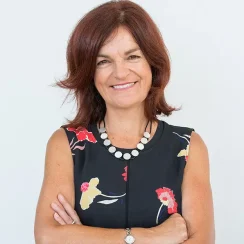
Jeanette Brown
Jeanette Brown is a coach, writer, and course creator helping people reinvent their lives—especially during major transitions like retirement. Based in Australia, she brings a warm, science-backed approach to self-growth, blending neuroscience, mindfulness, and journal-based coaching.
After a long career in education leadership, Jeanette experienced firsthand the burnout and anxiety that come with living on autopilot. Her healing began not with big changes, but small daily rituals—like journaling by hand, morning sunlight, and mindful movement. Today, she helps others find calm, clarity, and renewed purpose through her writing, YouTube channel, and courses like Your Retirement, Your Way: Thriving, Dreaming and Reinventing Life in Your 60s and Beyond.
A passionate journaler who finds clarity through movement and connection to nature, Jeanette walks daily, bike rides often, and believes the best thinking often happens under an open sky. Jeanette believes our daily habits—what we consume, how we reflect, how we move—shape not just how we feel, but who we become.
When she’s not writing or recording videos, you’ll find her riding coastal trails, dancing in her living room, or curled up with a book and a pot of herbal tea.
More Articles by Jeanette