The moment I stopped leading with my career title, I discovered a silence where my identity used to be — and it turns out that silence is one of the most universal, least discussed experiences of midlife.

Add VegOut to your Google News feed. 
Add VegOut to your Google News feed.
Here's something nobody warns you about: the question "So, what do you do?" will, at some point in your life, become genuinely difficult to answer. Not because you've stopped doing things. Not because you've become less interesting. But because the scaffolding you built your entire identity around — your job title, your professional role, the thing that gave you a ready-made answer at every dinner party for thirty or forty years — has quietly been removed, and you're left standing there with nothing between you and the honest, terrifying question of who you actually are.
We explored this same unsettling question in a video I made about rethinking happiness and purpose in retirement—because honestly, whether you're retiring or just stepping back from your career identity, that hollow feeling of not knowing who you are without your title hits the same way.
I know this because it happened to me.
The moment the script disappeared
I spent more than two decades in education and executive management. If you'd asked me at a barbecue, at a conference, at my kid's school fundraiser — I had the answer down to a polished sentence. Sometimes two sentences, if I was feeling generous. My title told people where I sat in the hierarchy, what kind of problems I solved, and whether I was worth continuing to talk to. It was efficient. It was comfortable. It was, I now realise, doing an enormous amount of psychological heavy lifting that I never acknowledged.
Then I shifted into what I call hybrid retirement — still writing, still coaching, still very much engaged with the world, but without the institutional frame around me. And the first time someone at a neighbourhood gathering asked, "What do you do?" and I opened my mouth, I felt a strange blankness. Not because I had nothing to say, but because every honest answer felt incomplete.
I write. I coach people. I'm building a course. I think a lot about purpose.
None of it captured what my old title had captured. None of it told the person across from me who I was in the same swift, efficient stroke. And the discomfort of that moment was far more intense than I expected.
Why losing a title feels like losing a limb
This isn't vanity. It's neuroscience.
Matthew Lieberman's research at UCLA has shown that our brains process social rejection and identity threats in some of the same neural regions that process physical pain. His work using fMRI imaging demonstrated that the dorsal anterior cingulate cortex activates during social exclusion in ways that mirror physical injury responses. When you lose a professional identity, your brain doesn't file it under "career change." It registers something closer to a wound.
This makes sense when you consider how deeply social identity is wired into our neurobiology. For decades, your job title served as a kind of social passport. It told others — and more importantly, it told you — where you belonged in the group. When that passport expires, the brain's threat detection systems notice before your conscious mind does.
I remember sitting in my car after that neighbourhood gathering, gripping the steering wheel, thinking: I have published articles. I have mentored hundreds of people. I have built programs from scratch. Why can't I explain who I am in a single sentence anymore?
The identity architecture we never examine
Psychologist Arthur Brooks writes extensively about what he calls the "striver's curse" — the way high-achieving people build their sense of self almost entirely around professional accomplishment, then face a kind of existential vertigo when that structure changes. In his work on the transition from career to what he calls the second curve of life, Brooks argues that this identity disruption is predictable and nearly universal among people who were deeply invested in their work.
What struck me about his framing is the word architecture. Because that's exactly what it feels like. You've been living inside a building you didn't realise you'd constructed, and suddenly you can see the scaffolding — and the gaps where load-bearing walls used to be.
We've written before about the moment I asked my mother what she'd want her grandchildren to know about her that had nothing to do with being a grandmother. Her answer haunted me for weeks, and part of the reason it haunted me was that I recognised the same gap in myself. Strip away the roles — mother, coach, manager, educator — and what's left? The answer is supposed to be you. But "you" turns out to be a surprisingly difficult thing to articulate when you've spent most of your adult life articulating yourself through function.
The vegan parallel nobody talks about
Something fascinating happens when people make a significant lifestyle shift — like adopting a plant-based life. The dietary change itself is the visible part. The invisible part is the identity renegotiation that follows.
You go to a family dinner and someone asks why you're not eating the roast. You're at a work lunch and you're scanning the menu, and someone notices, and suddenly you're explaining yourself. Not just your food choices — your values, your worldview, the way you see your relationship with living creatures. And if you're not careful, that explanation becomes a new title. I'm vegan. Said with the same efficiency, the same shorthand, the same relief of having a category to slot yourself into.
I don't think there's anything wrong with that. But I do think it reveals something important about how desperately our brains want a label, a tribe, a one-line summary. Research by social psychologist Naomi Ellemers has shown that social identity — the groups we belong to and how we define ourselves within them — is one of the primary ways the brain conserves cognitive energy. A label is efficient. It lets other people categorise you, and it lets you categorise yourself. The problem is that efficiency and accuracy are not the same thing.
What I found in the blank space
When I stopped introducing myself by my job title, the first thing I found was discomfort. The second thing I found was curiosity. And the third thing — which took months, not days — was something closer to freedom.
Because here's what happened: without a title doing the work for me, I had to actually think about what I wanted people to know. And that thinking led me to some answers that surprised me.
I started saying things like: I'm someone who's fascinated by what happens to people when they stop performing and start paying attention to what they actually care about. Or: I spend most of my time thinking about purpose — what gives people a reason to get up in the morning.
These answers were longer. They were less efficient. They sometimes got blank stares. But they were true in a way my old title never was. My title had been accurate — it described a role I held. But it wasn't honest. It didn't tell you anything about what mattered to me, what kept me thinking at 2am, what I was building toward.
Richard Leider, who has spent decades researching purpose and calling, describes this shift as moving from resume virtues to eulogy virtues. The things you'd put on your CV versus the things you'd want said about you at your funeral. Most of us spend the first half of life perfecting the resume version. The second half invites us — sometimes forcefully — to discover the eulogy version.
The people who understand this best
I've noticed something in the people I coach and the readers who write to me. The ones who struggle most with this identity shift aren't the ones who had mediocre careers. They're the ones who were brilliant at what they did. The ones whose titles were genuinely earned, genuinely meaningful, genuinely impressive. Because when you've been excellent in a role, that role becomes load-bearing in your psyche. It's not decoration. It's structure.
This is closely related to something We explored when writing about people who learned early to define themselves through what they carried for others. Whether you built your identity around professional competence or around being the responsible one in a family, the mechanism is the same: you became the role. And when the role shifts, you feel — temporarily, at least — like you've disappeared.
The good news is that you haven't.
Rebuilding identity from the inside out
If you're in this space right now, I want to offer a few things that helped me navigate it.
Start noticing what you do when nobody's watching. Not what you perform. Not what you post. What you genuinely reach for when there's no audience. For me, it was reading neuroscience papers at my kitchen table with a cup of tea. It was writing paragraphs I had no intention of publishing. It was walking my neighbourhood and noticing which gardens people had tended with obvious love. These small, uncurated moments held more identity information than any business card I'd ever handed out.
Pay attention to what makes you lose track of time. Mihaly Csikszentmihalyi's flow research showed that the activities where we lose ourselves are often the ones where we most fully find ourselves. When I'm coaching someone through a transition and I suddenly realise an hour has vanished — that's data. That's identity information hiding in plain sight.
Let the new introduction be awkward for a while. It will be. You'll fumble. You'll over-explain. You'll watch someone's eyes glaze and feel that old pull toward the crisp efficiency of a title. Stay with the fumbling. The discomfort is not a sign that you've lost yourself. It's a sign that you're finding a version of yourself that your old title was never equipped to carry.
I've put together a free guide called Thrive In Your Retirement that touches on exactly this kind of identity work — because thriving in this stage of life has far less to do with finances and far more to do with knowing who you are once the external structures fall away.
The identity nobody tells you about
There's a version of you that has been quietly forming underneath every role you've ever held. It's the person who chose plant-based living because something in you couldn't stomach the disconnect between your values and your plate. It's the person who finally said the honest thing to a friend after decades of performing politeness. It's the person who noticed that quiet acts of care for your neighbours say more about who you are than any title ever could.
That version of you doesn't need a label to exist. It just needs you to stop reaching for the old shorthand long enough to hear what it's been trying to tell you.
This struggle to rediscover who we are beyond our work titles is something I explore deeply in my resource Your Retirement Your Way, because whether you're retiring or simply stepping back, learning to define yourself outside of what you do professionally is one of life's most profound transitions.
The blank space after "What do you do?" isn't empty. It's an invitation. And what you build there — slowly, imperfectly, honestly — might turn out to be the truest introduction you've ever given.
If You Were a Healing Herb, Which Would You Be?
Each herb holds a unique kind of magic — soothing, awakening, grounding, or clarifying.
This 9-question quiz reveals the healing plant that mirrors your energy right now and what it says about your natural rhythm.
✨ Instant results. Deeply insightful.
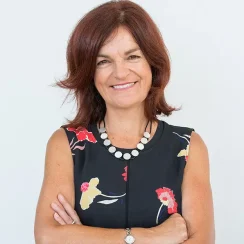
Jeanette Brown
Jeanette Brown is a coach, writer, and course creator helping people reinvent their lives—especially during major transitions like retirement. Based in Australia, she brings a warm, science-backed approach to self-growth, blending neuroscience, mindfulness, and journal-based coaching.
After a long career in education leadership, Jeanette experienced firsthand the burnout and anxiety that come with living on autopilot. Her healing began not with big changes, but small daily rituals—like journaling by hand, morning sunlight, and mindful movement. Today, she helps others find calm, clarity, and renewed purpose through her writing, YouTube channel, and courses like Your Retirement, Your Way: Thriving, Dreaming and Reinventing Life in Your 60s and Beyond.
A passionate journaler who finds clarity through movement and connection to nature, Jeanette walks daily, bike rides often, and believes the best thinking often happens under an open sky. Jeanette believes our daily habits—what we consume, how we reflect, how we move—shape not just how we feel, but who we become.
When she’s not writing or recording videos, you’ll find her riding coastal trails, dancing in her living room, or curled up with a book and a pot of herbal tea.
More Articles by Jeanette