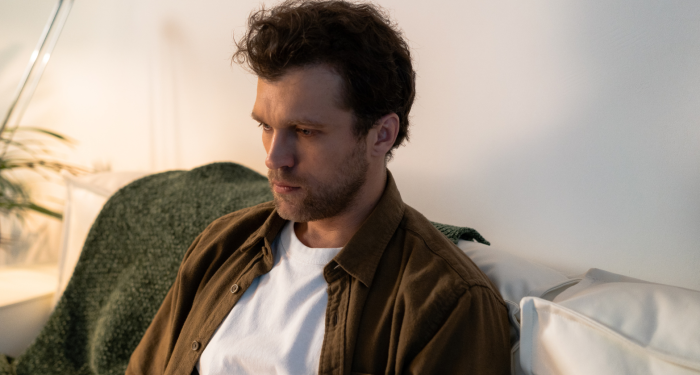
After watching countless men vanish into themselves past 55—including my late husband who spent more energy hiding his struggles than facing them—I discovered why male suicide rates explode in these supposedly golden years, and the answer shattered everything I thought I knew about masculine strength.
The number of men dying by suicide peaks between ages 50 and 54, then remains devastatingly high through their sixties and seventies. When I first encountered this statistic, I had to read it three times. How could this be happening in what we're told are the golden years?
Last week, I watched a man in his early sixties sitting alone at the coffee shop where I write. He ordered black coffee, opened his laptop, then closed it again without typing a word. For twenty minutes, he just sat there, looking through the window at nothing in particular.
When he left, I recognized something in his walk—that careful, measured gait of someone carrying invisible weight.
The invisible struggle nobody names
We talk endlessly about midlife crises in men—the sports cars, the affairs, the desperate grasps at youth. But after 55, when the dramatics often settle, something else emerges. It's quieter, more insidious, and far more dangerous because nobody's watching for it anymore.
I've been thinking about this since reading Rudá Iandê's new book, "Laughing in the Face of Chaos: A Politically Incorrect Shamanic Guide for Modern Life". One passage struck me particularly hard: "Everything that you conceive of as 'you'—your personality, your memories, your hopes and dreams—is a product of the miraculous creature that is your body."
For men whose bodies are changing, whose strength is waning, this hits differently. The book inspired me to look more closely at what happens when the physical self that has defined masculine identity for decades begins its inevitable transformation.
The crisis I'm talking about isn't dramatic. It's the slow erosion of purpose that happens when work winds down but death is still (hopefully) decades away. It's the peculiar loneliness of being surrounded by people who need you less than they used to.
It's the dawning realization that the script you've been following has run out of pages, and nobody taught you how to write the next act.
When strength becomes a prison
Growing up, boys learn that vulnerability is weakness. By 55, this lesson has calcified into bone-deep habit. I learned this watching my second husband navigate his Parkinson's diagnosis. For the first two years, he insisted on opening every jar, carrying every grocery bag, maintaining the fiction that nothing had changed. The energy he spent pretending exhausted him more than the disease itself.
Men of this generation were raised to be providers and protectors. What happens when retirement removes the first role and age challenges the second? They've spent decades perfecting the art of being needed. When that need diminishes—when adult children become self-sufficient, when younger colleagues take over projects—the silence can be deafening.
I remember a conversation from our church's grief support group. A man in his late fifties had lost his wife six months earlier. "The worst part," he said, "isn't the loneliness. It's that I don't know who I am without someone to take care of." The other men nodded. The women looked surprised.
We'd been talking about loss for weeks, but this was the first time someone had named this particular ghost.
The friendship desert
Here's something we don't discuss enough: most men over 55 have no close friends. They have golf buddies, work colleagues, couples they socialize with alongside their wives. But intimate friendship—the kind where you can admit you're scared or lost or deeply sad? That's rarer than we want to believe.
Women maintain friendships differently. We call each other crying. We share our fears over coffee. We've practiced vulnerability as a bonding ritual since girlhood. Men were taught the opposite—that bonding happens through shared activities, competition, problem-solving.
But what happens when the activities end, when competition loses its appeal, when the problems can't be solved?
After losing my husband, I joined a widow's support group that became my lifeline. But I noticed something: the men who lost spouses rarely stayed in these groups. They'd come once, maybe twice, then disappear. Later, I'd learn that many of them never told anyone they were struggling at all.
The burden of unexpressed grief
Men carry grief differently, and by 55, they're often carrying a lot of it. Lost parents, defunct careers, dissolved marriages, estranged children, abandoned dreams. But where do they put it all?
In one of my previous posts, I wrote about how grief compounds over time. For men who've never been given permission to grieve openly, these losses stack up like unpaid bills, accumulating interest.
My sister's death at 58 taught me how suddenly life can pivot. But I had outlets—therapy, friendships, writing. Many men have been taught that seeking help is admission of failure. They've been socialized to be fixers, not the ones needing fixing. So the grief stays locked inside, fermenting into something more dangerous: despair disguised as stoicism.
Finding a new story
The path forward isn't about men becoming more like women or abandoning everything they've learned about being strong. Rudá Iandê's insights reminded me that authenticity doesn't mean rejecting who you've been—it means expanding beyond the limitations of old stories.
What if strength included the courage to admit confusion? What if protection meant safeguarding your own emotional health? What if providing meant offering your accumulated wisdom rather than just your labor?
I've watched men in their sixties and seventies discover entirely new versions of themselves. A former executive who started teaching literacy at the local prison. A retired engineer who learned to paint, badly at first, then with increasing joy. A widower who started a walking group for other men—no agenda, just movement and gradual, careful conversation.
These aren't dramatic reinventions. They're quiet revolutions, one small risk at a time. They require something harder than physical strength: the willingness to be beginners again, to be imperfect, to need others.
Final thoughts
The silent crisis facing men after 55 is real, but it's not inevitable. It thrives in isolation and silence, fed by outdated scripts about what it means to be a man. The antidote isn't complicated, but it does require courage—the courage to reach out, to admit struggle, to reimagine strength as something that includes tenderness toward yourself.
If you're a man reading this, feeling that familiar tightness in your chest that says "this isn't for me," I want you to know: your struggles matter. Your loneliness is valid. Your confusion about who you are becoming is not weakness—it's the beginning of wisdom.
And if you love a man navigating these waters, remember that change happens slowly. Sometimes the best support is simply witnessing without trying to fix, creating space for feelings that have been waiting decades to be expressed.
The crisis is silent, but the solution doesn't have to be.