A city dweller discovers what happens when strangers actually care about your answers to "How are you?" and why her small-town father knew when Mrs. Henderson's arthritis was acting up just by checking the mailbox.

Add VegOut to your Google News feed. 
Last month, I found myself in a coffee shop in downtown Chicago, waiting for my latte among a sea of strangers. The barista called out order after order with mechanical precision, never once looking up from the espresso machine.
Nobody made eye contact. Everyone seemed wrapped in their own invisible bubble, earbuds in, screens glowing.
And then I thought about the little café back home where the owner still asks about my sisters by name and remembers that I switched from sugar to honey in my tea three years ago.
That moment crystallized something I've been noticing for years. There's a particular warmth that radiates from small-town folks, a way of acknowledging your existence that goes beyond mere politeness.
It's not that city people are unkind - they're often lovely once you break through. But that initial openness, that assumption that you belong? That's something special that seems to flourish naturally in smaller communities.
The art of noticing strangers
Growing up as the youngest of four sisters in a small Pennsylvania town, I watched my father work as a mailman for thirty-five years. He didn't just deliver mail; he delivered connection.
He knew when Mrs. Henderson's arthritis was acting up because she hadn't picked up her mail in two days. He'd carry groceries up the steps for Mr. Chen without being asked. These weren't grand gestures - they were the accumulated kindness of someone who saw people as more than addresses on envelopes.
This is what small-town people do without thinking. They notice you. Not in an intrusive way, but with a gentle awareness that says you matter.
When you walk into a local shop, there's often a moment of genuine curiosity - not suspicion, but interest. Who are you? Where are you from? Do you need help finding something? These questions come wrapped in warmth rather than obligation.
I remember bringing a college friend home one Thanksgiving. She was from Boston, and within two days, she was near tears.
"Everyone here actually cares about my answers when they ask how I am," she said, bewildered. "The grocery store clerk spent ten minutes helping me find the right pie crust and told me about her grandmother's recipe." She couldn't believe it wasn't an act.
Time moves differently in small places
Have you ever noticed how hurried most interactions feel in cities? There's always somewhere else to be, someone else waiting, another notification demanding attention.
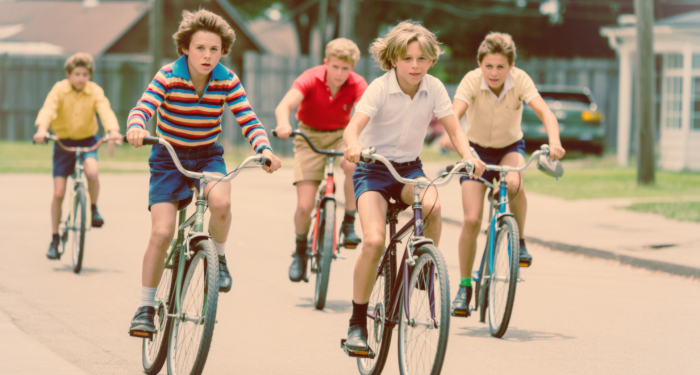
But in small towns, conversations unfurl like lazy rivers. People lean against fence posts to chat. They sit on porch steps and wave at passing cars. They have time for you because time itself seems less tyrannical.
My Thursday morning coffee tradition with my neighbor started fifteen years ago when she knocked on my door to borrow sugar. An hour later, we were still talking, our coffee cold, the sugar forgotten on the counter.
Now, every Thursday at 9 AM, we alternate houses. Sometimes we talk about profound things - loss, dreams, fears. Sometimes we debate whether the new stop sign on Oak Street was really necessary. The point isn't the topic; it's the ritual of showing up for each other.
This willingness to give time is perhaps the most luxurious gift small-town people offer. They'll give you directions that include landmarks from twenty years ago.
They'll tell you the history of the building you're admiring. They'll remember your name the second time they meet you and ask about that thing you mentioned you were worried about.
The invisible threads of connection
What makes someone feel truly welcome? It's not just friendliness - it's the sense that you're entering a web of connections that has room for you.
Small towns operate on an understanding that everyone is somehow linked, even strangers. You might be someone's cousin's friend. You might know someone who knows someone. Or you might just be passing through, but that makes you a guest rather than an intruder.
When I started my little free library outside my home, I expected people to quietly take and leave books. Instead, it became a gathering point.
Neighbors I'd never spoken to began stopping to chat about what they were reading. Children drew me pictures to tape inside the library door. One elderly man started leaving me notes about each book he borrowed, mini reviews written in shaky handwriting on index cards.
This is the magic - small-town folks don't just tolerate your presence; they weave you into the fabric of their daily lives.
They remember that you mentioned your mother was ill and ask about her weeks later. They save you a piece of cake from the church bake sale because they know you love chocolate. They include you in the group complaint about the new parking regulations, assuming you care as much as they do about this place you're sharing.
The courage of casual kindness
There's something brave about the way small-town people approach strangers with openness instead of caution.
In our increasingly disconnected world, where we're taught to be suspicious and guarded, they still lead with trust. They offer help before you ask for it. They share personal stories within minutes of meeting you. They assume the best until proven otherwise.
Every year, I help organize our neighborhood block party, and I'm always struck by how naturally people fold newcomers into the festivities.
Last year, a young couple who'd just moved in stood awkwardly at the edge of the gathering, clearly unsure if they were truly invited.
Within minutes, they were manning the grill, learning everyone's burger preferences, and being regaled with the infamous story of the block party of 2015 when raccoons invaded the dessert table.
This isn't naive simplicity - it's a choice to believe that community is built one genuine interaction at a time. It's understanding that making someone feel welcome costs nothing but pays dividends in human connection.
Final thoughts
The warmth that small-town people radiate isn't just about being nice. It's about seeing every person as a potential part of your story, every interaction as a chance for connection. They've mastered something we're all hungry for - the ability to make others feel seen, valued, and welcomed into the human family.
We can't all live in small towns, and cities have their own wonderful qualities. But we can all learn from this approach to human connection. We can choose to notice people, to offer our time generously, to assume the best of strangers.
We can remember that behind every hurried city face is someone who might just need what small-town folks offer so naturally - the simple acknowledgment that they exist and matter.
What’s Your Plant-Powered Archetype?
Ever wonder what your everyday habits say about your deeper purpose—and how they ripple out to impact the planet?
This 90-second quiz reveals the plant-powered role you’re here to play, and the tiny shift that makes it even more powerful.
12 fun questions. Instant results. Surprisingly accurate.