This simple yoga pose requires zero flexibility, costs nothing, and delivers surprisingly powerful benefits for your circulation, stress levels, and sleep quality.
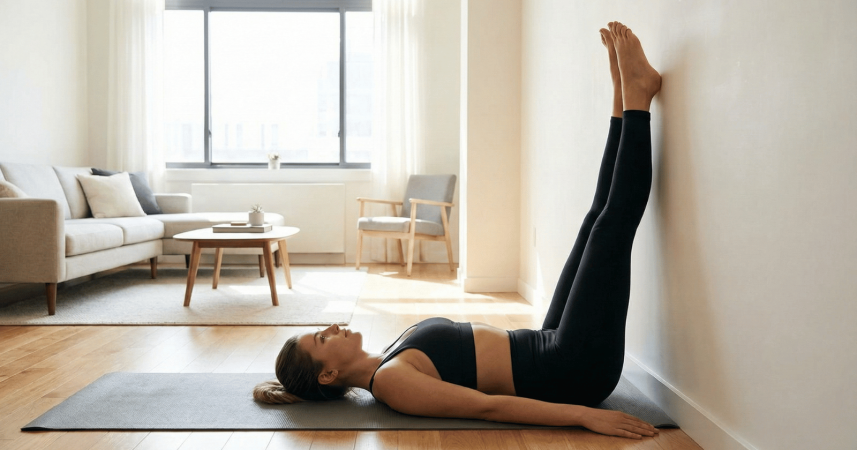
Sometimes the most effective wellness practices are the ones that feel almost too easy. Legs up the wall, known in yoga as Viparita Karani, is exactly that kind of practice. You literally lie on your back, scoot your hips close to a wall, and extend your legs straight up. That's it. No special equipment, no athletic ability required, no expensive studio membership.
But here's where it gets interesting. This deceptively simple position triggers a cascade of physiological responses that can genuinely shift how you feel. I started doing this after particularly long editing sessions left my legs feeling like concrete. Ten minutes later, I'd feel like a different person. The science behind why this works is actually pretty fascinating, and it explains why yogis have been doing this for thousands of years.
Your circulation gets a helpful assist from gravity
We spend most of our waking hours fighting gravity. Blood has to work against it to return from your lower extremities back to your heart. When you flip the script and elevate your legs, you're essentially giving your circulatory system a break.
This passive inversion allows blood and lymphatic fluid to drain more easily from your legs and feet. If you've ever noticed swollen ankles after a long flight or a day on your feet, this pose directly addresses that pooling effect. The venous return improves, meaning deoxygenated blood flows back to your heart more efficiently.
Research on passive leg elevation has shown measurable improvements in circulation and reduced lower limb swelling. It's why nurses and doctors often recommend elevating your feet after surgery or injury.
Your nervous system shifts into recovery mode
Here's where behavioral science gets really interesting. This pose activates your parasympathetic nervous system, often called the rest and digest response. It's the opposite of the fight or flight state most of us live in during busy days.
When you're in this reclined position, your body interprets the signals as safe. Heart rate slows. Blood pressure drops slightly. Breathing deepens naturally without you forcing it. Your body essentially gets the message that it's okay to stop being on high alert.
Studies on restorative yoga postures have demonstrated significant reductions in cortisol levels and improvements in heart rate variability. These aren't just feelings. They're measurable physiological shifts that compound over time with regular practice.
Your lower back and hamstrings get gentle relief
Modern life is rough on spines. We sit hunched over laptops, crane our necks at phones, and generally compress our lower backs in ways our ancestors never did. Legs up the wall creates a gentle traction effect that can relieve some of that accumulated tension.
The pose allows your lower back to release into the floor while your hamstrings get a passive stretch. Unlike aggressive stretching that can trigger protective muscle guarding, this approach lets gravity do the work gradually. Your muscles don't fight back because there's no perceived threat.
For anyone dealing with mild lower back discomfort or tight hamstrings from sitting, this daily practice can create cumulative relief. It won't fix structural issues, but it addresses the muscular tension that often accompanies them.
Your sleep quality may actually improve
Timing matters here. Doing legs up the wall in the evening, particularly an hour or two before bed, can help prepare your body for sleep. The parasympathetic activation we talked about earlier primes your system for rest.
Think of it as a transition ritual. You're signaling to your body that the active part of the day is over. The reduction in stress hormones and the calming effect on your nervous system can make falling asleep easier and improve sleep quality overall.
This is especially useful if you tend to carry the day's tension into bed with you. Instead of lying there with a racing mind, you've already begun the wind down process. Your body arrives at bedtime already halfway to relaxation.
How to actually do it right
Find a clear wall space and grab a folded blanket or thin pillow if you want cushioning under your hips. Sit sideways with one hip touching the wall, then swing your legs up as you lower your back to the floor. Scoot your hips as close to the wall as comfortable.
Your legs don't need to be perfectly straight. A slight bend in the knees is totally fine, especially if your hamstrings are tight. Let your arms rest by your sides or place your hands on your belly. Close your eyes and breathe normally.
Start with five minutes if ten feels like too much. The goal is consistency over duration. A daily five minute practice beats an occasional twenty minute session every time.
Final thoughts
We often overcomplicate wellness. We think we need expensive equipment, complicated routines, or hours of free time to make meaningful changes. Legs up the wall challenges that assumption in the best way possible.
This is a practice that meets you where you are. Stressed? It helps. Legs tired? It helps. Can't sleep? It helps. The barrier to entry is essentially zero, and the potential benefits touch multiple systems in your body simultaneously.
The real magic happens with consistency. Ten minutes a day, every day, creates compound effects that you'll start noticing within a week or two. Better circulation, calmer nerves, easier sleep. All from lying on the floor and letting gravity do its thing. Sometimes the simplest interventions are the most powerful ones.