The most predictable meal of your childhood may have been quietly building the psychological architecture that decades of therapy now tries to reconstruct.

Add VegOut to your Google News feed. 
The boring stuff saved us. That's the counterintuitive truth that keeps surfacing in developmental psychology research, and it runs against every instinct modern parents have about enrichment, stimulation, and keeping children engaged. The family dinner, that repetitive, seemingly unremarkable event where everyone sat down at roughly the same hour, in roughly the same configuration, eating roughly the same rotation of meals, turns out to have been doing something profound beneath the surface. And most of us dismantled it without a second thought.
I've been thinking about this for months, partly because I've watched families I know cycle through every optimization strategy available for their kids (tutoring, travel sports, coding camps, therapy at fourteen) while quietly abandoning the one ritual that research suggests may support emotional stability: sitting together and eating. The predictability of it. The sameness. The boredom, even. That was the medicine.
What Repetition Actually Built
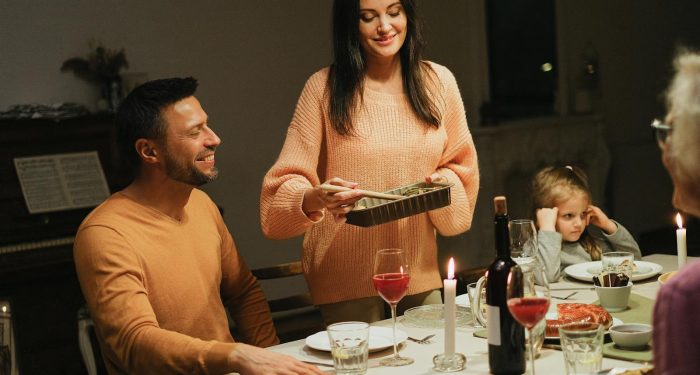
When psychologists talk about emotional regulation in children, they're really talking about a nervous system that learned, early, what to expect from the world. Routines create that expectation. A child who knows that dinner happens at 6:15, that Dad sits at the head and Mom sits nearest the kitchen, that the conversation follows a loose pattern of "how was school" and "pass the salt," is absorbing something far deeper than table manners. They're learning that the world is stable. That adults are present. That there will be a next meal, and it will look like this one.
That architecture of predictability becomes the scaffolding for emotional health. Studies on daily routines and child development have indicated that simple, repeated household rituals may correlate with better emotional adjustment, stronger self-regulation, and lower anxiety in children. Family dinner is among these rituals because it requires so little yet delivers so much: a fixed time, a shared space, the undivided (or at least partially divided) attention of caregivers.
The generation that grew up with this didn't think of it as a psychological intervention. They thought of it as dinner. That's precisely why it worked.
How We Lost It (And What Replaced It)
The erosion happened gradually, which is why almost nobody noticed. Work hours expanded. Commutes lengthened. Kids' extracurricular schedules ballooned into logistical nightmares that made a shared 6 p.m. meal functionally impossible. Microwaves and single-serve packaging made eating alone more convenient than coordinating five people's calendars. The kitchen table became a staging area for backpacks and mail.
But here's the part that rarely gets discussed: the food itself changed in ways that made the family meal harder to sustain, and the reasons behind that change are darker than most people realize.
Investigations into dietary policy have traced decades of manipulation by the food industry, documenting how the Sugar Research Foundation allegedly hired Harvard scientists in the 1960s to publish research downplaying sugar's role and emphasizing fat as the culprit for heart disease. Reports suggest the foundation influenced which studies would be reviewed and paid researchers who delivered favorable conclusions. A paper published in the New England Journal of Medicine in 1967 shaped nutritional policy for decades, with funding sources that weren't fully disclosed at the time.
That manufactured consensus led directly to the low-fat craze, which led to an explosion of processed, sugar-laden convenience foods engineered to replace the home-cooked meals that once anchored family dinner. Sugar consumption increased substantially in the late twentieth century, and high fructose corn syrup became a significant part of the American diet. The food pyramid recommended high grain consumption, and critics have suggested that agricultural interests influenced these guidelines. Nutritionist Louise Light, who worked on the original pyramid, later expressed concerns that industry pressures had compromised the final recommendations.
What struck me hardest about these investigations was a structural detail: the USDA has dual mandates—to provide Americans with nutrition guidance and to promote American agriculture. The same agency telling you what to eat is also tasked with supporting what American farmers produce. Think about that the next time you see a government food recommendation.
The Table Was Doing Double Duty
When families cooked and ate together, they weren't just building emotional stability through routine. They were also maintaining a relationship with food that was fundamentally different from what replaced it. Home-cooked meals, by default, involved whole ingredients. Someone peeled potatoes. Someone washed lettuce. Children watched food go from raw to ready, and that observation taught them something no nutrition label ever could: food comes from somewhere, and preparing it is an act of care.
The industrialization of the American diet didn't just make us sicker. It made the family meal logistically unnecessary. Why coordinate everyone's schedule around a pot of soup when you can microwave five different frozen entrees at five different times? The convenience was real. The cost was invisible for years.
Research on family rituals describes these routines as practices that "honor what is very important to the family." When the ritual disappears, the implicit message changes. The family stops saying "we gather" and starts saying "we manage." Children are perceptive enough to feel the difference, even when they can't name it.
There's a reason the economics of dinner keep coming up in conversations about generational change. Economic conditions in the mid-1990s were different, allowing more single-income households to function. That math has collapsed entirely. The ritual didn't die because families stopped valuing it. It died because the economy stopped making it possible.

What the Children Absorbed
I keep coming back to the word "predictability" because I think we undervalue it. We live in a culture that celebrates spontaneity, flexibility, disruption. We admire the pivot. We reward adaptability. And those are useful adult skills, but they're built on a foundation that requires something sturdier: the deep, bodily knowledge that certain things stay the same.
Children who ate dinner with their families every night absorbed that knowledge without studying for it. They learned to read facial expressions across a table (not across a screen). They practiced the art of waiting while someone else finished talking. They experienced low-grade conflict, like a sibling stealing the last roll, and watched adults navigate it in real time. They learned that their presence was expected, which is a different thing entirely from being told they matter.
The unspoken hierarchy of the dinner table taught children where they fit, and that fitting somewhere (having a literal seat) is a form of safety. The child who always sat in the same chair wasn't trapped by routine. They were anchored by it.
The Industry That Gained When Families Scattered
Here's the connection I can't stop turning over. The same decades that saw family dinner rates plummet also saw processed food revenue explode. Major food companies saw tremendous revenue growth. The breakfast cereal market became a multi-billion dollar global industry. Marketing campaigns like "Got Milk?" launched in the early 1990s, promoting dairy consumption. Industry revenue grew substantially.
None of this is conspiracy. It's documented. The food industry funded research to discredit whole-food diets, lobbied to reshape government nutrition guidelines, and then sold the processed alternatives that filled the gap when families stopped cooking together. Every step was rational from a profit standpoint. Every step was catastrophic from a public health standpoint.
The obesity rate in 1960 was 13%. Today it's 42%. Type 2 diabetes affected about 1% of Americans in 1960. Now it's 11%, with another 38% pre-diabetic. Heart disease remains the number one killer, despite decades of dietary guidelines that were supposed to solve it. We followed the advice, we did what we were told, and we got sicker. That's a business model.
And that business model fed (literally) on the dissolution of the family meal. Scattered eating patterns create more purchase occasions. Individual servings generate more packaging revenue. A family of four eating four different microwaved meals buys four products instead of one bag of lentils.
Rebuilding the Table
I don't think nostalgia alone rebuilds anything. Romanticizing the 1970s kitchen won't put dinner on the table in 2026 when both parents work until 6:30 and the kids have practice until 7. The conditions that supported the nightly family dinner were economic as much as cultural, and those conditions have largely evaporated.
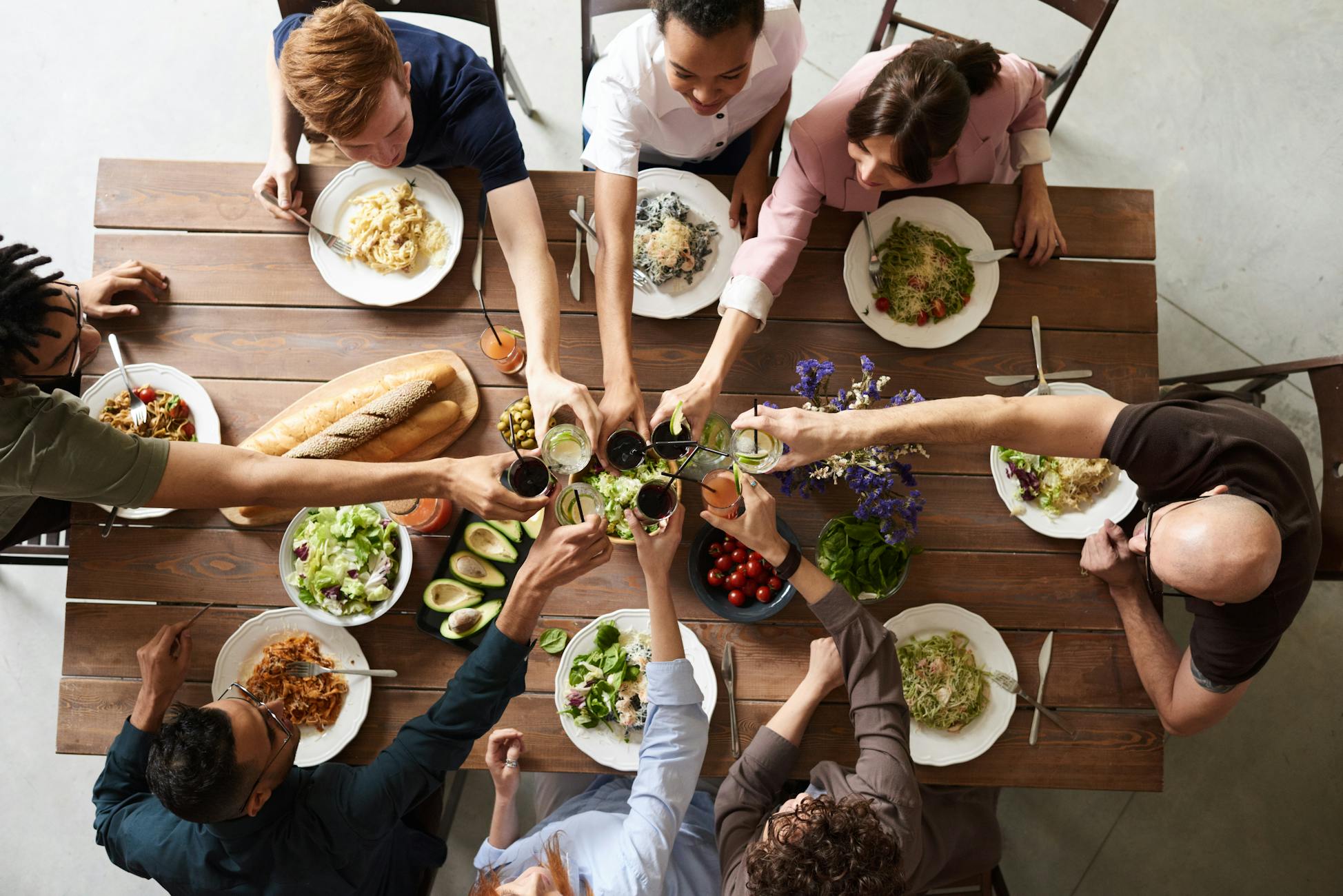
But the psychological principle underneath the ritual remains intact. Children need predictable, recurring moments of shared presence with their caregivers. The form can flex. Maybe it's breakfast instead of dinner. Maybe it's four nights a week instead of seven. Maybe the table is a blanket on the living room floor. The mechanism is the same: a fixed point in time, a shared meal, the implicit message that this is what we do, and you belong here.
What we feed our families matters too, and I'd argue it matters more than we've been led to believe. When you understand that comfort food and healing food can be the same thing, cooking together becomes both nutritional and psychological nourishment. A pot of vegetable stew simmering for an hour fills the house with a signal that says someone cared enough to plan ahead, to chop, to wait.
The generation that ate dinner together every night didn't have a name for what they were building. They just showed up, sat down, and passed the bread. That consistency was worth more than any enrichment program, any screen-time strategy, any parenting book published since. The research keeps confirming what the kitchen table already knew.
The hard question for the rest of us is whether we're willing to reclaim something we discarded, even partially, even imperfectly, in an economy and food system designed to keep us apart. Because the table is still there. Someone just has to decide to sit down.