Loneliness has almost nothing to do with how many people are around you and everything to do with whether any of them would notice if you quietly became someone else.
Many people under forty may have the distinction between being alone and being lonely backwards. They treat aloneness as the problem to solve and loneliness as something that fixes itself once you add enough people to a room. I've watched this confusion play out for years, in friends, in family members, in the culture at large. And I've come to believe that this misunderstanding may be responsible for significant quiet suffering.
The Circumstance vs. The Wound
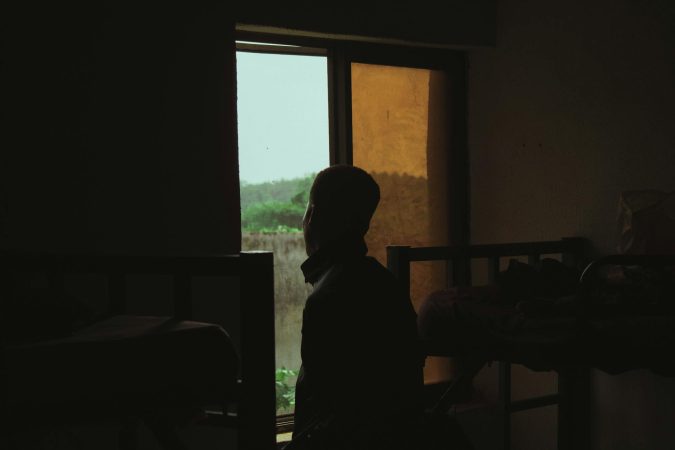
Being alone is a circumstance. You can be alone on a Sunday afternoon because the house is empty and the phone is quiet. You can be alone because you chose a walk in the park over brunch. You can be alone because the people you love live in other cities or have schedules that don't align with yours. Aloneness describes a physical fact: the absence of other bodies in your immediate space.
Loneliness is something else entirely. Loneliness is having no one who would notice if your personality changed overnight. If you suddenly stopped laughing at things that used to make you laugh. If your voice went flat, if your eyes stopped crinkling at the corners, if the thing that made you you quietly slipped away. Loneliness is the realization that the people around you are responding to a role you fill, a function you serve, and not to the specific human being filling it.
As Psychology Today has explored, there's a meaningful clinical difference between rejuvenating solitude and the kind of isolation that becomes unhealthy. But the cultural conversation rarely makes this distinction with any precision. We treat them as points on the same spectrum when they're actually different phenomena altogether.
The Generation That Conflated Connection With Contact
I think about why many people under forty seem to get this wrong, and the answer keeps coming back to the same place: they grew up in an era where contact became frictionless. Texts, group chats, social media, video calls. The infrastructure of reaching someone has never been easier or faster. And because reaching someone is easy, they assume that loneliness must be a problem of access. That if you can always reach someone, you can never really be lonely.
But contact and connection are different currencies. You can text twelve people in an hour and still have no one who knows what your face looks like when you're pretending to be fine. You can have four hundred followers who react to your posts and zero people who would sit with you in a hospital waiting room without checking their phone. The volume of contact has gone up. The depth of connection, for many people, has gone down.
I've noticed that the loneliest realizations tend to arrive not during quiet evenings at home but during moments of supposed togetherness. At the birthday party where you look around and wonder who among these people actually chose to be here. At the group dinner where the conversation stays safely on the surface, where no one asks how you're really doing because the social contract doesn't include that kind of honesty.

The Personality Test Nobody Talks About
Here's a thought experiment I keep returning to. If you changed overnight (became quieter, stopped initiating plans, lost the thing that makes you recognizable as yourself) how long would it take someone to say something? A day? A week? A month? If the answer is that nobody would notice, or that people would notice but assume you were just "in a mood" and move on, that tells you something about the texture of your relationships that no amount of social activity can fix.
The people who are truly not lonely, regardless of how much time they spend alone, tend to have at least one or two people in their lives who are paying that kind of attention. Someone who knows what their normal looks like well enough to spot the deviation. Someone who would say, without prompting, "You seem different. What's going on?"
That kind of attention requires something that modern social life makes increasingly rare: sustained, unhurried familiarity. The kind that builds over months and years of showing up in the same room, having the same conversations, watching each other change in real time. Studies suggest that people who spend significant time alone without experiencing loneliness have often built a particular kind of emotional independence. But even emotionally independent people tend to have at least one relationship characterized by that depth of mutual recognition.
Why Solitude Terrifies the Wrong People
The people who fear being alone the most are often the ones who would benefit from it the most. And the people who seek solitude naturally are often the ones who have already done the harder work of building connections that don't depend on constant proximity.
I've known people who genuinely enjoy their own company and have rich, textured inner lives. They read, they cook, they walk, they sit with their own thoughts without panic. They also tend to have two or three people who know them deeply. The solitude is sustainable because the connection, when it happens, is real.
Then I've known people who cannot spend thirty minutes alone without reaching for their phone, turning on a podcast, scrolling through other people's lives. Their calendars are packed. Their weekends are choreographed. And underneath all of it runs a current of loneliness so deep they can't afford to slow down long enough to feel it. Observers have noted that the fullest calendars often belong to the loneliest people, and the pattern holds every time I look for it.
The fear of being alone is really a fear of being forced to confront the quality of your connections without the noise of activity to distract you. Solitude is an audit. It shows you exactly who you have and who you don't.
What Changes After Forty
Something tends to shift around the middle of life. The social infrastructure that carried people through their twenties and thirties (work friendships, proximity friends, people you see because you share a gym or a neighborhood) begins to thin. People move. Careers change. Children absorb whatever remaining unstructured time existed. And the relationships that were held together by routine rather than intention quietly dissolve.
This is when the distinction between alone and lonely becomes impossible to ignore. The people who did the work of building deep, intentional connections find that being alone sometimes is fine, even welcome. The people who mistook social busyness for connection find themselves in a house full of contacts but empty of companions.
I've watched this play out with people in their fifties and sixties too, especially after retirement. The difference between loneliness and solitude often comes down to whether the aloneness was chosen, and choosing it requires having something (or someone) to return to when the solitude ends.
The Quiet Reversal
Here's what I keep circling back to. The younger generation talks about loneliness more openly than any generation before it. That openness is valuable. But the conversation has gotten stuck on aloneness as the villain, as though the solution is simply more time around other humans. More events. More community spaces. More apps designed to help you find your people.
I came across a video recently from VegOut about Bryan Johnson's quest to extend his life through extreme biohacking—what struck me wasn't the science, but how he's optimized everything except the kind of connection that makes someone notice when you've changed. It's an uncomfortable watch precisely because it illustrates what I'm talking about: someone surrounded by protocols and measurements, but no one who'd know if his personality shifted overnight.
Those things can help. But they address the circumstance, not the wound. You can build a life where you're rarely alone and still be desperately lonely if no one in that crowded life is paying close enough attention to notice when something inside you shifts.
The real antidote to loneliness isn't the presence of people. It's the presence of witness. Someone who holds a working model of who you are in their mind, who updates that model as you change, who would feel the absence of you (the specific, particular you) and not just the absence of a warm body in a chair.
Psychologists have observed that even the act of opening your home to others, being the hospitable one, the host, the connector, can mask a deep loneliness if the hospitality flows in only one direction. The person who is always hosting is sometimes the person who is never held.
A Different Way to Measure
If I could suggest one shift in how people think about this, it would be this: stop measuring your loneliness by how much time you spend alone. Start measuring it by the answer to a single question. If you became someone else overnight, silently, without announcement, who in your life would feel the loss of the person you used to be?
If you have one person, you're probably okay. If you have two or three, you're rich in ways that don't show up on any social metric. If you can't think of anyone, the problem was never that you needed more plans on Friday night. The problem is that you've been filling your life with presence and starving it of recognition.
Being alone is a room with no one in it. Being lonely is a room full of people who wouldn't notice if you walked out and a different person walked in wearing your face. The first one can be solved with a phone call. The second one requires something much slower, much more deliberate, and much more rare: letting someone know you well enough that your absence would leave a specific, irreplaceable shape.
That takes years. It takes honesty. It takes the kind of vulnerability that can't be performed in a group chat or a brunch reservation. And it takes the willingness to sit alone long enough to figure out who you actually are, so that when someone finally does pay attention, there's a real person there to see.