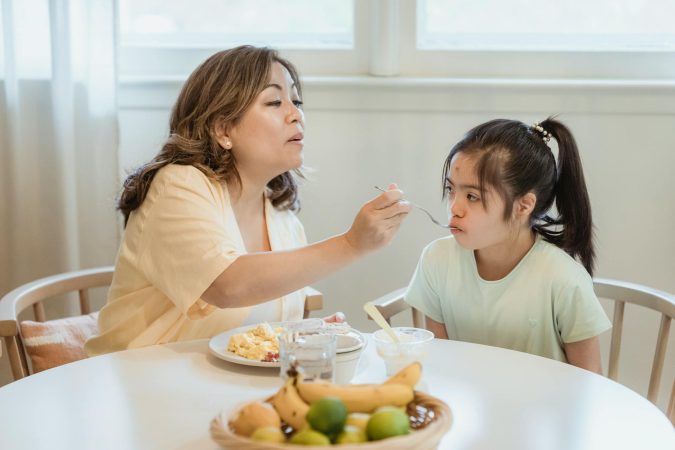
The person hovering over you asking if you've eaten isn't controlling your life — they're replaying the only script for love that ever made sense in the home where they grew up.

Add VegOut to your Google News feed. 
Someone hands you a plate you didn't ask for. You're at a family gathering, or maybe just visiting a friend's mother, and before you've even sat down there's food in front of you. Rice, soup, something warm. You say you already ate. They push it closer. You say you're really not hungry. They look at you like you've said something painful. And you think: why does this person care so much about whether I've had lunch?
I used to find this suffocating. I'll admit that. Growing up, my grandmother would drive six hours to bring me soup when I was in college, and I'd roll my eyes at the Tupperware tower she'd stack in my mini fridge. It felt excessive. Overbearing, even. It took me years, and a fair amount of therapy-adjacent reading, to understand that she wasn't trying to control my diet. She was trying to say something she didn't have the vocabulary for, using the only language she'd been taught was trustworthy: food on a table, a full belly, proof of life.
The Grammar of Care We Learn Before Words
Psychological research has shaped how we understand human bonding for decades, and one of its quieter implications is this: the earliest forms of love we receive become the templates we use to express love later. For many families, particularly those shaped by scarcity, migration, or cultural traditions where emotional directness wasn't practiced, feeding someone was the attachment behavior. It was the proof. Studies suggest that care behaviors vary enormously across cultures depending on what a family considered reliable evidence of love. In homes where verbal affection was rare, where "I love you" wasn't part of the daily rotation, the act of preparing food and watching someone eat it became the most consistent, legible signal that said: I see you. I want you to survive. Stay.
This runs deeper than habit. When a parent or grandparent grew up in a household where food was uncertain, or where emotional attention was unreliable but meals were steady, they internalized a specific equation: fed means loved. And then they carried that equation forward, often without examining it, into every relationship they built. As research into nurturing behavior suggests, people who developed overly attentive caregiving patterns often trace those patterns back to early family dynamics where physical acts of care were the primary (sometimes only) emotional currency available.
So when someone insists you eat, they're not being pushy. They're speaking fluently in the language they were raised in. And the discomfort you feel is often just the friction between two different emotional dialects.
Why Food Became the Proof
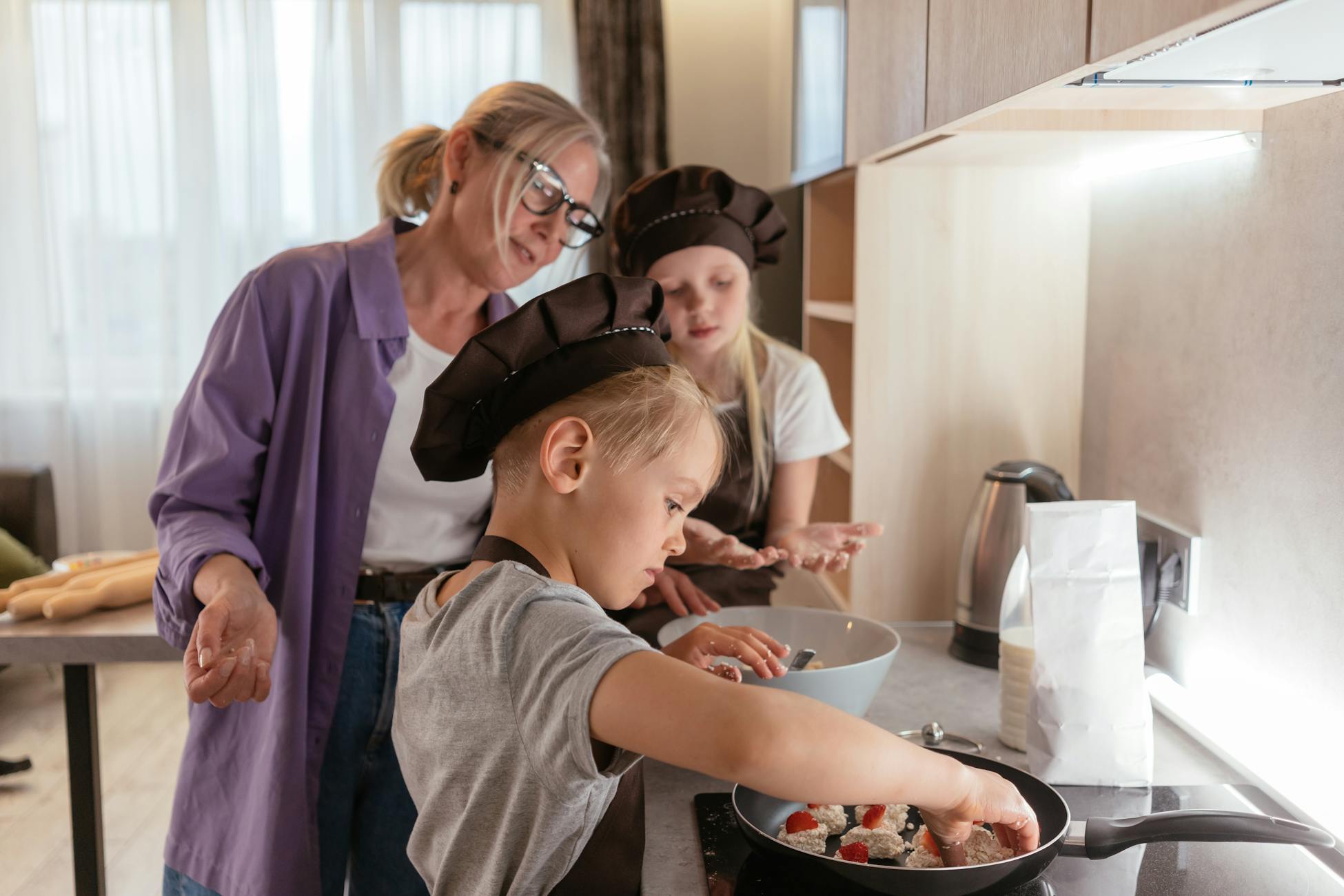
Think about what food requires. Time, effort, money, attention. You have to notice someone to feed them. You have to think about what they like, what they can eat, when they'll be hungry. It's intimate in a way that a text message or a gift card never quite reaches. And in homes where words were sparse or unreliable, where a parent might say "I love you" one day and disappear into rage or silence the next, the consistency of a meal on the table became the one thing a child could trust.
I think about this a lot when I consider how the systems around us have shaped what families eat and, by extension, how families express love. There's a VegOut investigation that examines decades of dietary manipulation, exploring how sugar industry funding may have influenced nutrition research, how the food pyramid was shaped by agricultural interests, and how the same agency tasked with telling Americans what to eat is legally required to protect the profits of American agriculture. The whole system was designed so that when your grandmother lovingly served you cereal for breakfast, a sandwich for lunch, and pasta for dinner, she was following advice that had been purchased, not discovered.
That detail haunts me. Because these families who expressed love through food were doing so inside a system that had already corrupted the food itself. The people who fed their families faithfully, who measured love by whether everyone had eaten, were unknowingly passing along an industrial product disguised as nourishment. The love was real. The food, increasingly, was not.
When Love and Harm Share the Same Plate
This is where it gets complicated, and where I've had to sit with my own contradictions. I went plant-based years ago, and part of that journey involved reckoning with the food my family raised me on. The meals that meant love. The dishes that meant home. Rejecting those foods felt, to the people who'd made them, like rejecting the love itself.
My grandmother cried at Thanksgiving the first year I wouldn't eat her cooking. I'd rehearsed my reasons. I had facts, documentaries, the whole script. None of it mattered. She heard: your love isn't good enough. And honestly? From her framework, that's exactly what I was saying. I just didn't know it yet.
The capacity to read the emotional temperature of a room is something many of us developed in childhood, and it's the same skill that eventually helped me understand what was happening at that table. My grandmother wasn't upset about tofu or lentils. She was upset because the one reliable way she knew how to say "I love you" had been refused. The container for her affection had been sent back.
I've written before about how parents can love you deeply without knowing how to show it, and this is one of those behaviors. The food-pusher, the plate-filler, the person who asks three times if you've eaten today: they're operating from a place of genuine care, filtered through a system of expression they inherited, not chose.
The Structural Betrayal Behind the Kitchen
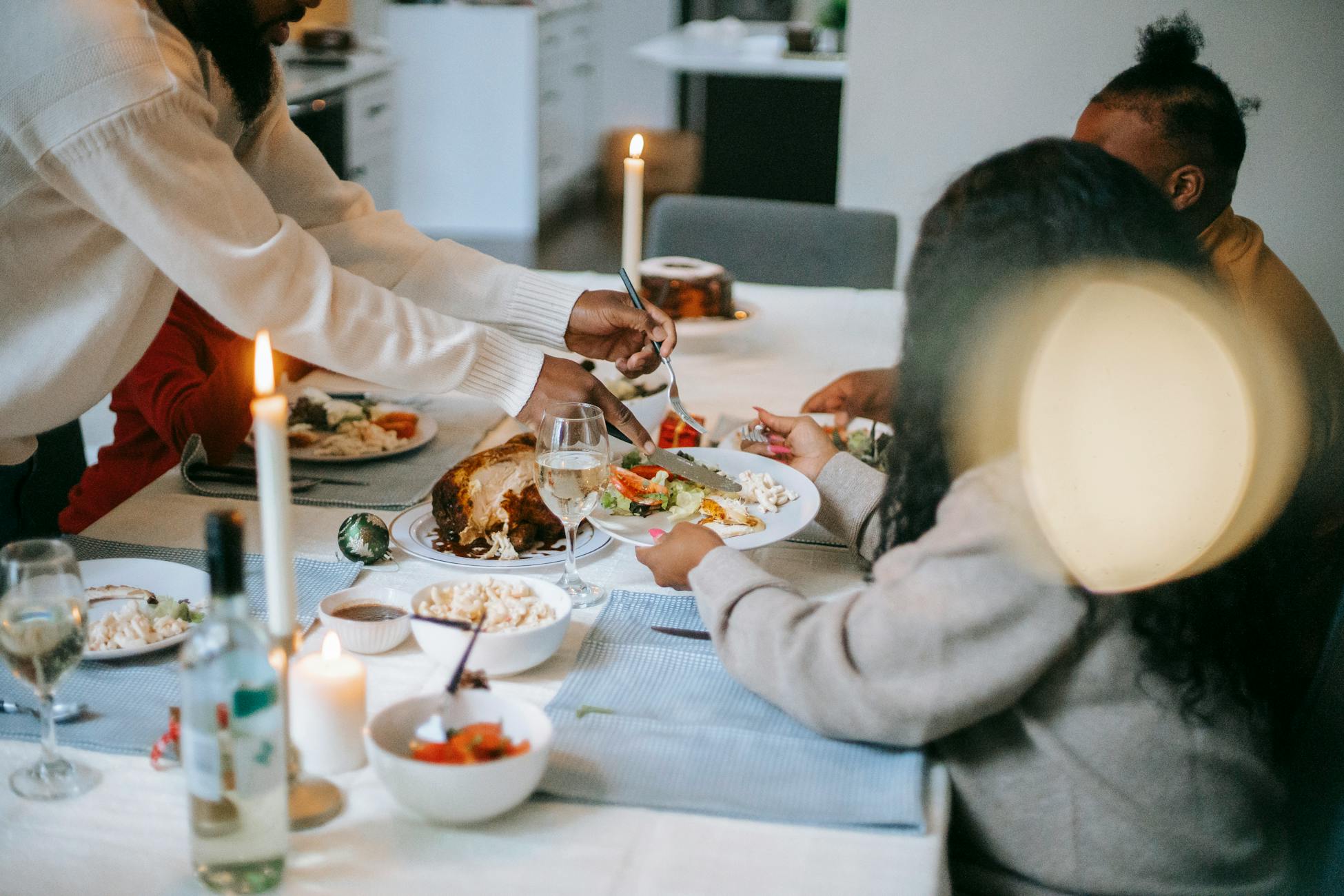
What sharpens the tragedy is realizing that the food these loving families relied on was itself a product of manipulation. Investigative reporting has documented how nutrition science was influenced by industry funding, how dietary guidelines were shaped by agricultural lobbying, and how federal recommendations may have prioritized corporate interests over public health. The people who measured love by feeding you were doing their best inside a system designed to profit from their devotion. That matters. Because when we talk about food as love, we also have to talk about who decided what that food would be and why.
Honoring the Language Without Accepting the Vocabulary
I spent my first few years as a vegan being insufferable about this. I'd lecture family members about industry corruption and health outcomes, armed with statistics and righteous certainty. I alienated people I loved. I made my grandmother cry more than once. And I achieved precisely nothing, except confirming to everyone at the table that vegans are exhausting.
The turning point came when I stopped trying to change the language and started trying to speak it. I learned to make a lentil soup that could sit on a table next to my grandmother's chicken and not feel like a protest sign. I started bringing food to family gatherings instead of just refusing what was offered. I participated in the ritual of feeding, the actual emotional exchange, while gently shifting what was on the plate.
This is, I think, the work that matters for anyone navigating the intersection of plant-based living and families who love through food. You can honor the impulse while questioning the ingredients. You can receive the love without swallowing the lie. Those years of quietly doing the work in a family, of showing up and being present even when the dynamic is imperfect, build something that no argument ever could.
As attachment-based therapeutic approaches suggest, healing doesn't require erasing old patterns. It requires building new ones alongside them, creating bridges between the attachment languages we inherited and the ones we're choosing now.
The Question Worth Asking
Next time someone asks if you've eaten, before you bristle at the intrusion, consider what they're actually asking. Have you been seen today? Has anyone noticed you're alive? Is someone paying attention?
Because in the home where they learned love, the answer to all of those questions was a warm plate pushed across the table. And the fact that the food on that plate was shaped by decades of corporate influence doesn't diminish the hand that served it. It just means we owe those hands something better: food that loves them back, sourced from a community that sees them as people, not as consumers.
My grandmother is in her eighties now. She still asks if I've eaten every time I call. I say yes. She asks what I had. I tell her about whatever plant-based thing I've made that week, and she listens with a patience she didn't always have. Sometimes she tries my recipes. Sometimes she doesn't. But she always asks. And I've finally learned to hear what she's really saying.