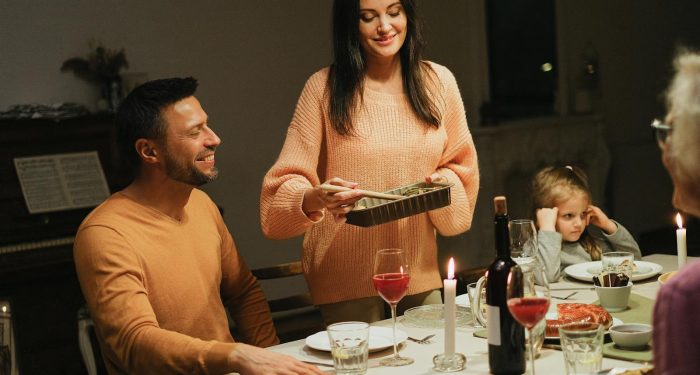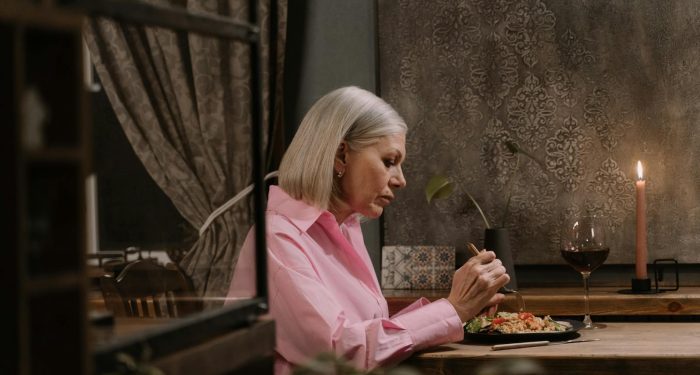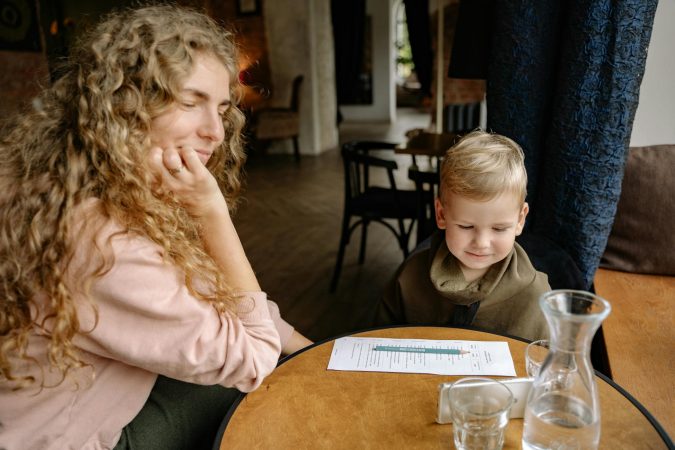
The stories we tell about food are almost never about food, and the story my mother told us about fast food was really about the architecture of poverty she was trying to hide.

Add VegOut to your Google News feed. 
What if the healthiest food decision your parent ever made for you had nothing to do with health at all? My mother had a phrase she used like a shield whenever we drove past a McDonald's or a Burger King: That food is beneath us. She said it with the kind of quiet authority that made you believe she'd tasted everything on the menu and found it wanting. She hadn't. She'd never been inside one. And the reason she'd never been inside one had nothing to do with nutritional standards or moral superiority. We simply couldn't afford it. I didn't understand that until I was twenty-six, standing in a Wendy's drive-through with my own money, ordering a value meal with the strange, guilty thrill of someone breaking a rule that had already dissolved. The fries were fine. The revelation was not.
Here's the thing about growing up in a household where money is tight: the adults rarely say "we can't afford it." They say something else. They say it's trashy, or unhealthy, or unnecessary. They build a story that transforms deprivation into a choice, and the story becomes so convincing that even the storyteller starts to believe it. My mother genuinely thought she was protecting us from something. In a way, she was. She was protecting us from seeing her shame.
The Mythology of the Family Table
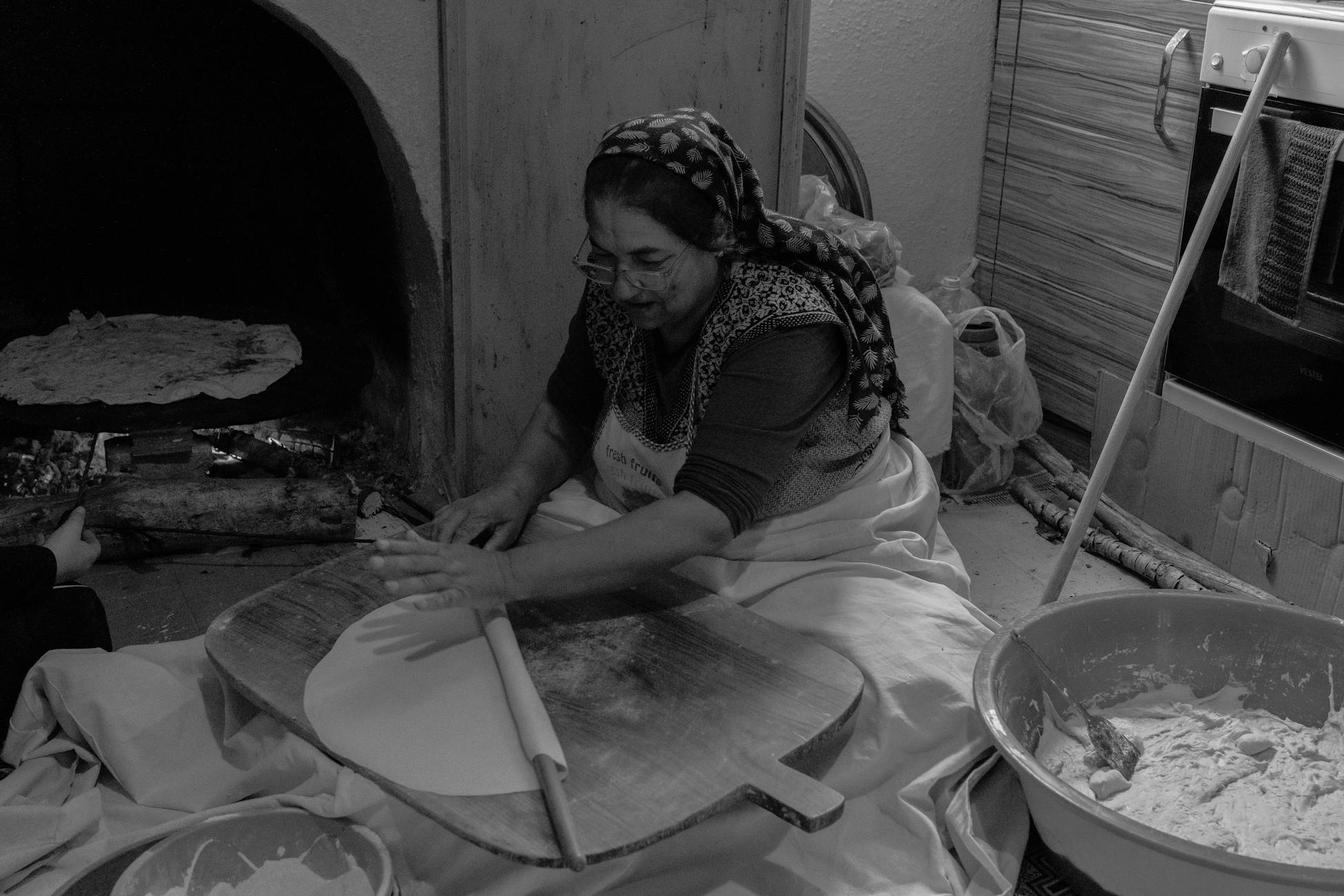
We ate the same seven or eight meals on rotation. Rice and beans. Lentil soup. Pasta with whatever vegetables were on sale. A pot of collard greens that lasted three days. My mother spoke about these meals the way some people talk about heirloom recipes, like they were handed down through generations of deliberate wisdom. And maybe some of them were. But the rotation existed because it was cheap, and the portions were controlled because they had to be. She called it "eating clean" before that phrase meant anything to anyone. She called it "not being wasteful." She called it discipline.
I carried a specific relationship with abundance into adulthood because of those years. I'd eat free samples at grocery stores without flinching but couldn't bring myself to order an appetizer at a restaurant. I'd buy the cheapest thing on the menu and tell friends I just wasn't that hungry. I'd fill my plate at a potluck and then feel a wave of something close to panic, like someone was going to notice I'd taken too much.
The psychology of food restriction in childhood runs deeper than hunger. Research on food insecurity and child development has demonstrated that the effects don't stop when the pantry gets fuller. The nervous system remembers scarcity long after scarcity ends. And when the scarcity is wrapped in a narrative of pride or moral superiority, it becomes even harder to untangle, because you're not just recovering from hunger. You're recovering from a lie you were told was virtue.
What Okinawa Taught Me About My Mother's Kitchen
I've been thinking a lot about this since watching a VegOut video that traced the rise and fall of Okinawan longevity. Studies of the traditional Okinawan diet suggest it was predominantly carbohydrate-based with relatively low levels of fat and protein. The primary food, by some accounts the majority of caloric intake, was the purple sweet potato. Not rice. Not fish. Sweet potatoes, supplemented with vegetables, legumes, small amounts of soy, and pork maybe once or twice a month. Their daily caloric intake appears to have been lower than standard guidelines. And they weren't restricting on purpose. That was simply what was available on a remote island before industrial agriculture arrived.
And they were outliving everyone on the planet.
When I heard that, something clicked. My mother's kitchen wasn't Okinawa. But the structure was eerily similar: plant-heavy meals built around whatever grew cheap and stored well, low in fat by circumstance rather than ideology, portions governed by what the household could sustain. The Okinawan centenarians weren't following a wellness protocol. They were eating what the island gave them. My mother wasn't following one either. She was feeding four people on what a teacher's aide salary allowed.
The video goes deeper into what was happening at the cellular level in those Okinawan bodies, and this is the part that reframed everything for me. Inside every cell, there's a system called mTOR that acts like a toggle switch. When it's activated, the cell grows, divides, expands. When it's suppressed, the cell shifts into repair mode, cleaning house, recycling damaged proteins, fixing DNA errors. Research suggests that animal protein is one of the stronger activators of mTOR, while plant protein activates it significantly less. The traditional Okinawan diet, with its naturally low protein and caloric intake, was essentially keeping the repair switch on for decades. Accidental cellular maintenance.
My mother's rice and beans were doing something similar. Not because she'd read a longevity study. Because that's what we could afford.
The VegOut breakdown of this science, including the research on what happened when American military presence brought fast food to Okinawa after the 1960s, is worth watching in full:
Within one generation after fast food chains and processed foods arrived on Okinawa, evidence suggests that obesity rates climbed, type 2 diabetes increased, and cardiovascular mortality rose. Same genetics. Same geography. Same climate. The only variable was the food. Okinawa now hosts numerous fast food locations. Dietary patterns shifted significantly toward higher saturated fat consumption. The population went from among the leanest in Japan to experiencing higher rates of obesity.
And I keep returning to the irony: the food my mother said was "beneath us" was, in molecular terms, the very thing that would have flipped our cells from repair mode into chronic growth mode. She was right, even though her reasons were wrong. Or maybe her reasons were more right than either of us knew.
Pride as a Survival Mechanism
I've spent time in therapy unpacking the specific texture of growing up with parents who showed love in ways that cost nothing but carried enormous weight. My mother's pride about food was one of those ways. It was a wall she built to keep the outside world from seeing inside our refrigerator. And walls, even the ones built from shame, sometimes protect the people behind them.
The shame cycle in parenting works like this: you feel inadequate about something you can't control (income, access, circumstances), so you construct a narrative that reframes the limitation as a deliberate choice. The narrative protects your children from feeling deprived. But it also teaches them that honesty about struggle is dangerous, that the appropriate response to hardship is performance.
I performed for years. I performed not being hungry. I performed not caring about food. I performed indifference toward the things other kids had that I didn't. And when I finally started eating plant-based as an adult, I had to sit with an uncomfortable question: was I choosing this, or was I repeating a pattern that had been installed in me before I had language for it?
The Both/And of Food and Class
The Okinawan story carries a complication that I think mirrors my own. The video addresses it honestly: Hong Kong has been reported to have among the highest per capita meat consumption in the world and also ranks among the places with the longest life expectancy on the planet. Women there live into their late eighties on average. If the equation were as simple as "eat less meat, live longer," Hong Kong would be a catastrophe. Instead, researchers consistently find that the non-dietary factors (physical activity, low smoking rates, walkable infrastructure, social connection, access to healthcare) explain most of the longevity advantage.
Studies of Okinawan centenarians, conducted over many decades, identified four factors for exceptional longevity. Diet was one. The other three: daily integrated physical activity, lifelong social support networks called moai (small groups formed in childhood that meet for life), and ikigai, a reason to wake up in the morning.
My mother had her own version of moai, though she never would have called it that. A rotating group of women from church and the neighborhood who watched each other's children, shared bulk groceries, and passed down clothes. Those relationships kept her sane during the years my father worked double shifts. They kept us fed during the months the math didn't work. And they provided something no supplement or meal plan ever could: the knowledge that someone was paying attention.
People who measure love by food aren't being overbearing. They learned that feeding someone was the most reliable proof that you noticed them and wanted them to stay alive. My mother's refusal to take us to fast food was, underneath everything, a form of love spoken in the only dialect she had.
What I Eat Now, and Why It Matters
I eat plant-based now by choice. Real choice, the kind that comes after you've done the work of separating your conditioning from your convictions. I eat sweet potatoes and lentils and greens, and sometimes I catch myself smiling because I'm eating exactly what my mother fed us, only now I understand what it does inside my body at the cellular level. The mTOR suppression. The autophagy. The repair mode that those Okinawan centenarians accidentally activated for decades by eating what their island provided.
But I also understand that going plant-based from a background of scarcity carries a different weight than choosing it from abundance. When you grew up without options, every food decision as an adult is shadowed by the ghost of the decisions that were made for you. The work is learning to hold both truths: that your parent did the best they could with what they had, and that what they had wasn't enough, and that the story they told to cover the gap left marks you're still finding.
My mother is 67 now. She still doesn't eat fast food. She still says it's beneath her. And I've stopped trying to correct the story, because I think the story is what got her through. Some walls, even the ones built from shame, become load-bearing over time. You can't remove them without bringing down something else.
The Okinawans who lived past 100 didn't have a philosophy about food. They had circumstances. And within those circumstances, their bodies found a way to thrive. My mother didn't have a philosophy either. She had pride, and four children, and not enough money. And within those constraints, she fed us food that, by some strange accident of economics and biology, was keeping our cells in repair mode the entire time.
She was right. Just not for the reasons she thought. And I'm still learning what to do with that.