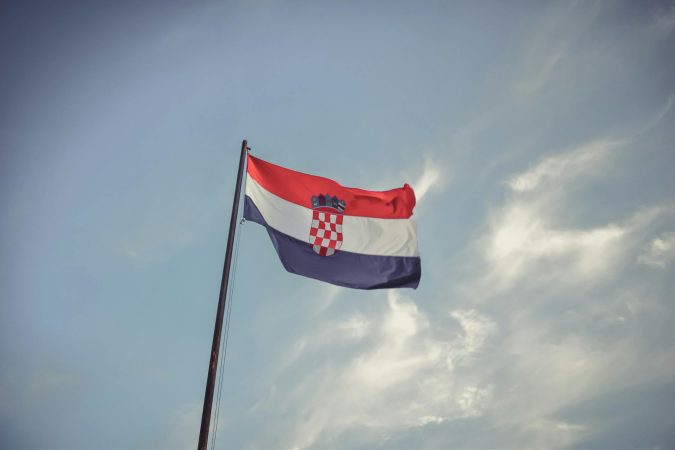
The Croatian island of Pag, long synonymous with electronic music festivals and all-night revelry, is considering a sweeping ban on public alcohol sales — a move that reflects a broader generational shift away from drinking culture across Europe.

Add VegOut to your Google News feed. 
The Croatian island of Pag, one of the Adriatic's most notorious party tourism destinations, has proposed a ban on alcohol sales in public areas — a striking reversal for a locale that has spent two decades marketing itself as Europe's answer to Ibiza. The proposal, first reported by Euronews, signals not merely a local regulatory adjustment but a deeper reckoning with the economics and ethics of alcohol-fueled tourism that is playing out across the continent.
The town of Novalja, Pag's main hub for nightlife tourism and home to the famous Zrće Beach strip of open-air clubs, is at the center of the initiative. Local officials have grown increasingly frustrated with the collateral damage of binge-drinking tourism: public disorder, noise complaints, environmental degradation, and a healthcare system strained by alcohol-related emergencies during peak summer months.
A Party Island at a Crossroads
Zrće Beach has drawn comparisons to Ibiza and Mykonos for more than a decade. Its cluster of beachside mega-clubs — Aquarius, Papaya, and Noa — have hosted internationally renowned DJs and attracted tens of thousands of young tourists each summer, primarily from Germany, Austria, the United Kingdom, and Scandinavia.
The economic model has been straightforward: cheap flights, affordable accommodation, and abundant alcohol create a magnetic pull for budget-conscious partygoers. But that model has generated mounting costs that local residents and officials say can no longer be absorbed.
The proposed ban would target the sale of alcohol in public spaces — streets, beaches, and open-air areas outside licensed venues. It would not, based on the current proposal's framework, shut down the clubs themselves or prohibit alcohol within their walls. The distinction matters: officials appear to be targeting the culture of street drinking and pre-gaming that has turned public spaces into de facto open-air bars, rather than dismantling the nightlife economy entirely.
The Generational Shift Behind the Policy
The proposal arrives against a backdrop that would have seemed implausible a generation ago: young Europeans are drinking significantly less than their parents did.
Data from the World Health Organization's 2024 Global Status Report on Alcohol and Health showed that alcohol consumption among Europeans aged 15 to 24 has declined steadily since the early 2000s. In several northern European countries — traditionally the heaviest-drinking demographics fueling Mediterranean party tourism — the drop has been precipitous. A 2023 survey by the UK's Office for National Statistics found that 26% of adults aged 16 to 24 reported being teetotal, up from 18% a decade earlier.
The reasons are multiple and reinforcing. Health consciousness among younger demographics has surged, amplified by social media culture where personal branding and physical appearance carry social currency. The rise of plant-based living and wellness-oriented lifestyles has reframed alcohol not as a harmless social lubricant but as a toxin incompatible with intentional, health-forward choices.
The sober-curious movement — a broad cultural phenomenon encouraging people to question their relationship with alcohol without necessarily committing to full abstinence — has moved from the margins to the mainstream. Brands marketing non-alcoholic spirits, wines, and beers have proliferated, and bars catering exclusively to non-drinkers have opened in London, Berlin, New York, and Amsterdam.
Economic Pressures and the Limits of Party Tourism
For destinations like Pag, the declining appeal of alcohol-centric tourism presents both a threat and an opportunity. The threat is obvious: if the core demographic is drinking less, the revenue model that sustained two decades of growth becomes fragile.
The opportunity is subtler but potentially more durable. Destinations that pivot toward wellness tourism, cultural experiences, gastronomy, and nature-based activities tend to attract visitors who spend more per capita, stay longer, and generate fewer negative externalities. Portugal's Algarve region and parts of the Spanish Balearic Islands have already begun this transition, investing in boutique hotels, farm-to-table dining, and eco-tourism infrastructure alongside — and sometimes in place of — nightlife.
Pag's proposed alcohol restrictions can be read as an early move in this direction. By curtailing public drinking without eliminating licensed nightlife, local authorities appear to be attempting a calibrated transition: retaining the economic engine of club tourism while reclaiming public space for residents and a broader spectrum of visitors.
The financial stakes are considerable. Tourism accounts for approximately 20% of Croatia's GDP, according to the Croatian National Tourist Board, and coastal destinations like Pag are disproportionately dependent on summer arrivals. Any policy perceived as hostile to tourism carries political risk.
A Pattern Across Europe
Pag is not acting in isolation. Across the Mediterranean and beyond, municipalities that became synonymous with party tourism in the early 2000s are imposing restrictions that would have been politically unthinkable a decade ago.
Barcelona has progressively tightened regulations on tourist apartments, pub crawls, and public drinking in the Barceloneta and Gothic Quarter neighborhoods. Amsterdam launched its "Stay Away" campaign in 2023, explicitly discouraging British stag parties and cannabis tourists. Mallorca and Ibiza have enacted laws limiting alcohol sales in key nightlife zones, banning happy hours and two-for-one drink deals.
The pattern reveals a structural dynamic: as the social and environmental costs of mass party tourism become more visible — and as residents gain political voice through local elections and civic movements — the regulatory pendulum swings toward restriction. The question for each destination is whether the restrictions come early enough to enable a managed transition or arrive only after the damage has calcified.
The Vegan and Wellness Connection
The decline in drinking culture among younger Europeans intersects directly with the growth of plant-based and wellness-oriented lifestyles. Research published in the journal Appetite in 2023 found that individuals who identified as vegan or plant-based were significantly more likely to report reducing or eliminating alcohol consumption, citing health optimization and ethical consistency as primary motivations.
This is not coincidental. The philosophical architecture of veganism — rooted in reducing harm, questioning inherited norms, and making consumption choices aligned with values rather than convenience — maps naturally onto a critical examination of alcohol's role in social life. For a growing cohort, the decision to stop eating animals and the decision to stop drinking alcohol emerge from the same impulse: a refusal to accept that "everyone does it" constitutes a sufficient reason.
The commercial implications are substantial. The global non-alcoholic beverage market was valued at $1.47 billion in 2024 and is projected to reach $2.78 billion by 2030, according to Grand View Research. Plant-based restaurants and wellness retreats are increasingly designing menus around sophisticated non-alcoholic pairings — kombucha, adaptogenic elixirs, cold-pressed juices, and alcohol-free craft cocktails.
For destinations like Pag, the growth of this market represents a plausible alternative revenue stream. A beachside venue that once depended on volume vodka sales could, in theory, pivot toward premium wellness experiences that command higher margins with lower social cost.
What Comes Next
The Novalja proposal still faces debate within the local council, and opposition from nightlife operators and tourism businesses is expected. Industry representatives have historically argued that restrictions drive party tourism to less-regulated competitors — Montenegro, Albania, or illegal pop-up events — without eliminating the underlying demand.
That argument carries some weight but increasingly collides with demographic reality. If younger generations are drinking less regardless of regulation, destinations that cling to an alcohol-dependent model risk chasing a shrinking market while alienating the growing segment of travelers who want something different.
The broader significance of Pag's proposal extends beyond a single Adriatic island. It is a test case for whether tourism economies built on excess can reinvent themselves before the cultural tide makes reinvention involuntary. The destinations that read the shift earliest — and invest in alternatives most aggressively — will likely emerge strongest.
For the generation rewriting the rules of consumption — choosing oat milk over dairy, tempeh over steak, sparkling water over spirits — Pag's potential transformation is not surprising. It is overdue.