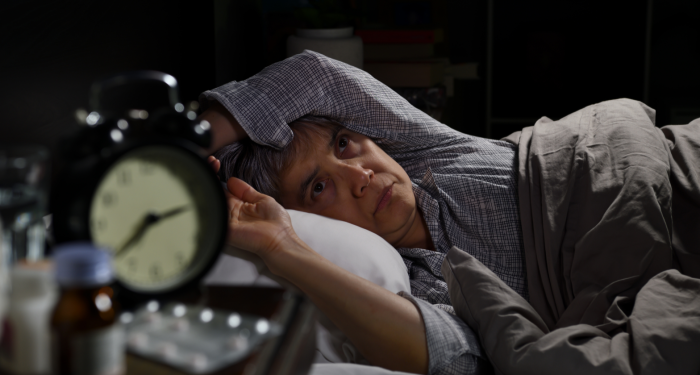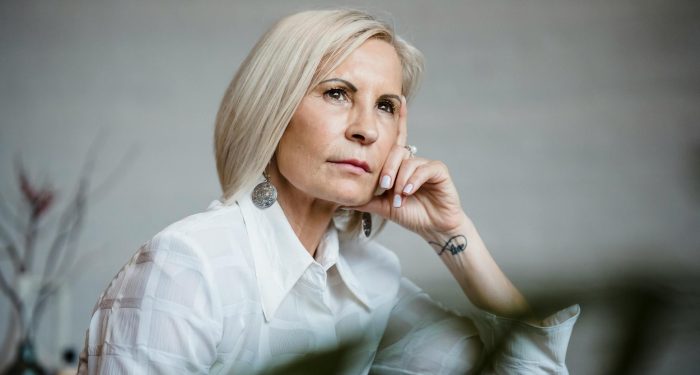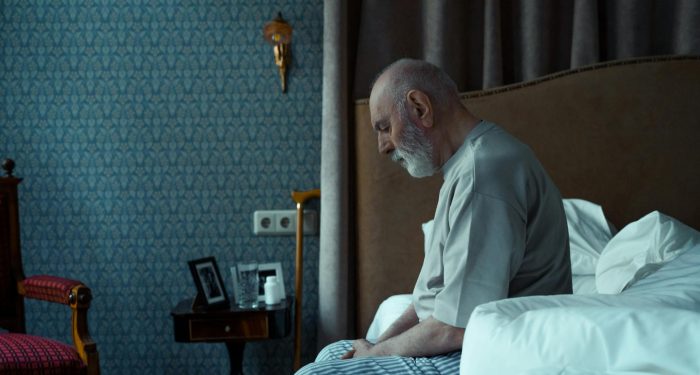
There is a tiredness that lives in the space between having nothing you must do and having nothing you want to do—and no amount of rest will touch it.

Add VegOut to your Google News feed. 
I noticed it first on a Wednesday. Not because anything happened on that Wednesday—that was precisely the point. I had slept almost nine hours the night before, which is more than I'd gotten on any single night during my years blogging on deadline or grinding through freelance assignments. I woke without an alarm. I made coffee in a quiet kitchen. I sat at the table with my laptop open to nothing in particular and looked out the window at the Venice Beach street where nothing required me. And I felt a tiredness so heavy it sat behind my eyes like a stone.
It wasn't the tiredness I remembered from years of late-night writing sessions—filing pieces at two in the morning, refreshing analytics dashboards compulsively, running an indie music blog that devoured every waking hour. It wasn't the tiredness of grief, which I know well enough to recognize by its particular weight. This was something else entirely—a tiredness that seemed to come from nowhere and respond to nothing. Not to sleep, not to vitamins, not to the long walks people kept suggesting.
It was the tiredness of a life that had become structureless, and I didn't know what to call it until I stopped trying to fix it and started trying to understand it.
When Freedom Becomes a Void
I went through a stretch about two years ago where everything professional sort of... evaporated. I'd stepped back from the music blog. My freelance pipeline had dried up. I was between projects in the way that sounds liberating when you describe it to someone at a dinner party but feels like falling when you're actually living it.
I'd fantasized about open mornings for years—days without obligations, about finally having the luxury of waking when my body decided to wake. I stopped setting an alarm because nothing required me to be awake at a specific time, and for a few weeks it felt like liberation. Then it began to feel like something else.
Not sadness, exactly. Not depression in the clinical sense. But an ambient exhaustion that seemed to thicken the air in every room I entered.
The psychologist Martin Seligman, in his foundational work on positive psychology, identified what he called "the pleasant life" versus "the meaningful life." The pleasant life is about comfort, ease, the removal of stressors. The meaningful life is about engagement—about being pulled into something that uses you fully. What I didn't understand until I was living it is that you can have a perfectly pleasant life and feel absolutely hollowed out by it.
Comfort without purpose doesn't restore you. It drains you in a way that mimics rest while delivering none of its actual benefits.
My days were completely open and completely empty at the same time. I could do anything, which meant I did almost nothing. The paradox of unlimited choice producing paralysis—psychologists have studied it extensively. But knowing the name of the trap doesn't spring you from it.
The Body Lies Down While the Self Disappears
There's a term I came across that changed how I understood what was happening to me. Researchers call it "languishing"—a concept the organizational psychologist Adam Grant brought into public conversation, drawing on work by sociologist Corey Keyes. Languishing isn't depression. It's not burnout. It's the absence of well-being—a kind of emotional flatline where you're not suffering acutely but you're not functioning fully either.
You're just... present. Technically alive. Going through motions that don't connect to anything that matters.
I recognized myself in that description so immediately it startled me. I was languishing. I had been languishing for what I now realize was the better part of a year, and I had been calling it "tired" because that was the only vocabulary I had for a body that wanted to lie down and a mind that couldn't explain why.
The thing about languishing is that it's invisible. Nobody worries about you. You're not crying. You're not missing appointments—you don't have appointments to miss. You're eating. You're sleeping. You're answering texts when your friends check in. You look fine. You are fine, technically.
But fine has become a kind of coffin you climb into every morning and lie very still inside of, waiting for something to happen that never does.
The Architecture of a Day Without Stakes
When I was running the blog, working around the clock, chasing interviews and album drops and trying to build something from nothing—I used to fantasize about what I'd do with unstructured time. I had lists. Mental lists, notes-app lists, lists scribbled on napkins at shows. I would surf more. I would finally learn to cook properly. I would read all the novels I'd been saving. I would write something longer—something meaningful. I would walk every morning at sunrise along the boardwalk.
What I did not anticipate is that desire itself requires scaffolding. You don't just want things in a vacuum. You want them in relationship to something—to a schedule that constrains you, to a life that demands you show up, to the pressure of limited time that makes leisure feel earned. Remove all of that, and the wanting drains out like water through a sieve.
The hardest part wasn't finding something new. The hardest part was admitting I'd spent years not wanting anything for myself outside of work.
I started paying attention to which hours felt the heaviest. It was always mid-afternoon—around two or three o'clock—when the tiredness became almost unbearable. Not coincidentally, this was exactly the time of day that used to be my busiest. Editing pieces, fielding emails, coordinating with contributors. The feeling of being needed in twelve directions at once.
I had hated it then. I would have given anything for a quiet afternoon. Now I had nothing but quiet afternoons, and they were swallowing me.
What Purpose Actually Does to the Brain
I started reading about this—partly out of curiosity, partly out of desperation. Research from Patrick Hill and Nicholas Turiano, published in Psychological Science, found that having a sense of purpose in life was associated with reduced mortality risk across the entire adult lifespan. Not just reduced sadness or improved mood—reduced death. Purpose, it turns out, isn't a luxury or a philosophical nicety. It's a biological requirement.
The body knows when it has something to show up for, and it responds accordingly. Remove the reason to show up, and the body begins to wind down in ways that feel exactly like tiredness but are actually something closer to withdrawal.
This is what nobody tells you about any major life transition that removes structure—whether it's leaving a career, ending a relationship, finishing a big project, or just hitting a fallow stretch in your freelance life. The moments when the emptiness hits hardest aren't the dramatic ones. They're the unremarkable ones. Tuesday at two in the afternoon. Saturday morning when you realize Saturday no longer means anything different from Wednesday. The slow erosion of temporal landmarks until every day feels like the same beige corridor stretching forward without end.
The Kitchen as a Starting Place
I went vegan about eight years ago—after watching a documentary that I initially put on as background noise while I was doing dishes. It wasn't a health scare or a dramatic epiphany. It was more like a slow click, like something I'd been circling for a long time finally locked into place. But during this stretch of languishing, my veganism became something unexpected: an anchor.
My partner isn't vegan—we've been together long enough that this is just part of our rhythm, not a source of conflict. But it means I'm always making deliberate choices about food. I can't just autopilot through meals. I have to plan. I have to think. I have to stand in the grocery store and read labels and ask questions and sometimes feel like I'm solving a small, pleasant puzzle just to figure out dinner.
That friction—the inconvenience, the learning curve, the small daily problem-solving—did more for my tiredness than any supplement or sleep hygiene routine ever had. Because the tiredness was never about the body. It was about the self. It was about having nowhere to place my attention that felt like it mattered.
There's a specific kind of aloneness that comes from being the only vegan at the table—every shared meal suddenly requires a quiet negotiation. But there's also something else that nobody talks about: the way choosing your food with intention makes you feel like a person who is choosing, period. Like someone who still has agency over the shape of his days. I've always believed in showing rather than telling when it comes to this stuff—I don't lecture my partner, don't evangelize at dinner parties. But the act of preparing a meal with care and attention, of making something that required thought and presence—that became a kind of daily proof that I was still here, still making decisions, still engaged with being alive.
Rebuilding the Scaffolding
I don't want to pretend I've solved this, because I haven't. Some mornings the tiredness still finds me before I've finished my coffee. Some weeks it settles in like the marine layer outside my window and doesn't lift until something—a call from an editor, an afternoon surfing, a neighbor stopping by to talk about nothing—breaks the spell.
But I've learned a few things.
I've learned that this particular exhaustion is a signal, not a sentence. It's the self saying I need to be used for something. It's the mind asking for stakes—even small ones. Even invented ones. It doesn't have to be a career. It doesn't have to be a cause. Sometimes it's just committing to bringing a plant-based dish to a friend's gathering and knowing that someone is expecting you to show up.
Research on social prescribing and community engagement confirms what I've felt in my bones: it's the combination of purpose and connection that restores energy. Not rest. Not relaxation. Not the absence of demand. But the presence of something worth getting out of bed for—even if that something is modest, even if nobody applauds it, even if the only person who notices is you.
I think about all the people I know—writers, creatives, freelancers, anyone who's hit a stretch where the work dries up or the structure collapses—who describe this same tiredness and are told to sleep more, exercise more, take magnesium, try meditation. And I want to say: this tiredness is not a deficiency of the body. It is the exhaustion of a life that has lost its shape.
And the only cure I've found is to start building the shape back, one small deliberate act at a time—one meal prepared with attention, one morning committed to something other than survival, one Tuesday afternoon at two o'clock when you decide that you, and your hours, still matter enough to fill with something that asks you to be fully here.
The tiredness doesn't vanish. But it loosens its grip. And some mornings—more now than before—I wake up and the first thing I feel isn't the weight. It's the faintest pull of something ahead, waiting for me to arrive.
What’s Your Plant-Powered Archetype?
Ever wonder what your everyday habits say about your deeper purpose—and how they ripple out to impact the planet?
This 90-second quiz reveals the plant-powered role you’re here to play, and the tiny shift that makes it even more powerful.
12 fun questions. Instant results. Surprisingly accurate.