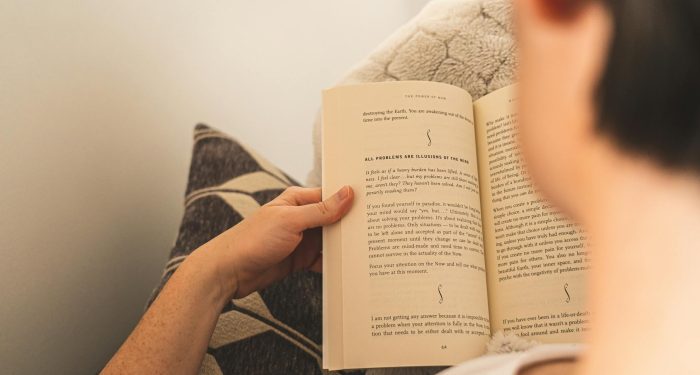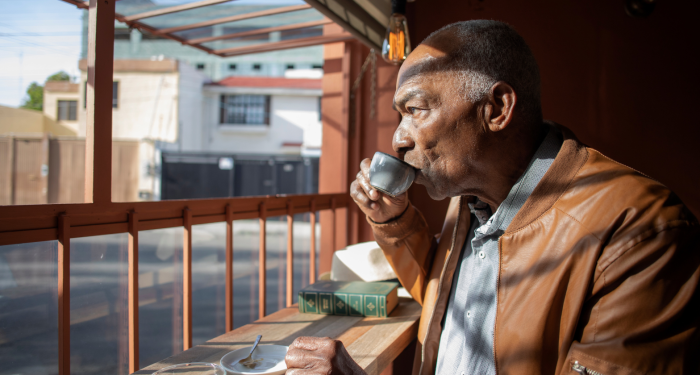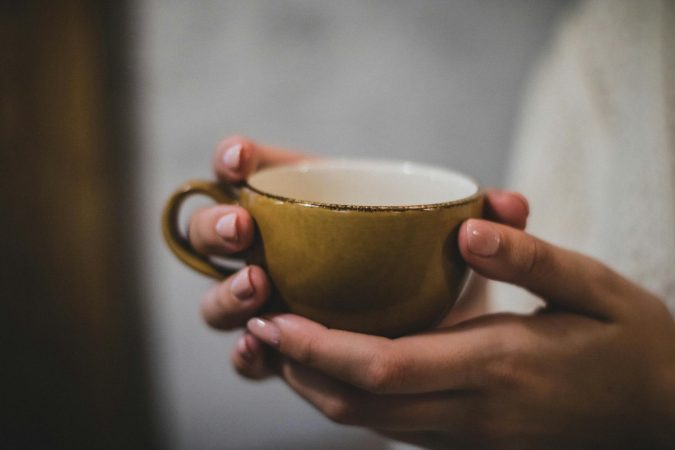
The morning coffee ritual has almost nothing to do with caffeine and almost everything to do with being briefly, mercifully unaccountable to anyone.
Morning coffee is the last socially acceptable form of doing absolutely nothing. Every other pause in a modern adult's day requires justification, a reason, an apology. You can't sit in your car for ten minutes without someone texting to ask where you are. You can't stare out a window at work without a colleague assuming you've lost focus. You can't take a slow walk around the block without framing it as exercise. But you can stand in a kitchen at 6:47 a.m. holding a warm mug, and no one on earth will ask you to explain yourself.
The conventional wisdom says coffee dependency is a chemical story. Adenosine receptors, dopamine pathways, the half-life of caffeine in the bloodstream. We've built an entire cultural shorthand around it: "Don't talk to me before my coffee," printed on mugs and t-shirts and office signs, as though the molecule itself were the barrier between chaos and function. But that framing misses something enormous. Because I've watched people clutch decaf with the same white-knuckled reverence. I've watched people who switched to herbal tea guard that first morning cup with identical ferocity. The substance changes. The devotion doesn't.
What stays constant is the pause.
The Architecture of a Protected Moment
I spent years working in professional kitchens and luxury hospitality, where mornings started before dawn and the first hours belonged to prep lists, inventory counts, and the particular tyranny of a breakfast service that had to be flawless by 7 a.m. In those environments, the five minutes someone took with their coffee before the shift started were treated as sacred. Not because the coffee was exceptional (it was usually terrible, the burned dregs of a pot brewed hours ago). Because it was the last moment before the day owned you entirely.
I noticed the same thing later, working as a private chef for wealthy families. These were people who could afford the finest single-origin beans, precision brewing equipment, custom blends flown in from small farms. And yet the part they valued had nothing to do with the bean. It was the ritual: the sound of water heating, the particular rhythm of pouring, the permission to stand still while the rest of the house was still quiet.
The mug was a prop. The real performance was stillness.
When I lived in Bangkok for three years, I befriended a man who ran a small coffee cart near Chatuchak Market. He served simple Thai-style coffee, sweet and strong, in small plastic bags with straws. Every morning, a cluster of regulars would stand around his cart, not really talking, just holding their bags of coffee and watching the market wake up. Nobody checked a phone. Nobody rushed. It was ten minutes of collective agreement that the day hadn't started yet.
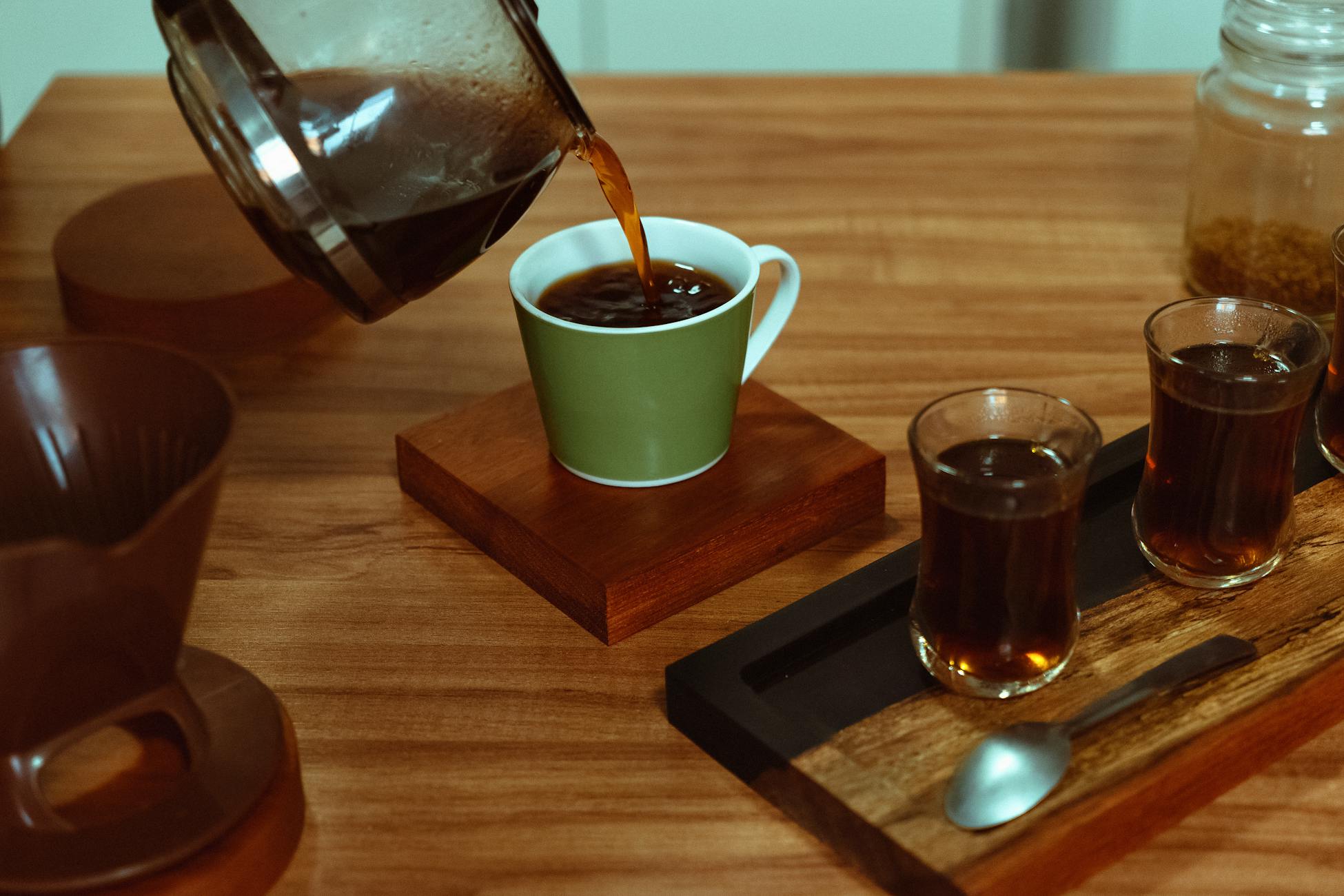
That cart taught me something I couldn't articulate until much later: the coffee wasn't fueling the day. It was postponing it.
What We're Actually Addicted To
Research consistently shows that stress affects the daily lives of many adults, and the sources range from financial pressure to relationship strain to the low-grade hum of digital overload. In that context, the morning coffee ritual starts to look less like a caffeine delivery system and more like a survival strategy. A negotiated ceasefire between the person you were in sleep and the person everyone needs you to become by 9 a.m.
I think about this often because I keep the same breakfast order every time I eat out: Greek yogurt with honey and black coffee. People assume the consistency is about preference. The consistency is about one fewer decision. One small territory in my day that belongs to me before the requests begin.
The Thai word "sabai" captures something close to what I mean. It translates roughly to ease, comfort, contentment, but the texture of the word is more specific than any English equivalent. Sabai is the absence of being pulled somewhere. Coffee, for many people, is their only sabai moment. The brief window where they are not a parent, not an employee, not a partner managing someone else's emotional weather. They are a person holding something warm.
That distinction matters. Because when someone says "I can't function without my morning coffee," they are reporting, with remarkable accuracy, what happens when you remove the only protected pause in a person's day. They aren't describing withdrawal. They're describing what it feels like to go from sleep directly into obligation with no buffer.
The Warmth Is Doing More Than You Think
There's a reason people wrap both hands around a mug, even in a warm room. There's a reason the first sip lands differently than the fifth. There's a reason nobody says they "need" their afternoon coffee with the same urgency as the morning one, even though the caffeine content is identical.
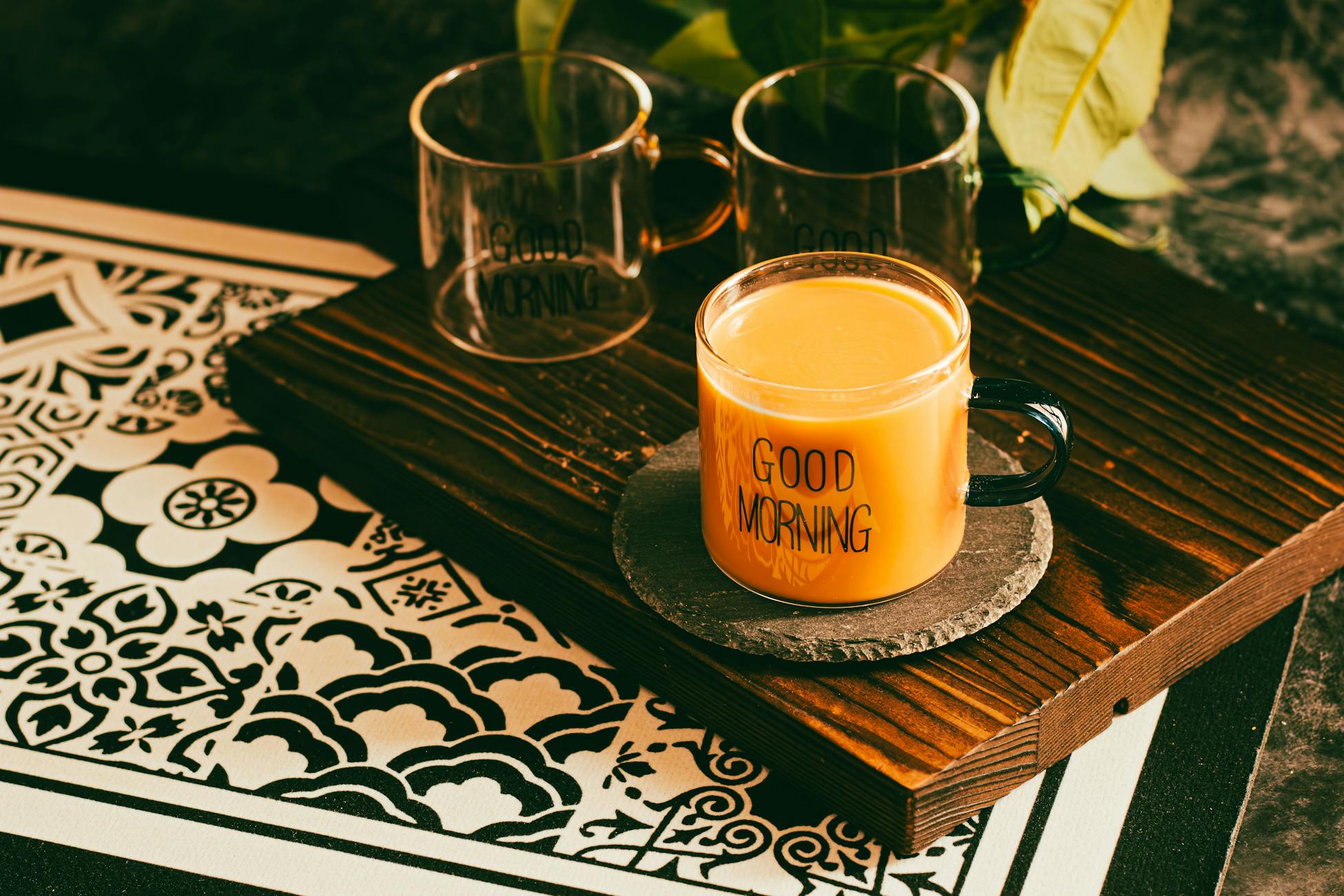
The morning version carries warmth at a moment when the nervous system is transitioning from the relative safety of sleep to the alertness the day demands. The physical warmth of a cup held close to the chest mirrors the conditions the body associates with safety: proximity, heat, containment. It resembles being held without requiring another person to do the holding.
Research suggests that even brief moments of deliberate presence (noticing physical sensations, grounding in the body) can help reduce stress responses. The morning coffee ritual, whether people realize it or not, often functions as exactly this kind of practice. The warmth in the hands. The steam rising. The smell preceding the taste. Every sensory channel engaged in something that asks nothing of you in return.
The ritual creates a container. And the container is where people locate themselves before the day scatters them.
Why We Can't Just Say We Need Rest
Something worth sitting with: if the morning coffee ritual is really about needing a protected moment, why can't people just say that? Why does the need get funneled through a beverage instead of named for what it is?
Because naming it would mean admitting the rest of the day offers no equivalent. Naming it would mean confessing that you've built a life where five minutes of uninterrupted stillness is available only if you attach it to a socially legible task. Nobody questions the person making coffee. Everyone questions the person sitting quietly in a chair doing nothing at 6:45 in the morning.
Many adults grew up in homes where love was earned by being no trouble at all. That conditioning runs deep. It produces adults who cannot rest without a justification for the rest. Coffee provides the justification. The mug in the hand is evidence of activity. You are doing something: you are drinking coffee. You are not just standing in your kitchen, existing, needing nothing and providing nothing. That would be indulgent. That would be suspicious.
The entire performance is a workaround for a culture that treats stillness as laziness and presence as unproductive.
What Happens When the Ritual Breaks
I've seen what happens when people lose the ritual. A kitchen renovation that displaces the coffee maker. A schedule change that eliminates the quiet window. A new baby who fills the pre-dawn hours with need. The reaction is disproportionate to the loss of a beverage. It looks, and feels, like grief.
Because the ritual was load-bearing. It was holding up something the person hadn't built any other support for.
This is adjacent to what I've observed in people approaching retirement, or any major life transition where the scaffolding of routine disappears. The decision-making authority over small daily details turns out to be the architecture of identity. Coffee at a certain time, in a certain mug, in a certain spot in the kitchen: these are not trivial preferences. They are anchors.
And the people who lose them without building replacements don't just miss the coffee. They miss the version of themselves that existed inside the ritual.
Holding Something Warm
When I came back to the States after three years in Thailand, I experienced a kind of reverse culture shock that had nothing to do with traffic or portion sizes. It was the speed at which people moved from one demand to the next. The absence of transition. The alarm went off and the day was already happening, fully formed, before anyone's feet hit the floor.
I started protecting my mornings with a deliberateness that confused people. Meditation first, then breakfast, then coffee, and none of it rushed. Friends asked how I "had time" for all that. I was baffled by the question. The morning was right there. All I had to do was stop giving it away before I'd used it.
Engaging in activities that support self-care, even ones as small as a deliberate morning pause, can reduce stress and anxiety in measurable ways. But the measurement almost doesn't matter. What matters is the felt experience of one moment where you are not performing, not producing, not managing anyone else's needs.
The people who say they can't function without their morning coffee know exactly what they need. They just don't have the language for it yet, or they do, but the language sounds too vulnerable to say out loud: I need five minutes where nobody needs me.
So they say coffee. And they hold the mug with both hands. And for a few minutes, the day waits.
The philosopher in me wants to call this a crisis of permission. The hospitality professional in me wants to call it a design failure: we've built lives with no margin, no buffer, no access to an internal world that isn't monetized or scheduled. But the person in me who still thinks about that coffee cart near Chatuchak, the quiet cluster of people standing in the early heat, holding their plastic bags and watching the market come alive, just wants to say something simpler.
You deserve more than one moment a day where nothing is expected of you. The coffee is a good start. But the mug should be a doorway, not the entire room.
What’s Your Plant-Powered Archetype?
Ever wonder what your everyday habits say about your deeper purpose—and how they ripple out to impact the planet?
This 90-second quiz reveals the plant-powered role you’re here to play, and the tiny shift that makes it even more powerful.
12 fun questions. Instant results. Surprisingly accurate.