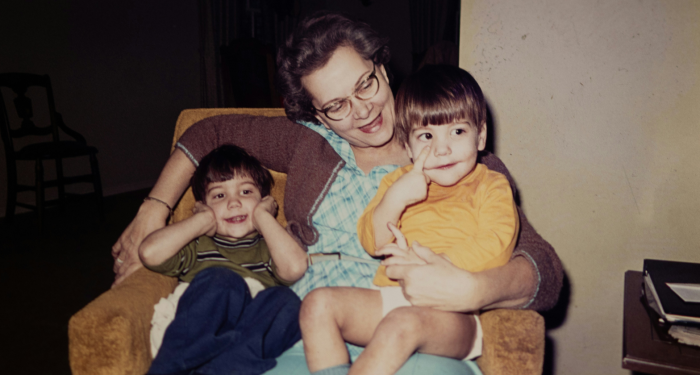
The bean soup my grandmother made to keep five children alive through a Pennsylvania winter now sits on a ceramic plate under microgreens, and nobody at the table knows they're eating survival.

Add VegOut to your Google News feed. 
Last month I sat in a restaurant in a gentrified neighborhood here in Austin—the kind with exposed brick that used to just be called "old wall"—and watched a couple photograph a bowl of white bean and root vegetable stew. The menu described it as "heirloom legume potage with foraged herbs and seasonal tubers, served with house-fermented sourdough." Twenty-eight dollars.
I did the math in my head before I could stop myself, because that's what happens when you've spent years in professional kitchens—you calculate, invisibly, reflexively, the way other people breathe. A pound of dried navy beans costs about a dollar sixty. A few carrots, a couple of potatoes, an onion, maybe three dollars total. The bread, if you bake it yourself the way my grandmother did because buying it was an extravagance, costs pennies per loaf. The entire pot she made—the one that fed her family for two days—probably ran her under four dollars in 1974 money. Adjusted for inflation, maybe twenty bucks today.
And here it was, a single serving, artfully smeared across handmade stoneware, costing more than the whole original pot.
The couple didn't know any of this. They weren't supposed to. The restaurant had done its job: it had severed the dish from its origins so completely that what arrived at the table was no longer survival food. It was an experience. It was aesthetic.
The Alchemy of Forgetting Where Things Come From
There's a particular kind of cultural magic trick that happens when poverty food becomes restaurant food. The ingredients stay roughly the same, but everything around them changes—the lighting, the language, the story being told.
Beans and rice become "Caribbean-inspired grain bowls." Potato soup becomes "vichyssoise reimagined." Cornbread gets drizzled with honey and served on a wooden board with a sprig of rosemary, and suddenly it's not what someone's mother made because the groceries had to last until Friday. It's rustic. It's farmhouse. It's intentional.
The word that does the heaviest lifting in this transformation is "simple." Farm-to-table menus love calling things simple. Simple preparations. Simple ingredients. As if simplicity were a philosophical choice rather than what happens when you open a cupboard and there are three things in it.
I spent years training under European chefs in luxury hospitality, and I can tell you—the language of fine dining is engineered to perform this trick. The dinners that working-class families survived on week after week weren't simple because someone read Michael Pollan and decided to honor the integrity of the carrot. They were simple because there was no money for complexity.
This distinction matters—not because enjoying a well-made bowl of beans is wrong, but because the erasure of context is a form of theft. When you strip a dish of its economic origins and dress it in the language of artisanal intention, you're not celebrating the people who created it. You're replacing them.
Scarcity as Invisible Architecture
I've been thinking a lot about a concept that sociologists call the scarcity mindset—first rigorously explored by Sendhil Mullainathan and Eldar Shafir in their landmark 2013 research published in Science. Their work demonstrated that poverty doesn't just limit what you can buy. It reshapes how you think. The constant mental labor of managing insufficiency—stretching a grocery budget, deciding which bill to pay late, calculating whether you can afford the off-brand peanut butter this week—creates a cognitive bandwidth tax that literally reduces the mental resources available for other decisions.
It's an invisible architecture that structures every waking moment.
My grandmother didn't have language for this. She just knew that by Wednesday she'd done so much math in her head that she was tired in a way that sleep couldn't fix. She knew that the bean soup wasn't a recipe so much as an equation—protein multiplied by volume divided by the number of mouths, solved for the variable of whatever was cheapest at the store that week.
I think about her every time I host a dinner at my place—a little 1920s bungalow where I cook for friends most weekends. I have the luxury of choosing constraints. I can decide to make a five-dollar plant-based meal because I find it meditative, because the Thai concept of sabai—that unhurried contentment I absorbed during three years in Bangkok—has taught me to find satisfaction in enough rather than excess. But my grandmother didn't choose her constraints. They chose her.
And here's the thing nobody talks about: those constraints produced genuinely extraordinary food. Not accidentally, not despite the limitations, but because of them. Generations of working-class cooks—disproportionately women, disproportionately women of color—developed extraordinary culinary intelligence precisely because they had to. When you can't afford to waste a single ingredient, you learn things about flavor, technique, and resourcefulness that no culinary school teaches.
The kind of plant-based meals you can make for under five dollars aren't lesser food. They carry the accumulated wisdom of people who had to be brilliant with almost nothing.
The Performance of Authenticity
What fascinates me—and what I find increasingly difficult to sit with—is the specific way affluent food culture performs its admiration for these traditions.
The farm-to-table movement didn't invent the idea of eating locally and seasonally. Poor people have always eaten locally and seasonally, because they couldn't afford to do otherwise. They ate what grew near them, what was in season, what their neighbors had surplus of. The concept of "eating with the seasons" is just what scarcity looks like when you describe it from the outside.
Geographer Julie Guthman's research on food gentrification has documented how the alternative food movement often reproduces the very class hierarchies it claims to challenge. The farmers' market, the CSA box, the artisanal bakery—these spaces are coded as virtuous, but they're also coded as expensive. They take the practices of necessity and repackage them as practices of privilege.
The working-class family buying whatever vegetables are cheapest this week isn't "eating seasonally." They're just poor. But put the same vegetables in a wicker basket with a chalkboard sign listing the farm they came from, and suddenly it's a lifestyle.
I think about this every time I see the word "humble" on a menu. Humble ingredients. Humble preparations. The word is doing something insidious—it's acknowledging that these foods come from poverty while simultaneously neutralizing that acknowledgment. Calling something humble is a way of gesturing toward class without actually engaging with it. It lets the diner feel a kind of borrowed authenticity without confronting any of the material conditions that produced it.
What Gets Romanticized and What Gets Remembered
There's a psychological phenomenon that's relevant here—what researchers call the fading affect bias, extensively studied by W. Richard Walker and colleagues. The unpleasant emotions associated with memories tend to fade faster than the pleasant ones. Over time, we remember the warmth of the kitchen but not the anxiety of the empty refrigerator. We remember the togetherness of a shared meal but not the reason everyone was eating the same pot of soup for the third night in a row.
Nostalgia is a selective editor, and it's very good at its job.
This is what makes the romanticization of poverty food so psychologically effective. It maps perfectly onto how memory already works. We want to believe that the bean soup was about love rather than about math. We want the story to be about a grandmother who chose to cook from the heart, not one who was terrified about making rent. And the farm-to-table restaurant gives us permission to believe that cleaned-up version of the story.
It says: this food is beautiful. It says: this food is worthy. What it doesn't say is: the people who invented this food were in pain, and many of their descendants still are.
There's a reason my generation and the ones just behind us are rediscovering these meals now. We're living through economic conditions that rhyme disturbingly with the ones our grandparents navigated—crushing housing costs, stagnant wages, the slow erosion of stability that looks different but feels familiar. The difference is that now there's an Instagram filter for it. Now scarcity comes with a hashtag.
And the question that haunts me is whether this rediscovery is an act of genuine connection—people finding their way back to ancestral knowledge—or another turn of the same wheel, another generation aestheticizing what it hasn't yet been forced to fully understand.
The Price Difference as a Moral Document
That twenty-eight-dollar bowl of bean stew isn't just expensive. It's a record. It documents the exact distance between making food to survive and making food to perform survival. It captures, in a single price tag, the way America relates to its own working class—with admiration that never converts to material support, with reverence that never becomes policy, with love that never shows up as a living wage.
There's a 2013 study published in Social Forces by Josée Johnston and Shyon Baumann that examined how food discourse constructs "authenticity" as a form of cultural capital. They found that the language used to describe food in upscale contexts consistently borrows from working-class and immigrant traditions while simultaneously distancing itself from the economic realities of those traditions. The food is authentic, but the poverty is not. The recipe is honored, but the cook is invisible.
I keep coming back to those items that cost under a dollar in 1975 and are luxury goods today, and what that trajectory reveals about how we assign value. The ingredients haven't changed. Beans are still beans. Bread is still flour and water and time. What changed is who's eating them and why—and more importantly, who's profiting from the narrative around them.
What Respect Would Actually Look Like
I don't have a clean ending for this, because I don't think the situation is clean. I eat at restaurants that charge twenty-eight dollars for bean soup. I've worked in kitchens that served dishes descended directly from poverty cooking, plated on ceramics that cost more than a week's groceries for the families who invented those dishes. The contradiction lives in me the same way it lives in the culture—uncomfortably, without resolution.
When I host dinners at my place now, I try to hold both truths at once. I cook simple plant-based meals—not because "simple" is trendy, but because I've learned from years in professional kitchens and years of living minimally that constraints produce a kind of clarity. And I try to tell the real story of where the food comes from. Not the curated version. The honest one.
But I think respect, if we're serious about it, starts with refusing the romantic version entirely. It means saying: this food exists because people were desperate, and their desperation produced genius, and that genius deserves to be compensated—not just in menu prices that go to restaurant owners, but in wages and healthcare and housing and the thousand forms of material support that would mean nobody has to be that desperate again.
It means acknowledging that the bean soup was never simple. It was the most complex thing in the room—an artifact of intelligence applied under impossible constraint, a document of love expressed through the only medium available, a survival technology refined across generations by people whose names we never learned.
And every time we call it humble, every time we photograph it under soft lighting and describe it with words designed to erase its origins, we are telling the same lie America has always told about its working class: that their suffering was beautiful, that their poverty was poetic, and that admiring them from across a cloth-napkin table is the same thing as giving a damn.
It isn't. It never was.
And the twenty-eight dollars on the check is not a tribute. It's a receipt for the distance we've traveled from knowing the difference.