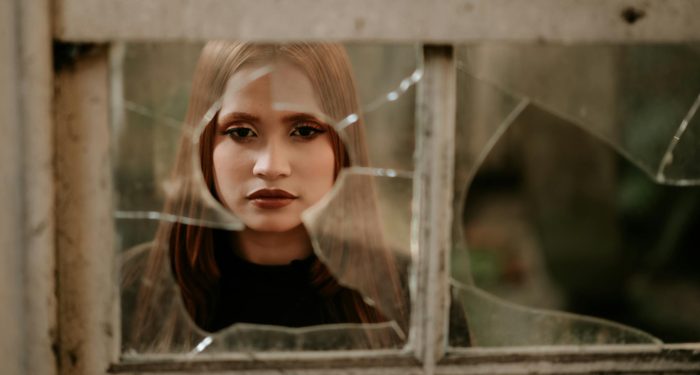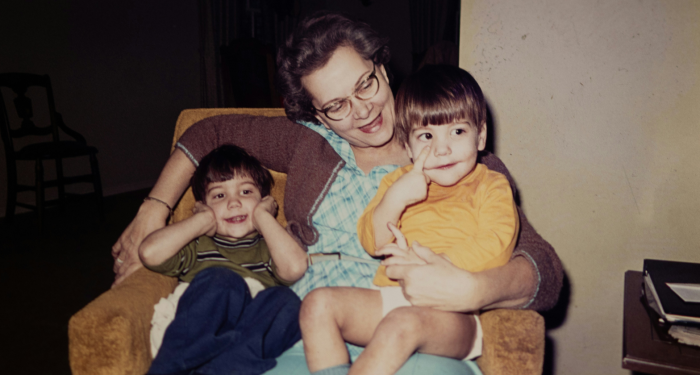
The generation that built everything with their hands is now watching those hands shake, and they have no script for admitting they're terrified.

Add VegOut to your Google News feed. 
Last month I drove my father to a cardiology appointment. He's seventy-eight. Former pipe fitter, thirty-six years at the same plant, retired with a lunchbox he still keeps on the shelf above the dryer. When the nurse asked him to describe his symptoms on a scale of one to ten, he looked at her like she'd asked him to explain the color blue to someone born blind. He said, "I'm fine." His hands were trembling against his knees. His lips had gone the color of old newspaper. He said it again: "I'm fine, really." And the nurse, who was maybe twenty-eight, nodded and typed something into her computer, and I sat in the corner chair watching a man who once set his own broken finger with electrical tape try to find a single word for the terror I could see pooling behind his eyes.
He couldn't. He didn't have one.
The Architecture of Silence
There is a generation of people, mostly born between the late 1940s and early 1960s, who were taught that endurance was the highest form of virtue. Pain was weather. You moved through it. Complaining was a luxury reserved for people who hadn't been through real hardship, and since everyone they knew had been through real hardship, no one complained. They expressed love through acts of service: the fixed screen door, the double-checked tire pressure, the porch light that stayed on until everyone was home. What they didn't express was fear. Fear was a weed you pulled before it took root, and if you couldn't pull it, you paved over it with work.
This approach served them for decades. It carried them through factory floors and teacher's lounges, through pregnancies they didn't plan and layoffs they didn't deserve, through marriages that sometimes held and sometimes didn't. The system worked because the body cooperated. The body was a machine, and machines run if you maintain them, and maintenance meant you didn't talk about the grinding noise. You just kept going.
Now the machine is breaking down. And the manual they were given has no chapter on what to do when the body starts sending messages the mind was never trained to receive.
When the Body Becomes a Stranger
I've been watching this happen for nearly a decade now, across my own family and in the families of nearly everyone I know who grew up in a working-class or lower-middle-class household. The parents who never missed a shift, who walked off sprained ankles, who dismissed headaches with a wave and a cup of black coffee, are now sitting in waiting rooms being told words like degenerative and progressive and chronic. Words that don't mean "push through it." Words that mean "this is your body now."
The clinical research on this is devastating in its clarity. A landmark study published in the journal Psychology and Aging by Tamres, Janicki, and Helgeson (2002) found that older adults, particularly men socialized in mid-twentieth-century frameworks of stoicism, are significantly less likely to engage in emotional disclosure about health fears, even to their own physicians. They underreport symptoms. They minimize. They reframe chronic pain as "just getting old." Another study from The Gerontologist (Courtenay, 2000) documented how traditional masculinity norms directly predict delayed healthcare seeking, with men over sixty-five waiting an average of weeks longer than women to report cardiac symptoms.
These aren't statistics to me. These are my father's hands shaking against his khaki pants.
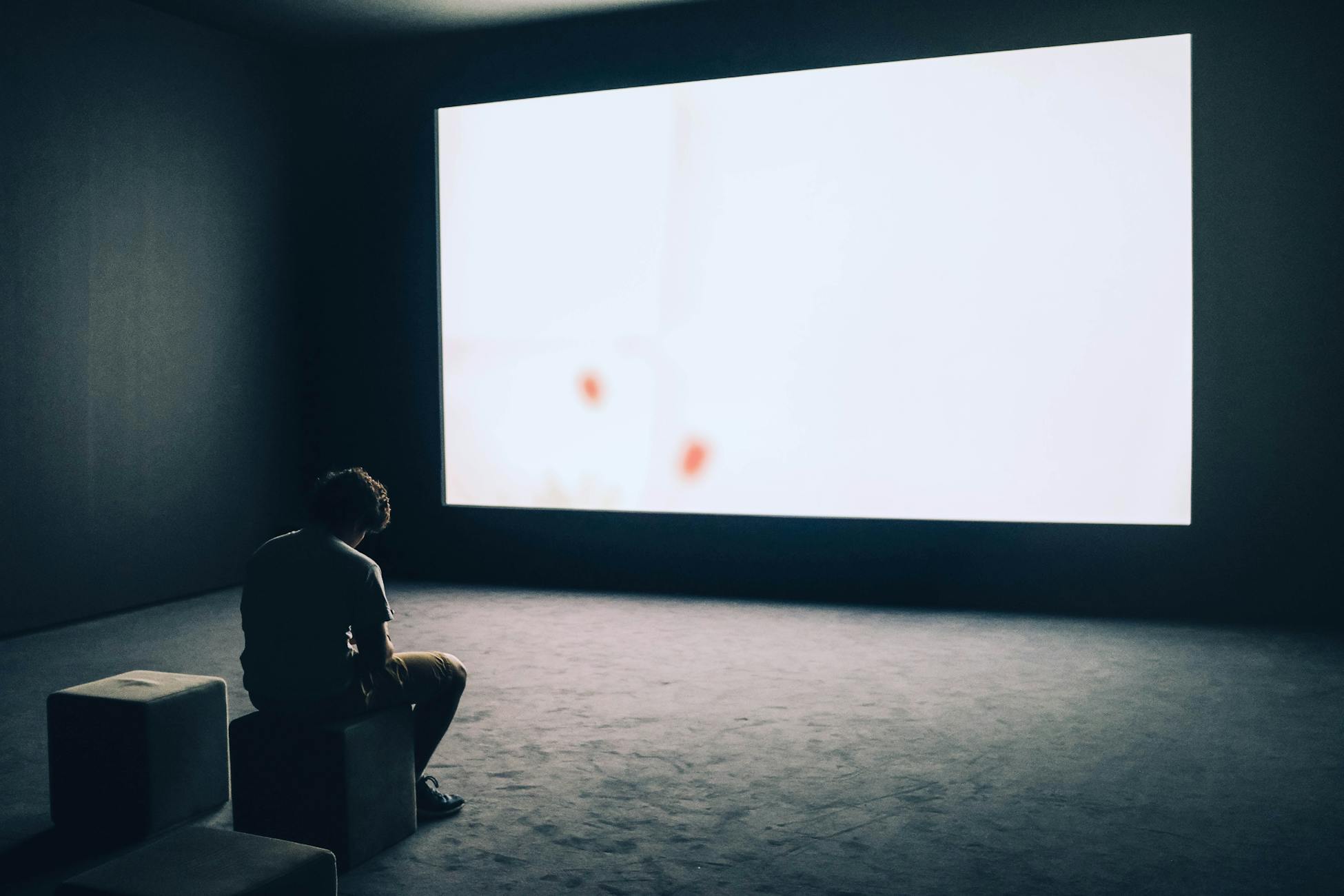
My mother was similar, though her version of silence was different. She didn't refuse to acknowledge pain. She acknowledged it, categorized it, and then filed it under "things that don't matter as much as everyone else's needs." She had a torn rotator cuff for two years before she mentioned it, and only then because she couldn't lift the turkey out of the oven at Thanksgiving. Her body had to physically fail at the act of feeding other people before she'd admit something was wrong. The hierarchy was that clear: her pain ranked below the family's dinner.
A study by Nolen-Hoeksema (2001) in Current Directions in Psychological Science described this gendered pattern with painful precision: women of this generation often develop what researchers call "communal coping," where they process distress only through the lens of how it affects their ability to care for others. Their own suffering has no independent category. It exists only as a disruption to service.
The Vocabulary That Was Never Built
Here's what I keep returning to. Men who spent forty years being the strong one reach their seventies with no idea how to say "I'm scared," and what comes out instead is irritability, withdrawal, sudden bursts of anger over things that don't warrant it. Their children interpret this as stubbornness or the crankiness of old age. They don't see that beneath the gruffness is a man standing at the edge of something he was never given a single tool to navigate.
My father doesn't know how to say: I am afraid of what is happening inside my body. He knows how to say: "The doctor's an idiot." He knows how to say: "I don't need all those pills." He knows how to say: "Your mother worries too much." Each of these sentences is a translation of the one he can't speak. Each one is a closed door with terror behind it.
And it's not that he's incapable of depth. This is the man who cried exactly once in front of me, when his dog of fourteen years died, standing in the backyard with one hand on the fence post and the other pressed flat against his own chest like he was trying to keep something from escaping. He felt everything. He just never learned the language.
The values they grew up with in the 1950s and 60s prized grit, self-reliance, discretion. Those values built bridges and raised families. They also built walls inside people that, decades later, have become load-bearing. You can't remove them without the whole structure threatening to come down.
What the Body Holds
I started paying attention to plant-based nutrition partly because of my father. After his second appointment (the one where the cardiologist used the word "blockage" and my father responded by asking about the weather), I spent three weeks reading everything I could about dietary approaches to cardiovascular inflammation. I found myself drawn not just to the science but to the philosophy underneath it: the idea that what we put into our bodies is a form of communication with ourselves. That nourishment is a kind of listening.
This was a foreign concept in the house where I grew up. Food wasn't about choice in a lower-middle-class household. It was about necessity. You ate what was there. You didn't ask if it was good for you. You asked if there was enough. The idea that food could be an act of self-care, that choosing what you eat could be a form of saying I matter enough to pay attention to this, would have seemed absurd to my parents in 1987. It still seems almost absurd to my father now, though he does eat the lentil soup I bring him on Tuesdays without complaint, which for him is practically a revolution.
The Terror Underneath
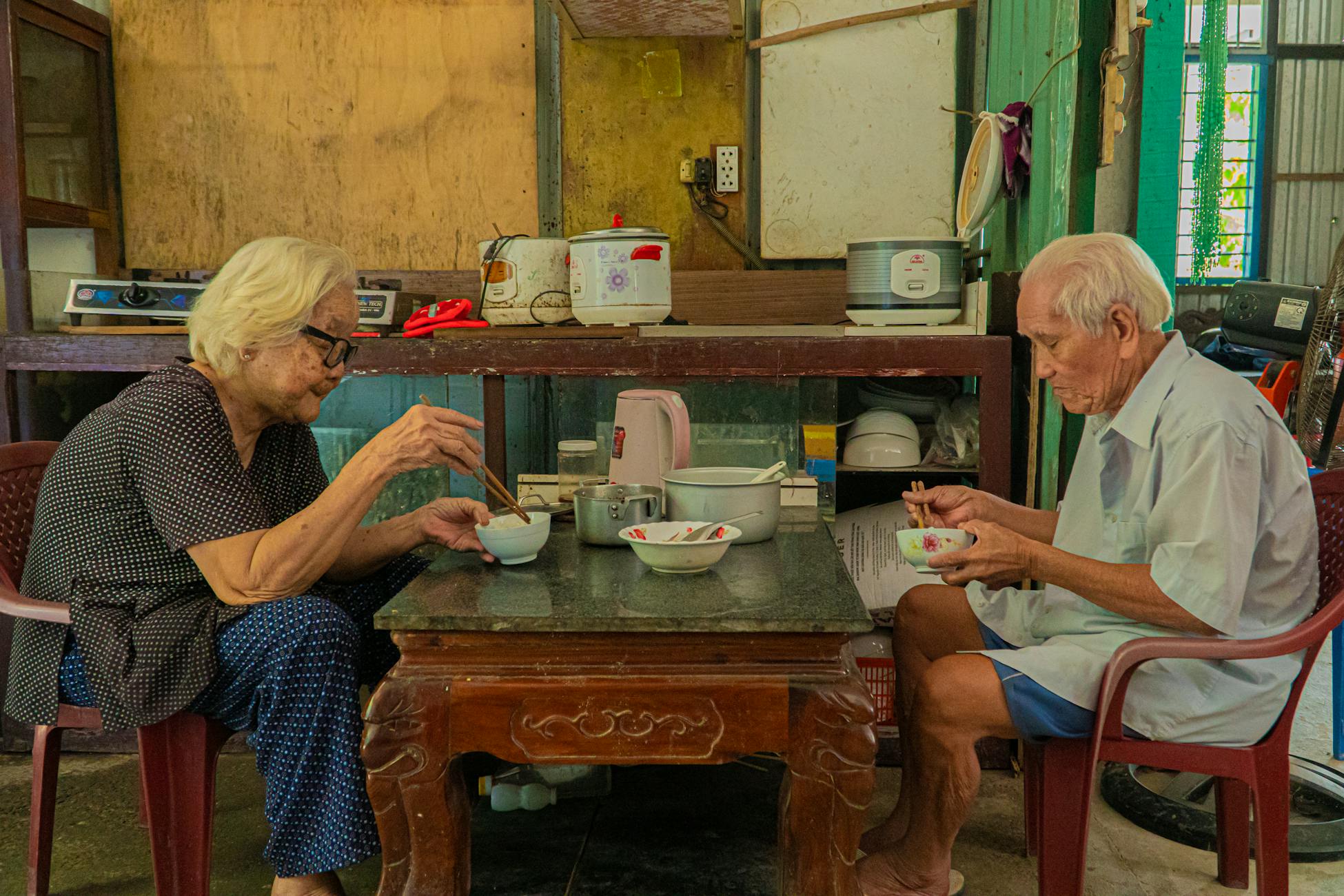
What frightens me most is the loneliness of their fear. My father sits in his recliner at night after my mother goes to bed, and I know (because my mother has told me, in her own coded language, which sounds like: "He's been staying up late again") that he is sitting in the dark with whatever the doctor said that week, turning it over, unable to share it, unable to name it, unable to set it down.
This is what toughness cannot fix. You can grit your way through a twelve-hour shift. You can walk off a bruised rib. You can bury a parent and go to work the next morning and never mention it. But you cannot grit your way through the slow recognition that your body is becoming unreliable, that the machine you trusted is sending you signals you don't know how to read, that the independence you built your entire identity around is eroding underneath you like riverbank soil.
The brochure version of retirement and the real version have almost nothing in common. The brochure shows fishing trips and grandchildren. The real version, for a lot of people like my father, looks like sitting in a cardiologist's office trying to find the word for the feeling between your ribs that you've been ignoring for six months because naming it would mean admitting you are not, in fact, fine.
What I Wish I Could Give Them
I don't have a neat ending for this. I don't think there is one. My father won't suddenly start journaling about his feelings. My mother won't stop deflecting her own pain through concern for everyone else's. They are who they were made into, and at seventy-eight and seventy-five, the architecture of their emotional lives is as fixed as the foundation of the house they've lived in for forty-one years.
But I can sit with him. I can drive him to the appointment. I can bring the lentil soup on Tuesdays and not make a production of it. I can say, "That sounds scary, Dad," when he tells me the doctor wants to run more tests, even though I know he'll wave it away. I can say it so that the words exist in the room, even if he can't say them himself. I can offer the language, like leaving a door open that he may never walk through but will at least know is there.
Last Tuesday, after the appointment, we sat in the car in the parking lot for a while. He didn't start the engine right away. He looked out the windshield at nothing in particular. Then he said, quietly, almost to himself: "I don't like this." Three words. For a man who has said "I'm fine" ten thousand times, those three words were an entire confession. I put my hand on his arm and said nothing, because sometimes the bravest thing you can do for someone who was never allowed to be afraid is to simply be present when they finally are.
If You Were a Healing Herb, Which Would You Be?
Each herb holds a unique kind of magic — soothing, awakening, grounding, or clarifying.
This 9-question quiz reveals the healing plant that mirrors your energy right now and what it says about your natural rhythm.
✨ Instant results. Deeply insightful.

Adam Kelton
Adam Kelton is a writer and culinary professional with deep experience in luxury food and beverage. He began his career in fine-dining restaurants and boutique hotels, training under seasoned chefs and learning classical European technique, menu development, and service precision. He later managed small kitchen teams, coordinated wine programs, and designed seasonal tasting menus that balanced creativity with consistency.
After more than a decade in hospitality, Adam transitioned into private-chef work and food consulting. His clients have included executives, wellness retreats, and lifestyle brands looking to develop flavor-forward, plant-focused menus. He has also advised on recipe testing, product launches, and brand storytelling for food and beverage startups.
At VegOut, Adam brings this experience to his writing on personal development, entrepreneurship, relationships, and food culture. He connects lessons from the kitchen with principles of growth, discipline, and self-mastery.
Outside of work, Adam enjoys strength training, exploring food scenes around the world, and reading nonfiction about psychology, leadership, and creativity. He believes that excellence in cooking and in life comes from attention to detail, curiosity, and consistent practice.
More Articles by Adam