
The exhaustion you feel after a dinner party has nothing to do with your Myers-Briggs type and everything to do with a labor you were never taught to notice yourself performing.

Add VegOut to your Google News feed. 
Post-social exhaustion is real, measurable, and almost universally misdiagnosed. You leave a birthday party, a work happy hour, a friend's housewarming, and you feel like you ran a marathon in dress shoes. Your body aches. Your brain feels carbonated. You want silence the way a dehydrated person wants water. And the explanation you've been handed — "I'm just an introvert" — feels right enough that you never look further. But that explanation is incomplete, and in many cases, flatly wrong.
The conventional wisdom says the introversion-extroversion spectrum explains social fatigue. Introverts lose energy in groups; extroverts gain it. Clean binary. Easy to understand. The problem is that I've watched card-carrying extroverts collapse on their couches after hosting dinner, unable to form a sentence. I've seen people who genuinely love socializing describe a kind of bone-deep tiredness that has nothing to do with wanting to be alone and everything to do with what they were actually doing while they were "socializing." They weren't just talking. They were working.
What most people believe is that social events drain energy the way exercise drains a battery — through sheer output. But what actually drains the battery is a specific kind of invisible cognitive labor: the continuous, unconscious management of other people's emotional comfort. And the reason you don't recognize it as labor is that you've been doing it since childhood.
The labor nobody taught you to name
The term for this is emotional labor, and while sociologists have used it to describe the work flight attendants and service workers perform — managing their own emotions to produce a desired emotional state in someone else — the concept has expanded far beyond professional settings. It now describes something millions of people do in every social interaction, without a job title and without pay.
Think about what you actually do at a social gathering. You scan the room for who looks uncomfortable. You adjust your laugh based on who told the joke. You modulate your opinions depending on the political temperature of the group. You ask questions you already know the answers to because the other person seems to need the conversational space. You nod at the right moments. You excuse yourself from one conversation and enter another, carrying a mental ledger of who you've spoken to and who might feel neglected.
None of that is conversation. All of it is management.
And the critical distinction is this: you're not managing your own comfort. You're managing theirs. Your nervous system is allocated almost entirely to the project of making sure no one in the room feels awkward, ignored, or bored. Your own experience of the event becomes secondary. Sometimes it disappears entirely.
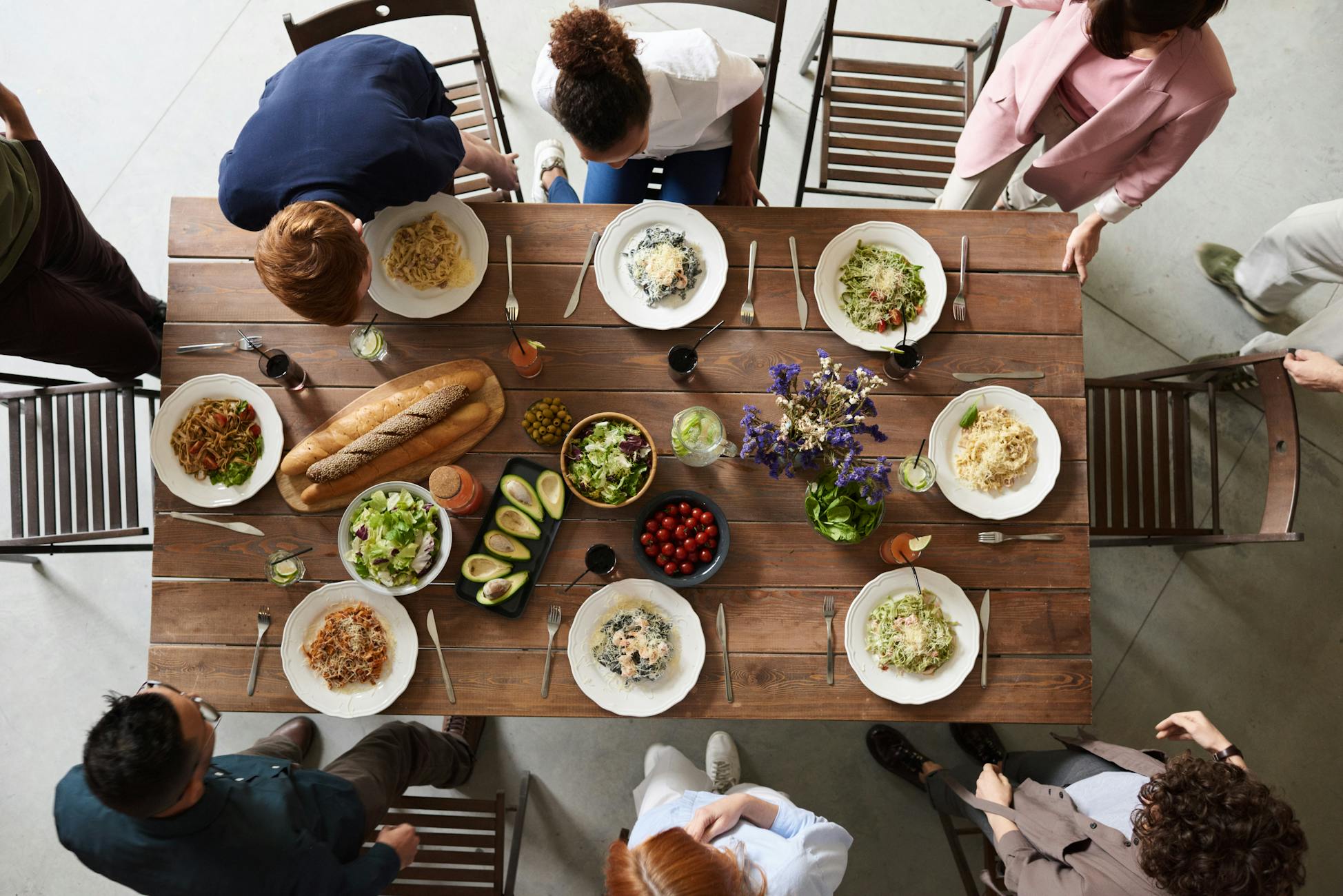
I recognized this pattern in myself a few years ago, after hosting a small dinner at my place. Six people. Good food. Nobody was difficult. And afterward, sitting in my kitchen at eleven o'clock, I felt gutted. Emptied. I'd spent three hours making sure everyone's wine glass was full, that the quieter guest got pulled into conversation, that no silence lasted long enough to become uncomfortable. I'd been a thermostat for the entire room, adjusting the emotional temperature minute by minute. By the end, I had nothing left for myself because I'd given it all away in increments so small I never noticed the spending.
Where the pattern gets installed
People who do this didn't learn it at a seminar. Research suggests they often learned it in childhood, frequently in a home where someone's emotional state was unpredictable and the child's survival strategy was to become exquisitely attuned to other people's moods. The skill appears to develop early: reading facial micro-expressions, detecting vocal tone shifts, sensing when a parent is about to become upset before the parent knows it themselves.
By adulthood, this attunement operates on autopilot. You walk into a room and your nervous system starts scanning. Who's tense? Who's performing enthusiasm they don't feel? Who needs to be acknowledged? The scanning is so automatic that you experience it as "just being social." You don't experience it as work because you've never known socialization without it.
Children who grow up in emotionally distant households sometimes develop the opposite pattern — withdrawal. But children who grew up in emotionally volatile households may develop this one: hypervigilant warmth. They become the person everyone describes as "so easy to be around" without ever asking what that ease costs the person producing it.
The cost, over the course of a three-hour event, is enormous. Your brain is running constant social calculations, processing multiple conversational threads and monitoring for interpersonal dynamics. And none of this cognitive expenditure is directed at your own enjoyment. The entire apparatus is pointed outward.
Why the introversion label feels right but misses the point
The introversion explanation is seductive because it's half true. Research suggests that introversion may correlate with a lower threshold for social stimulation. Research on extroversion, introversion, and social behaviors consistently shows that the binary is an oversimplification, that both types can experience social fatigue depending on context and behavior during the interaction.
The real variable isn't whether you gain or lose energy from people. The real variable is what you're doing with your attention while you're around them.
A person who attends a party and spends three hours genuinely absorbed in conversation — saying what they think, laughing when they find something funny, leaving when they're done — will feel tired in the way a good workout feels tiring. Spent but replenished. A person who attends the same party and spends three hours monitoring, adjusting, performing, and managing will feel tired the way an air traffic controller feels tired. Depleted with nothing to show for it.
The difference has almost nothing to do with introversion. People who have learned to know their worth often stop performing this labor in social settings. They don't stop being introverted. They stop being everyone else's emotional infrastructure.

The resource equation
Think of your cognitive and emotional energy as a budget. You walk into a party with a certain amount. Every social interaction draws from it. The question is: what are you spending on?
When you spend on genuine connection — honest exchange, real curiosity, mutual vulnerability — the return on investment is high. You feel seen. Studies suggest your brain may release bonding hormones. The interaction feeds you even as it costs you.
When you spend on emotional labor — monitoring, performing, adjusting — the return is almost zero. Nobody thanks you for it because nobody knows you're doing it. You leave the event having given everything and received nothing, and the deficit registers in your body as exhaustion. The kind that sleep doesn't fix.
There's a reason why some people reach a point where the cost of approval exceeds the return. They've been running this deficit for years, sometimes decades. The breaking point comes when the body starts refusing to fund the operation.
You've probably experienced this without having the language for it. You cancel plans and feel immediate relief. Not because you dislike the people. Because your system knows what attending will cost and it's protecting you from another overdraft.
What it looks like when you stop
The people I've known who eventually broke this pattern describe a similar arc. First comes the recognition: "I'm not tired because of socializing. I'm tired because of how I socialize." Then comes the terrifying experiment of attending a gathering and not managing anyone's experience.
They let silences happen. They said what they actually thought instead of what would land well. They didn't fill gaps. They didn't track who seemed left out. They didn't laugh at things they didn't find funny. And the result, almost universally, was two things: they felt less exhausted afterward, and they felt more anxious during.
That anxiety is the withdrawal symptom. When you've built your social identity around being the person who makes everyone comfortable, stopping feels like failing. The internal voice says: "If I'm not useful, why would anyone want me here?" That voice is the original wound talking. The child who learned that their value was in their vigilance, not in their presence.
Learning to separate the two — your vigilance from your presence — takes time. Sometimes it requires watching other people socialize without managing and noticing that the room doesn't collapse. The awkward silence passes. The person who looked uncomfortable finds their own way. The world continues to function without your invisible labor.
People who reach the other side of this often describe a shift that resembles what looks from the outside like withdrawal but is actually recalibration. They attend fewer events. They stay for shorter periods. They enjoy the ones they attend more. They come home tired in the good way, the way that comes from having actually been somewhere instead of having worked somewhere disguised as a guest.
The question worth sitting with
Next time you leave a social event and feel that familiar collapse, ask yourself a different question than "Am I an introvert?" Ask: "Whose comfort was I managing tonight, and did anyone manage mine?"
The answer will probably be clarifying and probably uncomfortable. You were managing everyone's. Nobody was managing yours. And the exhaustion you feel isn't the price of being around people. It's the price of being around people while pretending you don't have needs.
That collapse on the couch, the craving for silence, the phone facedown on the table — those aren't introversion. They're the body's invoice for a service it never agreed to perform. And the invoice will keep arriving, event after event, year after year, until you renegotiate the terms.
The renegotiation doesn't require becoming cold or selfish or antisocial. It requires something much harder: tolerating the possibility that you can be present in a room without being responsible for it. That your company is enough without your labor. That the people worth being around are the ones who don't need you to perform warmth because they generate their own.
The exhaustion was never the cost of connection. It was the cost of substituting management for it. And the only way to stop paying is to start showing up as a guest instead of the staff.
If You Were a Healing Herb, Which Would You Be?
Each herb holds a unique kind of magic — soothing, awakening, grounding, or clarifying.
This 9-question quiz reveals the healing plant that mirrors your energy right now and what it says about your natural rhythm.
✨ Instant results. Deeply insightful.

Adam Kelton
Adam Kelton is a writer and culinary professional with deep experience in luxury food and beverage. He began his career in fine-dining restaurants and boutique hotels, training under seasoned chefs and learning classical European technique, menu development, and service precision. He later managed small kitchen teams, coordinated wine programs, and designed seasonal tasting menus that balanced creativity with consistency.
After more than a decade in hospitality, Adam transitioned into private-chef work and food consulting. His clients have included executives, wellness retreats, and lifestyle brands looking to develop flavor-forward, plant-focused menus. He has also advised on recipe testing, product launches, and brand storytelling for food and beverage startups.
At VegOut, Adam brings this experience to his writing on personal development, entrepreneurship, relationships, and food culture. He connects lessons from the kitchen with principles of growth, discipline, and self-mastery.
Outside of work, Adam enjoys strength training, exploring food scenes around the world, and reading nonfiction about psychology, leadership, and creativity. He believes that excellence in cooking and in life comes from attention to detail, curiosity, and consistent practice.
More Articles by Adam