
The pre-cleaning ritual before the cleaner arrives is a ghost story, and the ghost is the version of you that learned early on that visible disorder meant something was wrong with your family.

Add VegOut to your Google News feed. 
Have you ever caught yourself frantically wiping down counters, stacking papers into neat piles, and hiding laundry in the closet twenty minutes before the person you are literally paying to clean your house is due to arrive? And have you ever stopped, mid-wipe, cloth in hand, and wondered who exactly you're performing for?
I used to think it was politeness. A courtesy. Nobody wants a stranger to see their actual mess. But the more I sat with the behavior, the more I recognized something deeper running underneath it, something that had nothing to do with the cleaner and everything to do with a kitchen table from thirty years ago.
The Performance Nobody Asked For
Growing up, my mother kept the house immaculate before anyone visited. The cleaning before company arrived was different from regular cleaning. It was urgent, almost panicked. Cushions were fluffed to military precision. The bathroom got scrubbed even if it had been scrubbed that morning. And if one of us left a toy on the stairs, the reaction told us something had gone wrong that was bigger than a misplaced toy.
We absorbed that message without anyone saying it out loud: a messy house means a messy family. A messy family means people will talk. People talking means something is wrong with you.
That equation was installed before I could do long division. And decades later, when the doorbell rings, my hands still reach for a cloth.
Psychologists have observed how early childhood environments can create behavioral patterns that persist into adulthood. Studies on adverse childhood experiences and their long-term effects show that the emotional climate of a household, the rules about what was acceptable, what brought praise, what brought silence or shame, shapes adult behavior with remarkable precision. The stress doesn't need to be dramatic. It can be as quiet as a mother's tight jaw when company pulls into the driveway and the living room isn't ready.
Where Shame Learned to Live
There's a particular kind of household where tidiness functions as currency. Order equals safety. Disorder equals exposure. These homes aren't always abusive. Many of them are loving, even warm. But they carry an invisible ledger where your worth and your surfaces are somehow connected.
Children raised in these environments learn to scan rooms before guests arrive. They learn to see their home through a visitor's imagined eyes. They develop what I'd call a kind of preemptive shame: the ability to feel humiliated by something that hasn't happened yet and might never happen at all.
That preemptive shame follows people into adulthood. It shows up when a friend drops by unannounced and you apologize six times for the state of the kitchen. It shows up when you feel a spike of anxiety because the laundry basket is visible through the bedroom door. It shows up, most absurdly and most revealingly, when you clean the house before the cleaner arrives.
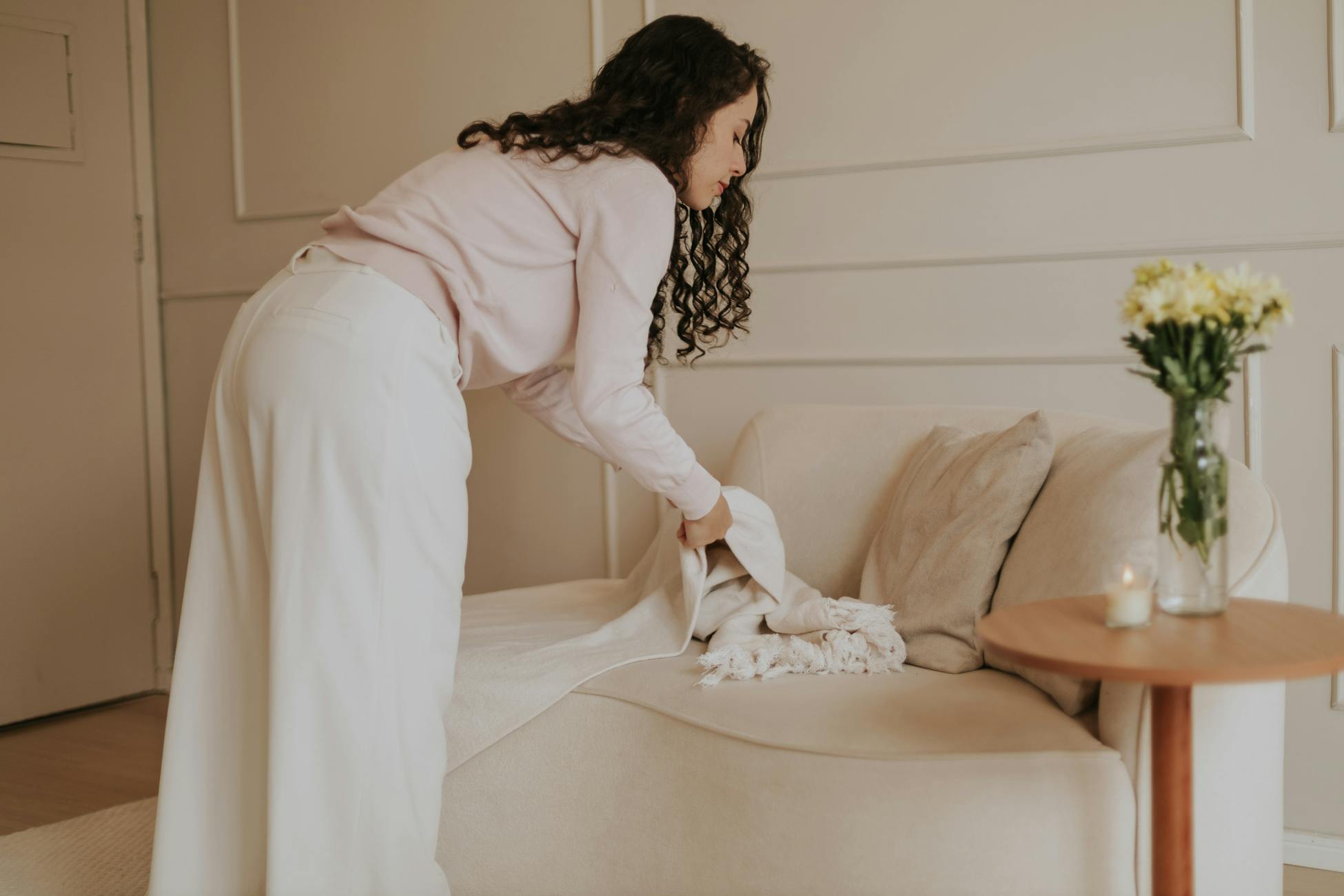
Research into intergenerational transmission of shame and anxiety reveals how certain emotional patterns pass through families without anyone ever naming them. Parents who grew up afraid of judgment raise children who are afraid of judgment, and they do it not through lectures but through tone, through urgency, through the particular way a dish towel gets snapped over a counter when the doorbell rings unexpectedly.
The Social Cost That Never Expired
For many families, especially those navigating class insecurity, the state of the home was a public statement. A cluttered living room could mean poverty, or laziness, or a mother who wasn't managing. These judgments landed harder in certain communities and certain decades, but they were never really absent from any of them.
If your family occupied a space where reputation was fragile (new to a neighborhood, one of few immigrant families on the block, recently divorced, living just above the line where social services might get involved) then the house being clean wasn't about preference. It was about protection.
And that protection had a cost. Children in those homes learned that their natural state, shoes by the door, cereal bowls in the sink, toys across the carpet, was a liability. Their existence created evidence that had to be managed. The mess they made as children doing what children do became something that needed to be hidden from view.
Decades later, these same people hire someone to clean their house and then spend an hour beforehand making sure there's nothing embarrassing to find. The cleaner will see the house at its best, which defeats half the purpose of having a cleaner, but the person doing the pre-cleaning can't stop themselves. The social cost of being perceived as messy is a debt that never feels fully paid.
Cleaning as Emotional Regulation
Here's the thing. For many people, the pre-cleaning ritual has very little to do with cleanliness and almost everything to do with managing anxiety. The act of tidying before someone enters the space is a form of emotional regulation disguised as housework.
Writers on this site have explored how washing dishes immediately can be rooted in childhood environments where leaving something undone felt psychologically unsafe. The same mechanism drives the pre-cleaner tidy. There's a deep, body-level discomfort with the idea of being seen in a state of disorder, because disorder once meant danger.
The cleaning itself is soothing. Wiping a counter, folding a blanket, straightening a stack of books: these repetitive, controlled actions calm the nervous system. They give you the feeling of having handled something, even when the thing you're handling is an anxiety that started before you had words for it.
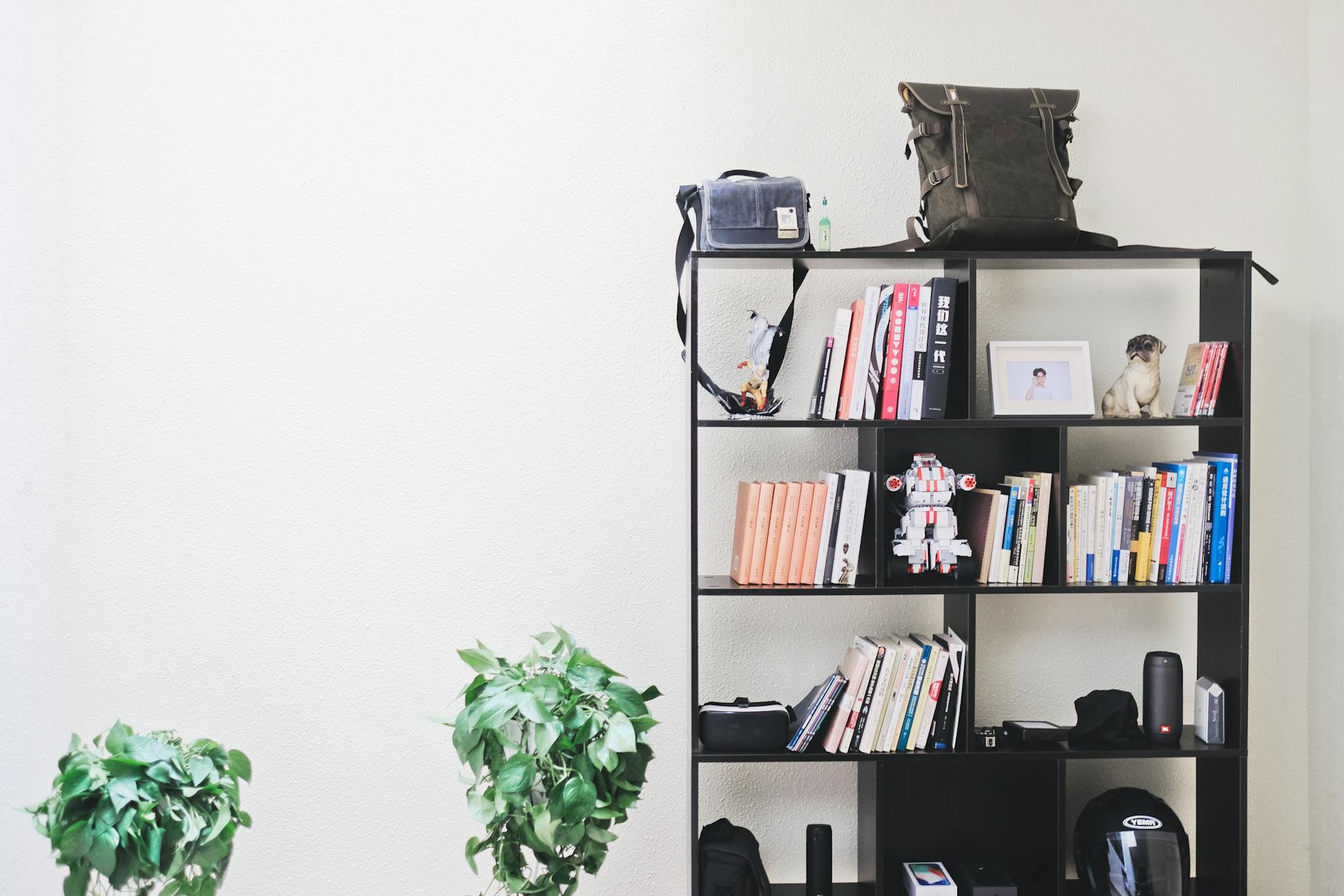
People who grew up as the responsible child in their family often carry this pattern most visibly. They were the ones who noticed when the house needed to be presentable. They were the ones who read the room and started cleaning before they were asked. That vigilance earned them praise, or at least safety, and they never fully learned how to set it down.
The Judgment That Lives Inside the Body
What makes this pattern so persistent is that the judgment being avoided is almost entirely internal. The cleaner coming to your house at two o'clock this afternoon is not going to call your mother. They are not going to report to the neighbors. They are not going to think less of you as a human being because there are crumbs on the kitchen floor. That is, quite literally, what you are paying them to address.
But the person you're really cleaning for isn't the one with the key to the front door. The person you're cleaning for is an internalized voice from childhood, a composite of every raised eyebrow, every tight-lipped "what will people think," every frantic pre-company cleaning session your parents enacted while you watched and absorbed the lesson: be ready. Be presentable. Never let them see the real state of things.
Studies on early bonding and long-term child development suggest that the emotional atmosphere of a child's first years creates templates that persist far into adulthood. Children who sensed maternal distress around household order may have absorbed that distress as information about what was required of them. The template says: control the environment before you are judged by it.
Both the Wound and the Wisdom
I want to be careful here, because there's a version of this conversation that pathologizes something that is also, in many ways, a genuine strength. People who grew up managing the visible state of their homes tend to be extraordinarily attuned to social environments. They read rooms. They notice when someone is uncomfortable. They anticipate needs. They create spaces where other people feel cared for, because they spent their formative years learning exactly how to do that.
The skill is real. The awareness is a gift. But it came with a cost, and the cost is a particular kind of exhaustion: the exhaustion of never fully trusting that your unmanaged self is acceptable.
People who learned to need no one often carry a similar duality: the self-sufficiency that emerged from early emotional necessity is both a survival skill and a quiet form of isolation. The pre-cleaning habit lives in the same territory. It protects you from a judgment that may no longer exist, while simultaneously confirming that you still believe the judgment is coming.
What It Might Look Like to Set the Cloth Down
I'm not going to pretend I've stopped doing it entirely. Last month, I caught myself reorganizing the bookshelf fifteen minutes before my cleaning service arrived. I stood there holding a copy of a cookbook I haven't opened in two years and thought: who is this for?
The answer, as always, was nobody currently alive in my house.
Recovery from this kind of pattern, if we want to call it recovery, looks less like stopping the behavior cold and more like noticing it with something other than judgment. Oh, I'm doing that thing again. The thing where I perform readiness for an audience that dissolved decades ago. Interesting. Not shameful. Just interesting.
Because the cruelest extension of the original wound would be to shame yourself for the very mechanism you developed to avoid shame. That loop has no exit.
The exit, if there is one, is gentler than that. It sounds like leaving the dishes in the sink when the cleaner arrives and noticing that your heart rate spikes, and sitting with that spike instead of reaching for the sponge. It sounds like letting someone see your actual life, crumbs and all, and discovering that the catastrophe you were bracing for simply doesn't arrive.
It sounds like understanding that the mess was never the problem. The problem was a world that taught a child that their worth and their surfaces were the same thing. And the quiet, radical work of adulthood is learning, one unwashed dish at a time, that they never were.