The tears you shed for fictional characters aren't a weakness — they're evidence your nervous system still knows how to feel, even when you've taught yourself to lock it down everywhere else.

Add VegOut to your Google News feed. 
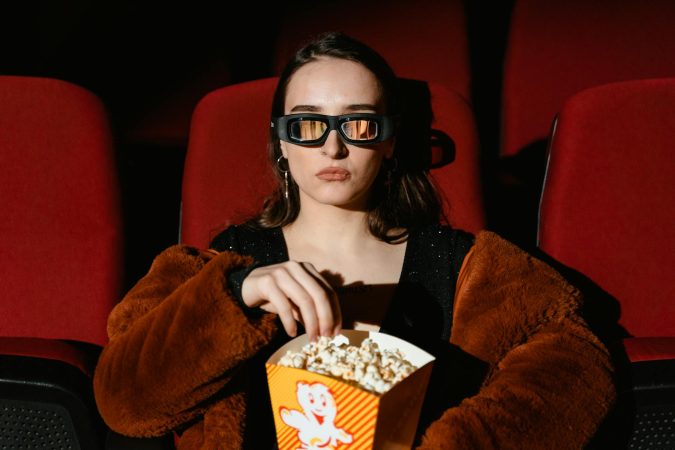
I cried watching a Pixar movie last month. Full, chest-heaving tears, the kind that make you grateful for a dark theater. The scene wasn't even particularly devastating. A father was letting go of his daughter's hand as she walked into something new. I sat there, thirty-six years old, clutching a napkin I'd grabbed from the concession stand, completely undone by animated characters made of pixels and light.
Two weeks before that, I'd gotten a call that a close friend from my restaurant days in New York had been hospitalized. Serious. The kind of serious where people start texting you links to CaringBridge pages. I handled it the way I handle everything real: I made a list. I called his sister. I offered to coordinate meals. My voice didn't crack once. I didn't shed a single tear until weeks later, alone in my kitchen in Austin, staring at a cast iron pan he'd given me when I left the city.
For years I thought this gap between my two selves meant something was broken in me. That the version of me who dissolved during movies was the imposter, or maybe it was the composed one. Turns out, neither version is fake. Both are real expressions of a nervous system that learned, a long time ago, when it was safe to feel and when it absolutely was not.
The Nervous System Has Its Own Logic
Here's the thing about emotional suppression: most people who do it well have no memory of learning. It didn't come from a self-help book or a therapy session. It came from childhood, from some version of a household where keeping yourself together was how you kept yourself safe. Maybe a parent was volatile and you learned to read the emotional temperature of a room before you walked in. Maybe there was a crisis and you were the kid everyone praised for being strong. The lesson landed in your body before your brain had language for it: real feelings, expressed in real time, are dangerous.
So the nervous system builds a workaround. It develops an extraordinary capacity to stay regulated during actual emergencies while quietly storing everything it can't process in the moment. And when fiction comes along (a movie, a novel, a song), it offers something real life rarely does: a context where nothing is at stake. Nobody needs you to be steady. Nobody's watching to see if you'll hold it together. The container is sealed. The credits will roll. You're safe.
Research suggests that emotion regulation is often misunderstood, with suppression and expression shaped by culture and context rather than representing some universal pathology. The ability to modulate emotional display depending on circumstances is a feature of the nervous system, not a glitch. Timing matters more than technique. And the people who cry at movies but stay composed during crises have exquisite timing, even if they developed it under duress.
Fiction as Permission Slip
I grew up in a household where both my parents were teachers. They were kind, well-meaning people who also happened to carry a very Boston, very working-class relationship to emotional display. You could be upset, but you handled it. You could be scared, but you didn't burden anyone with it. I watched my father absorb layoff anxiety, financial strain, and the slow decline of his own parents with a composure that I now understand was survival, not serenity.
So I learned the same trick. By the time I was running kitchen teams in my twenties, I could manage a dinner service meltdown (shattered plates, a blown pilot light, a sous chef walking out mid-shift) without raising my pulse. I was proud of that. People complimented me on my calm. What they didn't see was that I'd go home afterward and feel absolutely nothing. Not relief, not anger, not exhaustion. Just a flat gray absence where feeling should have been.
Then I'd put on a film, something with a sweeping score and a story about loss, and everything I hadn't felt all week would come flooding out. I remember watching a documentary about an elephant sanctuary in Thailand (this was during my three years in Bangkok, when I was already quietly unraveling from a relationship that was ending) and sobbing for forty minutes straight. The elephants had been separated from their families and then reunited. I hadn't called my brother in six months.
Fiction gave me what real life couldn't: permission. A character on screen was carrying grief I recognized, and because the grief was theirs, I could touch it without having to own it. The distance of the story created just enough safety for my body to do what it needed to do.
Emotional Numbing and the Return Path
There's a pattern where a person reacts sharply to negative stimuli and then shuts down emotionally in its aftermath. The numbness feels protective, and in many ways it is. But it also creates a peculiar internal weather: you become someone who can handle anything and feel almost nothing. The composure everyone admires is real. The emptiness underneath it is also real. Both exist simultaneously, which is where the confusion lives.
People who cry at movies aren't being dramatic. They're experiencing the only moments when their nervous system drops its guard enough to process accumulated emotion. The fictional frame provides a bounded space where strong feelings can surface without consequence. There's no crisis to manage, no one to take care of, no reputation to protect. So the tears come, often surprising the person crying most of all.
I've talked to friends about this, particularly other people from working-class backgrounds who learned early that vulnerability was a luxury item. Almost all of them describe the same split: stone-faced at funerals, wrecked by a thirty-second commercial about a dog finding its way home. They laugh about it, but underneath the laughter is recognition. We all learned the same lesson in different kitchens and classrooms and living rooms.
Why This Matters for How We Live
The danger with well-developed emotional suppression is that it works too well. You get through the crisis, the loss, the transition, and you feel fine. Genuinely fine. And then six months later, you're standing in a grocery store aisle and a song comes on and your eyes fill with tears and you have no idea why. Or you watch a film about a father and daughter and you're suddenly grieving something you didn't know you'd lost.

I started meditating in Thailand partly because a teacher there told me something I've never forgotten. He said that the body remembers what we try to forget. Every emotion you defer, every feeling you table for later, leaves its mark. And eventually, it finds a way to collect.
Fiction is one of the body's collection agents. So is music. So is, for me, cooking. I can be perfectly composed making a complicated plant-based meal for friends, focused and precise, and then I'll taste something that reminds me of a dish I used to make with someone I've lost, and the whole ledger opens.
This is also why people who've done significant emotional work sometimes find that they become more aware of their emotions and allow themselves to express them more freely. When you start giving your nervous system permission to feel in real time, the backlog begins to clear. And it clears in unexpected moments: the Pixar movie, the elephant documentary, the song in the grocery store. These aren't breakdowns. They're thaw.
The Both/And of Composure and Tears
I used to think I had to choose. Either I was the competent, unshakable person who could manage a crisis, or I was the sensitive person who cried at movies. The idea that I could be both felt like a contradiction. But the truth is, the composure and the tears come from the same root. They're both responses to a nervous system that learned very early to monitor what was safe and act accordingly.
The kids who grew up being called mature for their age often become adults who can hold a room together during a catastrophe and then fall apart during a commercial about long-distance phone calls. Those two things aren't contradictory. They're the same skill, operating in different conditions. In crisis mode, the system locks down to protect. In fiction mode, the system finally exhales.
Research on behavioral regulation increasingly points to the idea that emotional patterns are learned early and deeply, shaping how we respond to the world in ways that persist well into adulthood. The child who learned to stay calm because calm kept the household stable doesn't simply outgrow that programming. They carry it into boardrooms, emergency rooms, family dinners, and movie theaters.
What changes, if you're lucky and if you do the work, is awareness. You start to notice the gap between the crisis and the feeling. You start to understand that the tears in the theater aren't random. They're the emotional backlog making its way to the surface through the only door you left unlocked.
Leaving the Door Open a Little Wider
I still cry at movies. I'm not trying to stop. If anything, I've come to see those moments as a kind of check engine light for my emotional life, a signal that there's something underneath my composure that needs attention. When I notice myself getting wrecked by a fictional scene, I try to sit with it afterward and ask what real feeling the story was holding for me.
Sometimes the answer is obvious. Sometimes I sit with it for days. But the question itself is the practice. It's the slow work of teaching my nervous system that safety isn't only available in fiction. That the container of my actual life can hold real feelings, too.
My friend from New York recovered, by the way. He's home now. I called him last week and my voice cracked on the phone and I let it. He didn't comment on it. He just said, "Yeah, man. Me too." And we sat there for a minute, saying nothing, in one of those silences that holds more than words ever could. No movie. No score. Just two people, feeling something real, in real time. It was terrifying. It was also, finally, enough.
If You Were a Healing Herb, Which Would You Be?
Each herb holds a unique kind of magic — soothing, awakening, grounding, or clarifying.
This 9-question quiz reveals the healing plant that mirrors your energy right now and what it says about your natural rhythm.
✨ Instant results. Deeply insightful.

Adam Kelton
Adam Kelton is a writer and culinary professional with deep experience in luxury food and beverage. He began his career in fine-dining restaurants and boutique hotels, training under seasoned chefs and learning classical European technique, menu development, and service precision. He later managed small kitchen teams, coordinated wine programs, and designed seasonal tasting menus that balanced creativity with consistency.
After more than a decade in hospitality, Adam transitioned into private-chef work and food consulting. His clients have included executives, wellness retreats, and lifestyle brands looking to develop flavor-forward, plant-focused menus. He has also advised on recipe testing, product launches, and brand storytelling for food and beverage startups.
At VegOut, Adam brings this experience to his writing on personal development, entrepreneurship, relationships, and food culture. He connects lessons from the kitchen with principles of growth, discipline, and self-mastery.
Outside of work, Adam enjoys strength training, exploring food scenes around the world, and reading nonfiction about psychology, leadership, and creativity. He believes that excellence in cooking and in life comes from attention to detail, curiosity, and consistent practice.
More Articles by Adam