The generational gap in my family isn't really about tofu or tempeh — it's about who earned the right to change without apology and who still owes the world an explanation.
Last Thursday, my buddy Marcus reached across my dining table and asked me to pass the nutritional yeast — casually, the way you'd ask someone to pass the salt. He sprinkled it over his pasta like it was the most natural thing in the world. His girlfriend was already halfway through her second helping of the lentil bolognese I make almost every week, talking about something that happened at work, not even registering the meal as unusual.
To the people who eat at my house regularly, this is just what food looks like at Adam's place. There's no label on it. No disclaimer. No asterisk.
Two days later, I went out to lunch with my mom. We were at a restaurant — one of those Austin spots with a menu the size of a novella — and when I asked the server about the vegan options, my mom jumped in before he could answer.
"My son's vegan," she said, with that particular tone I know too well. Half explanation, half apology. As if I'd just announced I was about to do something mildly embarrassing and she wanted to get ahead of it.
I didn't say anything. I ordered the roasted vegetable plate and a side salad, no cheese. But I sat with that moment for the rest of the afternoon. I'm still sitting with it now.
The Apology That Isn't Really About Food
Here's what I've learned after being vegan for several years now — and after writing about my decision to go fully plant-based after a decade in luxury hospitality — the food is never really the issue. The food is the visible thing, the tangible thing, the thing people can point to and negotiate around. But underneath the menu substitutions and the "Is there dairy in this?" questions, there's something much deeper happening.
There's a negotiation about identity. About permission. About who in the family gets to become someone new and who has to keep explaining why.
My mom loves me. I know this in my bones. She texts me every few days. She sends me articles she thinks I'll like. She drove from Houston to Austin to help me move into this 1920s bungalow I'm renting. But when we're in public and the subject of my eating comes up, something shifts. She becomes the translator between me and the world, smoothing over my choices as if they're a quirk to be managed rather than a decision to be respected.
And here's the thing — she doesn't do this with other people's choices. When her coworker's daughter announced she was going vegetarian, my mom thought it was wonderful. Talked about how "the younger generation is so conscious." No apology. No explanation beyond the practical. Just admiration.
The difference isn't the food. The difference is the direction of the change — and who's doing the changing. When a stranger's kid goes plant-based, it's progressive. When your own son — the one who trained under French chefs, who built a career around tasting menus and butter-finished sauces — goes vegan, it's a problem to be narrated.
Who Gets Permission to Change
There's a concept in family systems psychology that I stumbled across during one of those late-night reading spirals — research on family homeostasis published in the Journal of Family Therapy — that describes how families unconsciously resist change in any member because it threatens the stability of the whole system. When one person shifts, everyone else has to recalibrate. And the person who changed? They become the disruptor, even if the change is quiet, personal, and entirely about their own plate.
I think about this every time my mom uses that apologetic tone. She's not embarrassed by veganism itself — she's made my cashew cream pasta at her own house and told me she loved it. She's embarrassed, or maybe unsettled, by the fact that I changed. That the son she understood — the hospitality guy who could break down a tasting menu, who spent years perfecting classical techniques under European chefs — decided to walk away from all of that and build a completely different relationship with food.
If you've ever been the only vegan or vegetarian in your family, you know exactly what I'm talking about. The way the table goes quiet for half a second when you order. The way someone always says, "Oh, right, I forgot," even though it's been years. The way your choices become a conversation topic for everyone else while you just want to eat your dinner.
But when you're the person who used to be the cook — when you're the guy who once made the Thanksgiving prime rib, who built his professional identity around food that was decidedly not plant-based — the disruption feels almost personal to them. As if by choosing differently now, you're retroactively criticizing every meal you ever made. Every dinner party. Every holiday spread.
You're not. You're just growing. But growth in a man who "should know better" about food apparently requires more justification than growth in someone who's just starting out.
What My Dinner Table Taught Me About Normal
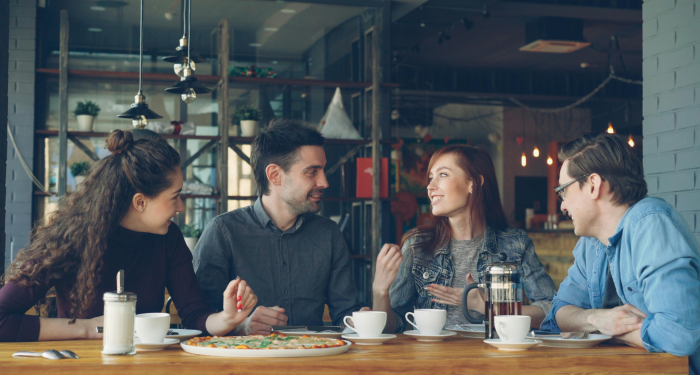
I host dinner gatherings at my bungalow most weekends — small ones, six or eight people max, gathered around the reclaimed wood table that takes up most of my kitchen. It's the minimalist's version of the dinner parties I used to orchestrate in hotels, stripped down to what actually matters: good food, real conversation, no pretense.
The friends who come regularly don't know that the cashew cream in the pasta is "unusual." They don't know that the banana bread I bake on Sunday mornings doesn't have eggs in it. They've never tasted the version with eggs — at least not at my house — so there's no comparison, no before-and-after, no sense of loss. To them, this is simply bread. This is simply dinner. This is simply what Adam makes.
I watch them eat without commentary, without performance, without the exhausting ritual of explanation — and I think, this is what it looks like when something is just normal. Not defended. Not justified. Not apologized for. Just lived.
Research on food attitude formation shows that people develop their sense of what's "normal" food primarily through repeated exposure in trusted social settings, not through cultural messaging. What they eat regularly in environments that feel safe becomes their baseline. Everything else is measured against it.
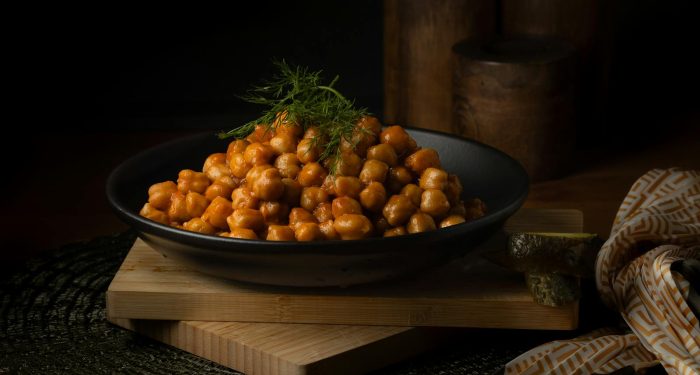
My dinner guests' baseline includes roasted chickpeas and coconut yogurt. That's not ideology to them. It's Tuesday.
The generational gap, then, isn't between me and the people at my table. It's between me and the generation above — the one that remembers the butter-finished sauces, the one that carries the memory of who I used to be and can't quite reconcile it with who I am now.
The Weight of Being the One Who Remembers
I don't blame my mom. If I'm being honest, I understand her more than she probably realizes.
She watched me go all-in on food from the time I was a teenager. She drove me to my first restaurant job. She bragged to her friends when I got hired at that hotel in Bangkok. She kept the menu from the first formal dinner I ever cooked for the family — a five-course French affair, heavy on the cream, that I spent two days preparing. That menu is still on her refrigerator.
I was, for a very long time, a fixed point in her understanding of who her son was: the food guy, the chef, the one who could make anything taste incredible with enough butter and technique.
And now I'm not that fixed point anymore. I live in a stripped-down bungalow in Austin. I write about personal development and mindful eating. I practice a Thai philosophy of sabai — ease, contentment, not forcing — that I picked up during three years in Bangkok. I eat plants and bake bread without butter and host dinner parties where no animal products cross the threshold.
Every one of these changes is a small earthquake in the family story she tells herself about who her son is.
I've thought a lot about what parents wish their adult children understood but will never say out loud — and I've come to realize there's a reverse version too. The things adult children wish their parents understood but can't quite articulate. One of them is this: we didn't stop being your children when we started becoming ourselves. We're just finally doing the work of figuring out who we actually are underneath the roles we were handed.
And when we change — when we finally have the clarity and the courage to redefine ourselves — it can feel like betrayal to the people who needed us to stay recognizable.
Apology as Control
I want to be careful here, because I don't think my mom is being malicious. But I've come to understand that apologizing for someone — "My son's vegan," said with that little laugh — is a form of control. It's a way of framing another person's choice before that person can frame it for themselves.
It says, I know this is unusual, and I want you to know that I know. It distances the apologizer from the choice. It says, this is his, not mine.
A study on identity-based embarrassment in close relationships found that people experience secondhand embarrassment most acutely when a loved one's behavior challenges the social identity they share. My mom isn't embarrassed by veganism. She's navigating the social cost of having a son who doesn't fit the script she'd written — the hospitality professional, the classically trained cook, the guy who was supposed to open a restaurant someday — and she's absorbing that cost by becoming the narrator, the explainer, the buffer between me and the world.
The thing is, I don't need a buffer. I spent years managing five-star dining rooms, navigating the egos of chefs and the demands of guests who spent more on a single meal than I made in a week. I lived alone in Bangkok for three years, learning a language and a culture from scratch. I can handle a waiter's momentary confusion about the menu.
The Real Gap
The generational gap in my family isn't about food. It's not about whether lentils count as a real dinner or whether nutritional yeast belongs on pasta. It's about something much more uncomfortable — the unspoken family contract that says sons are supposed to stay on the trajectory their parents imagined for them. Recognizable. Predictable. On track.
My dinner guests never signed that contract. They just see me. They see the guy who makes the food they like, who keeps his home spare and intentional, who'd rather have a meaningful conversation over a simple meal than perform hospitality the way he used to. They don't carry a mental file of all the versions of me that came before. They only know this one.
My mom carries every version. And somewhere in the gap between the son who perfected classical French sauces and the son who orders the roasted vegetable plate, there's a grief she hasn't named yet. Not for the food — for the certainty. For the predictability. For the version of me that made her world feel stable by following a path she could narrate to her friends.
I understand that grief. I felt something similar when I left Bangkok — when the life I'd built there, the rhythms and relationships and sense of sabai I'd cultivated, suddenly became a past version of myself that I could visit but never quite return to. It wasn't about the city. It was about the person I was there becoming someone I had to carry forward in a different form.
But here's what I wish I could say to my mom — really say, not in the careful way we talk around things at restaurant tables.
I wish I could tell her that my changing isn't a commentary on who I was. It's an extension of who I've always been: someone trying to figure it out, meal by meal, year by year, doing the best I can with what I know now. The curiosity that drove me into professional kitchens at nineteen is the same curiosity that drove me out of them at thirty-two. It's the same impulse. It just pointed somewhere new.
And what I know now is that people who keep evolving — who keep learning and questioning and, yes, changing what's on their plate — aren't disrupting the family. They're showing the people around them that becoming isn't something you finish in your twenties. Or your thirties. Or ever.
Marcus asked for the nutritional yeast last Thursday like it was nothing. Because to him, it is nothing. It's just dinner.
And my mom said "My son's vegan" to a waiter like it was something that needed managing. Because to her, it is something — something she's still processing, still holding, still trying to fit into the story of us.
Both of those things are true at the same time.
The gap between them isn't about food. It's about love — messy, complicated, generational love — and the slow, sometimes painful work of letting the people you love become someone new.
Even when that person is your son.
Especially when that person is your son.
If You Were a Healing Herb, Which Would You Be?
Each herb holds a unique kind of magic — soothing, awakening, grounding, or clarifying.
This 9-question quiz reveals the healing plant that mirrors your energy right now and what it says about your natural rhythm.
✨ Instant results. Deeply insightful.

Adam Kelton
Adam Kelton is a writer and culinary professional with deep experience in luxury food and beverage. He began his career in fine-dining restaurants and boutique hotels, training under seasoned chefs and learning classical European technique, menu development, and service precision. He later managed small kitchen teams, coordinated wine programs, and designed seasonal tasting menus that balanced creativity with consistency.
After more than a decade in hospitality, Adam transitioned into private-chef work and food consulting. His clients have included executives, wellness retreats, and lifestyle brands looking to develop flavor-forward, plant-focused menus. He has also advised on recipe testing, product launches, and brand storytelling for food and beverage startups.
At VegOut, Adam brings this experience to his writing on personal development, entrepreneurship, relationships, and food culture. He connects lessons from the kitchen with principles of growth, discipline, and self-mastery.
Outside of work, Adam enjoys strength training, exploring food scenes around the world, and reading nonfiction about psychology, leadership, and creativity. He believes that excellence in cooking and in life comes from attention to detail, curiosity, and consistent practice.
More Articles by Adam