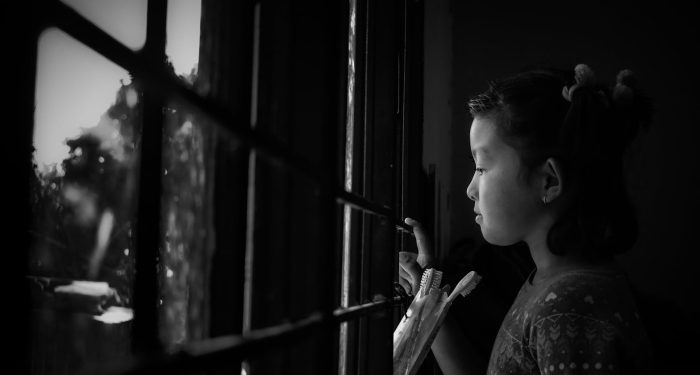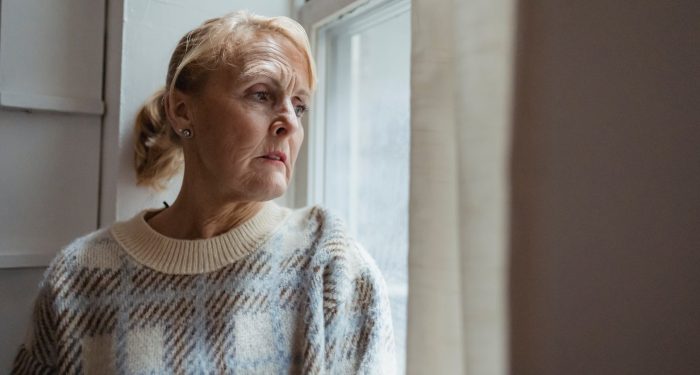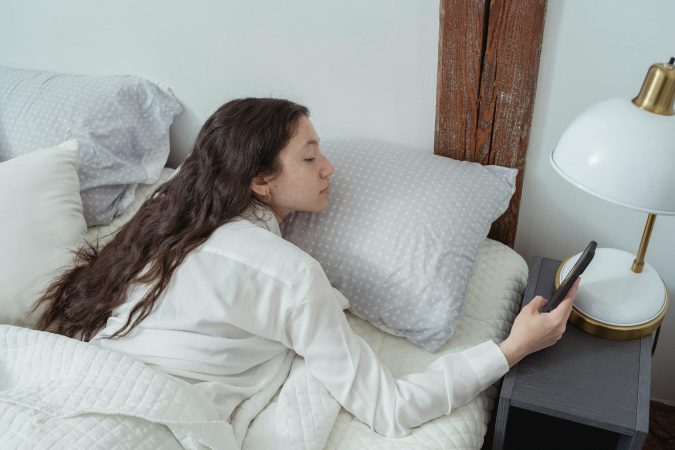
I spent decades fantasizing about a life with no alarm clock, and when I finally got it, the silence didn't feel like freedom—it felt like proof that nobody needed me anywhere.

Add VegOut to your Google News feed. 
The first morning it happened—the morning I realized I hadn't set an alarm the night before, and that there was no reason to—I lay in bed watching the ceiling fan turn slow circles above me. It was 9:47 a.m. on a Tuesday. The garbage truck had already come and gone. My neighbor's dog had already been walked. The world had started without me, and no one had noticed.
I remember thinking, This is it. This is the thing I've been chasing since I was twenty-two years old. No boss waiting. No clock to punch. No commute through LA traffic. Just me, the ceiling fan, and an entire day shaped by nothing but my own choosing.
I thought I'd feel giddy. What I felt instead was a kind of quiet horror I still don't fully have language for.
That was three years ago. I haven't set an alarm since.
The Fantasy vs. the Architecture of a Day
I'd dreamed about this for most of my adult life—an unstructured morning, the freedom to wake when my body said so, the luxury of making a slow pot of coffee without already being late. Back when I was running an indie music blog in my twenties, staying up until 3 a.m. writing about bands nobody had heard of, I told myself that one day I'd have a life where mornings belonged entirely to me. And now they do.
I'm aware of how it sounds. I know there are people grinding double shifts who would trade places with me without blinking. I know the privilege embedded in this confession is almost obscene. But loneliness doesn't ask for your tax bracket before it settles in. It doesn't care whether you earned the emptiness or inherited it.
What I didn't understand—what nobody tells you—is that alarm clocks aren't just about time management. They're evidence. Proof that somewhere, someone or something expects you. That your physical body is required in a specific place at a specific hour. Remove that, and you don't just lose a schedule. You lose a kind of tether to the world, the feeling that your absence would create a noticeable gap.
Research from the University of Virginia published in the Journal of Social and Personal Relationships found that feelings of social connection are less about the quantity of interactions and more about the sense of being needed—what researchers call "mattering." When people feel they don't matter to others, the psychological consequences mirror those of chronic social isolation.
I think about that study on the mornings when I open my eyes at 10:15 and the only notification on my phone is a weather alert.
Structure as a Love Language Nobody Talks About
I grew up in a household where the morning routine had a pulse of its own—the kind of scrambling that families with too many people and not enough bathrooms know bone-deep, where everything is timed and nothing is wasted. There was chaos in it, yes. But folded inside that chaos was a kind of love I didn't recognize until it was gone.
Being needed at the breakfast table. Being counted. Having someone look at the clock and think, Where is he?
My girlfriend leaves for work at 7:30 most mornings. I hear the door close, the car start, the engine fade down the block. And then: silence. Not the peaceful kind that wellness influencers photograph with linen sheets and matcha lattes here in Venice Beach. The kind that has weight to it. The kind that sits on your chest if you let it.
I started making elaborate breakfasts just to give the first hour a skeleton. Tempeh scrambles with roasted peppers. Cashew cream on sourdough—the kind of slow, deliberate cooking that became second nature after I went vegan eight years ago. I'd plate it carefully, eat it slowly, wash each dish by hand. It could take ninety minutes if I let it. And I always let it, because what was waiting on the other side? More silence. More choosing. More freedom that felt—paradoxically—like a cage with no walls.
The Loneliness of Unwitnessed Time
There's a difference between being alone and being unwitnessed. I've come to believe that distinction is everything.
Being alone is a state. You can be alone on the Venice boardwalk, at a movie, on a hike in Topanga Canyon, and feel perfectly whole. But being unwitnessed is something else entirely—it's the creeping realization that you could vanish from Tuesday to Thursday and no one's calendar would reflect the absence.
A 2020 meta-analysis published in Psychological Bulletin by Julianne Holt-Lunstad confirmed what many of us feel intuitively: that perceived social isolation—feeling unseen, not just being physically alone—is a stronger predictor of mortality risk than obesity or physical inactivity. The danger isn't the empty room. It's the belief that no one would know if the room stayed empty.
I used to think freelancing from home was the pinnacle of modern life. No commute on the 405, no fluorescent lights, no small talk about weekend plans with people I'd never see outside the office. And for a while, it was. I'd left the structure of regular gigs behind, built a freelance writing life that let me work in coffee shops or from my couch—and told myself I'd arrived.
But then Sunday nights stopped feeling like dread and started feeling like nothing at all, and that's when I knew something had shifted beneath me.
Annie Dillard wrote that how we spend our days is how we spend our lives. The uncomfortable math of that idea kept me up at night. If every day looks the same—if no one is expecting you, if nothing begins until you decide it does—then the days stop having edges. They blur. A week passes and you can't point to a single thing that marked Tuesday as different from Friday.
What I Tried, and What Actually Helped
I tried the obvious things first. I joined a morning yoga class—plant-based community, gentle people, the kind of studio where everyone takes their shoes off at the door and speaks in hushed tones. It helped for a few weeks. But then I realized I could skip a session and no one would text to ask where I was. The optionality of it—the fact that nothing happened if I didn't show—was exactly the problem wearing a different outfit.
I tried volunteering at a community garden. I tried a co-working space in Santa Monica. I tried scheduling standing calls with friends. Each of these added something, but none of them replicated the particular feeling I was missing: the feeling of being structurally necessary. Of being built into someone else's day the way a load-bearing wall is built into a house. Not decorative. Essential.
A 2021 paper in Social and Personality Psychology Compass by Nathaniel Lambert and colleagues explored the concept of "relational value"—the sense that others consider their relationship with you to be important and worth maintaining. The researchers found that relational value was a core human need, distinct from mere belonging. You can belong to a group chat, a mailing list, a yoga studio. But relational value means someone would rearrange their morning if you needed them to.
That's different. That's the thing.
What actually helped—what slowly began to dissolve the worst of it—wasn't adding more activities to my calendar. It was starting to be honest about what I was feeling, out loud, to people who could hear me.
I told my girlfriend one evening over dinner that I was lonely. Not unhappy. Not depressed in the clinical sense. Just lonely. She looked at me the way you look at someone who's just said something you've been thinking but were afraid to name. We started eating breakfast together before she left. Fifteen minutes. Nothing elaborate. Just two people at a table, witnessed.
The Quiet Cost of Aspiration Culture
We spend so much of our younger years romanticizing escape—escape from the alarm, the cubicle, the nine-to-five. The entire narrative of "making it" in this culture is built around liberation from obligation. Work for yourself. Set your own hours. Answer to no one.
And I bought into it completely. I spent my thirties building toward exactly this—transitioning from the music blog to freelance writing, carving out a life where I could pitch stories about psychology and conscious living from my apartment in Venice Beach and never wear pants with a zipper if I didn't feel like it. I smiled through the discomfort for months because admitting that freedom felt terrible seemed ungrateful. Seemed weak. Seemed like proof that I couldn't handle the very life I'd designed.
But here's what I think now, three years into this alarm-free existence: the fantasy of total autonomy is built on the assumption that other people are obstacles—things standing between you and your best life. What you don't realize until you've cleared every obstacle away is that some of those obstacles were actually architecture. They were the walls that held the shape of your days. Without them, the roof has nothing to rest on.
I don't miss commuting. I don't miss office politics or being micromanaged. But I miss being expected somewhere. I miss the casual accountability of a colleague saying, Hey, you weren't at the meeting—everything okay? I miss the way an alarm clock, however annoying, was a tiny daily contract between me and the world: You are needed at this hour. Be there.
What I'm Learning to Build Instead
I still don't set an alarm. I'm not sure I ever will again. But I've stopped pretending the freedom is uncomplicated.
I cook breakfast with my girlfriend now—not for her, with her. She's not vegan, and that used to be a thing I quietly navigated around. But something shifted when I stopped treating meals as separate experiences and started treating them as shared ones. I'll make my tempeh scramble, she'll do her eggs, and we'll sit together for fifteen minutes before the day pulls us apart. It's the kind of connection I've come to believe matters more than any philosophical alignment—showing up at the same table, witnessed, even when your plates look different.
I committed to a weekly volunteer shift at a local food pantry, and I told the coordinator to count on me, to notice if I don't show. That last part felt vulnerable in a way I wasn't prepared for. Asking someone to expect you is asking them to care about your absence, and that's a kind of intimacy we don't have a word for.
I've also started calling my mom on Wednesday mornings. Not because either of us has news. But because regularity—the sheer repetition of showing up at the same time—builds something that spontaneity can't. Research from the University of Kansas suggests that it takes roughly 200 hours of shared time to move from acquaintance to close friendship, and that consistency matters more than intensity. I think the same is true for maintaining the relationships we already have. It's not the grand gestures. It's the Wednesday calls. The Tuesday breakfasts. The alarm that says, Someone is waiting.
I dreamed of a life with no alarm clock for twenty years. And I got it. And the honest truth—the one I'd never put on a motivational poster—is that it taught me more about what I actually need than any amount of hustling ever did.
I don't need freedom from obligation. I need obligations worth waking up for. I need to be a load-bearing wall in someone else's house, even if it means I can't sleep until noon. Especially if it means that.
The ceiling fan still turns in slow circles every morning. But now, by the time I notice it, I've usually already been up for an hour—not because an alarm told me to, but because someone is expecting me in the kitchen.
And that, it turns out, is the only freedom that doesn't echo.
What’s Your Plant-Powered Archetype?
Ever wonder what your everyday habits say about your deeper purpose—and how they ripple out to impact the planet?
This 90-second quiz reveals the plant-powered role you’re here to play, and the tiny shift that makes it even more powerful.
12 fun questions. Instant results. Surprisingly accurate.