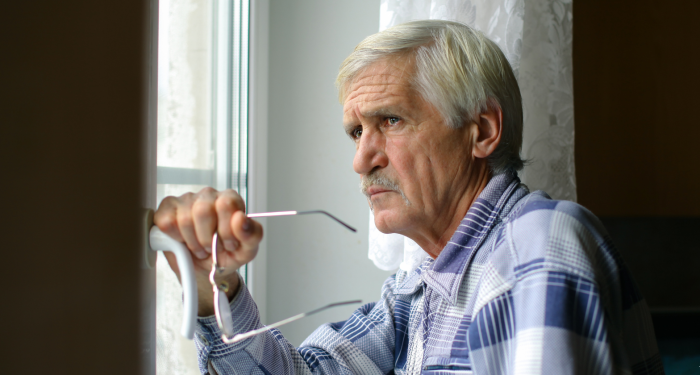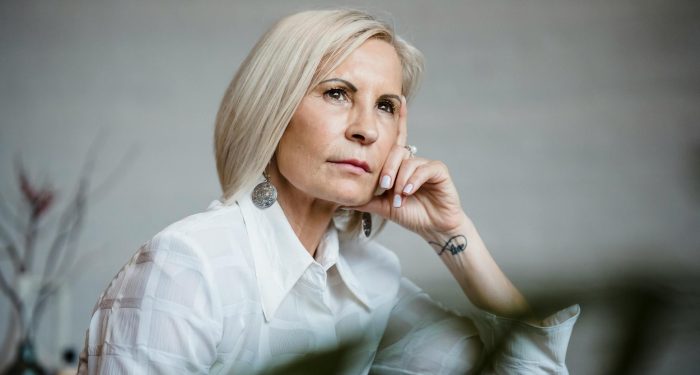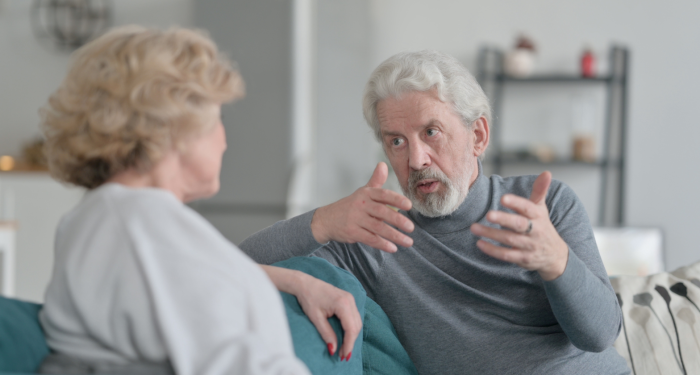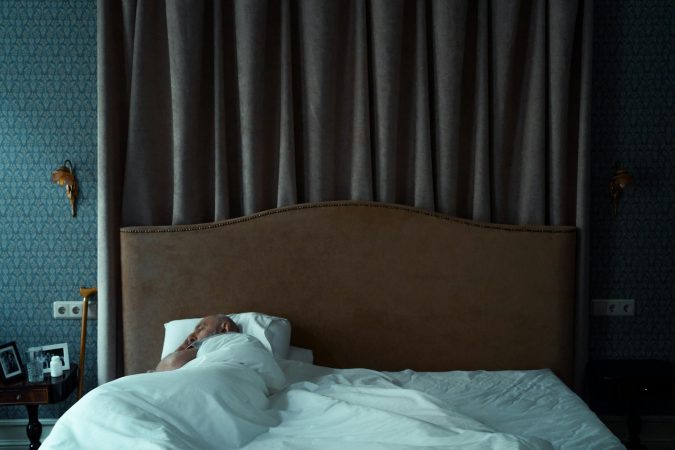
The scariest kind of exhaustion doesn't show up on a sleep tracker — it shows up in the moment between opening your eyes and remembering what your day looks like.

Add VegOut to your Google News feed. 
I sleep through the night now. Seven hours, sometimes eight. No tossing. No waking at 3 a.m. with my heart hammering over something I said at a party in 2009. The sleep is deep and unbroken and — if you believed the wellness articles — it should be fixing everything.
I wake up and the bed is barely disturbed. My body rested. My mind quiet. And then I sit on the edge of the mattress and the weight settles in, not in my bones but somewhere behind my sternum, because I know exactly what comes next. The same thing that came yesterday. And the day before that. And the fourteen days before that.
I'm forty-four years old. I freelance from home, mostly alone. My partner leaves for work around eight, and the apartment in Venice Beach goes quiet in a way that used to feel like a gift. And I sleep beautifully every single night.
That's the part nobody warns you about — that the exhaustion can live right alongside perfect rest, like two tenants sharing a house who never speak to each other.
When Rest Isn't the Answer
For years, I told myself the tiredness was because I wasn't sleeping enough. The indie music blog I ran through my thirties guaranteed that — shows that didn't start until eleven, writing until 3 a.m., the low hum of always being online, always chasing the next post. I was convinced that if I could just sleep, really sleep, the fog would lift. That building a quieter freelance life would hand me back the version of myself I'd been before the hustle hollowed me out.
But the fog didn't lift. It changed shape. It became something thicker, slower — not the frantic exhaustion of having too much to do, but the dull weight of having nothing that requires me at any particular hour. I stopped setting an alarm a couple of years ago when my freelance schedule became fully self-directed, and at first it felt like liberation. Now it feels like proof that the world would spin on just fine without me ever getting out of bed.
There's a term for this in psychology: existential fatigue. It's not clinical depression — though it can live in the same neighborhood. It's the bone-deep weariness that comes from a perceived absence of meaning. Your body functions. Your health panels come back fine. You eat well — plant-based for eight years now, since a documentary quietly rewired how I thought about food — and you move your body and you hydrate and you do everything the magazines tell you to do.
And still. Still, you wake up tired in a way that has nothing to do with sleep.
The Architecture of an Empty Day
Here is what my days look like:
I wake up. My partner has already left or is leaving. I make coffee — oat milk, no sugar, the same mug I've used since 2011. I open the kitchen blinds. I water the pothos on the windowsill, which is thriving because it's the only living thing in this apartment that needs me on a reliable schedule.
I check email. There's nothing urgent. There hasn't been anything urgent in a while — freelancing between assignments has a specific kind of silence to it. I eat breakfast. I clean up. I might walk down to the boardwalk. I might not. I read for a while — usually something I've already read, because new books require a kind of forward momentum I can't always find.
Around noon I eat again. The afternoon stretches out like a hallway with no doors. By evening my partner's home, and I realize I have nothing to report about my day. Then I go to bed and sleep perfectly, and the whole thing begins again.
The sameness isn't the problem. Or rather — the sameness is the problem, but not in the way people think. It's not boredom. Boredom implies you want stimulation and can't find it. This is something quieter. It's the slow erosion of feeling like your days are building toward anything.
Research from psychological science has shown that having a sense of purpose is one of the strongest predictors of well-being — stronger than income, stronger than social network size, stronger in some studies than physical health. When that sense of purpose dissolves, what's left isn't nothing. It's a very specific kind of something. A presence disguised as absence.
When I ran the blog, I was needed — fiercely, exhaustingly needed. Bands who wanted coverage. Readers who relied on my recommendations. A small team of contributors who looked to me for direction, for editing, for the emotional scaffolding that nobody ever names as labor. And now I write pieces on my own schedule for editors I rarely meet in person, and my body doesn't know what to do with that information except be tired.
The Guilt of Good Health
There's a strange guilt that comes with this kind of exhaustion. Because I know — I know — how many people would trade places with me. I live in Venice Beach. I make my own hours. I eat well. I went vegan after watching a documentary eight years ago, and what started as a thirty-day experiment became a permanent shift. My bloodwork improved so dramatically that my doctor actually paused during our last appointment and said, Whatever you're doing, keep doing it.
So I'm healthy. I'm rested. I live somewhere people vacation to. And I wake up every morning with a weight in my chest that I can't explain to anyone without sounding ungrateful.
That's the trap — the suspicion that you have no right to feel this way. That exhaustion is reserved for people who are actually doing something.
But that's not how exhaustion works.
Self-determination theory, one of the most well-supported frameworks in motivational psychology, argues that humans have three fundamental needs: autonomy, competence, and relatedness. Freelancing can technically satisfy autonomy — you're free, after all. But competence and relatedness? Those often evaporate the moment your work becomes solitary and irregular. You go from being someone who knows things, who is consulted, who matters in a daily creative rhythm, to someone whose greatest daily achievement is remembering to submit an invoice.
What Nobody Tells You About Sameness
When I ran the blog, sameness had a texture to it. Monday was different from Friday even when the workload was identical, because the inbox was different — heavier on Mondays with weekend show recaps, lighter on Fridays when everyone was looking ahead. The sameness had people in it. It had interruption. It had the particular chaos of managing a small creative community that ran on caffeine and opinions.
The sameness I live in now has fewer people in it. Or rather — it has people at a distance. My partner and I share the apartment, but we share it on different schedules. Friends text. My editor checks in when there's an assignment. But none of it requires me to be anything other than available, and availability without purpose is just waiting.
I read somewhere — and this stayed with me — that social isolation and loneliness carry health risks comparable to smoking fifteen cigarettes a day. I'm not isolated, exactly. I have people. But there's a difference between having people and being woven into the daily fabric of other lives in a way that makes your absence noticeable.
I've started arriving everywhere early — the coffee shop, the grocery store on Lincoln, the Saturday morning plant-based brunch meetup I found through a community board. I tell myself it's because I like being punctual. But the truth is that leaving the apartment feels like an event, and I want to stretch it out as long as possible.
The Body Keeps a Different Clock
My body sleeps well because there's nothing keeping it awake. No deadline. No worry that hasn't already been worried into smooth stone. No anticipation. And anticipation, I've realized, was the thing that used to make sleep feel like a bridge to something — a tomorrow that held possibility, even if that possibility was just the controlled chaos of a new album dropping or a piece going live.
Now sleep feels like a reset button on a machine that runs the same program every day. Efficient. Clean. Pointless.
I don't say this for pity. I say it because I think nobody talks about this particular kind of tired — the kind that doesn't respond to melatonin or lavender or a better mattress, because the problem was never physical. The problem is waking up and knowing. Knowing the shape of the day before it arrives. Knowing that nothing in the next sixteen hours will surprise you, challenge you, or need you in a way that makes your heartbeat change rhythm.
Where the Light Comes In
I don't have a neat resolution for this. I distrust neat resolutions — they belong to people who haven't sat with something long enough to know it doesn't resolve.
But I will say this: the Saturday brunch meetup helps. Not because of the food — though I've learned to make a cashew cream sauce that would have stunned my twenty-five-year-old self, the one who thought veganism meant salads and sadness — but because of the guy who sits across from me and tells me about the terrible punk band he was in during the nineties while he plates his tofu scramble. Because of the woman who organizes the group and calls me by name and remembers that I don't like cilantro. Because of the small, ridiculous competence of learning to fold spring rolls alongside strangers and having someone say, Those look beautiful.
My partner helps too — not because he's vegan, he isn't, but because some evenings he'll come home and ask me to make that miso-glazed sweet potato thing, and for twenty minutes I'm needed in a specific, tangible way that my body understands. It's the "show don't tell" approach I try to bring to everything — I don't lecture him about food choices, I just make something good enough that he asks for it again. Connection over confrontation. It turns out that philosophy works on the self, too.
These are tiny things. They wouldn't register on any wellness checklist. But they interrupt the sameness. They put a door in the hallway.
And some days — not every day, but some — I wake up with something that feels less like weight and more like a quiet, cautious lean toward the morning.
I still sleep well every night. I still wake up knowing the shape of the day. But I'm learning — slowly, imperfectly — that the shape can be changed from inside. That community doesn't have to be dramatic to be real. That purpose doesn't always announce itself. Sometimes it just stands next to you at a cutting board and asks if you'd like to try the miso glaze.
Sometimes that's enough to make tomorrow look slightly different from today. And slightly different, right now, feels like everything.