
I sat down with a calculator and my father's old tax returns and realized the American middle class didn't shrink — it was quietly replaced by something that looks the same but costs three times as much to maintain.

Add VegOut to your Google News feed. 
My father made $42,000 in 1996. I know this because I found his tax return in a filing cabinet I inherited after he passed, tucked between a life insurance policy and a folder labeled "House" in his blocky handwriting. I held that piece of paper for a long time. Forty-two thousand dollars. A three-bedroom house in a decent school district. Two kids. A used Buick that he drove for eleven years. Annual family vacation to the same lake cabin in Wisconsin. Dental visits twice a year. A savings account that grew slowly and never got raided. My mother stayed home until I was in third grade, then worked part-time at a doctor's office for what I later learned was $8.50 an hour.
I make $126,000. Three times what he made, almost to the dollar. I rent a two-bedroom apartment. I drive a nine-year-old Honda. I haven't been to the dentist in fourteen months because my insurance changed and the new plan covers less. I do not have children, partly by choice and partly because every time I run the numbers, the math sends me into a kind of low-grade panic that settles somewhere behind my sternum and stays there for days.
The math is correct. I checked. And that's the part that haunts me.
The Ghost of a Paycheck
If you adjust my father's 1996 salary for inflation alone, $42,000 becomes approximately $83,000 in today's dollars. So on paper, I'm making significantly more per year than he did, in real terms. I should be living better. I should have more margin, more breathing room, more of whatever it is that separates comfort from survival.
But housing costs have increased dramatically as a share of middle-class family income. Mine takes 38%. Health insurance for my father's family of four was partially covered by his employer, with a modest premium that came out to around $120 a month. My employer-sponsored plan costs me $487 a month for just myself, with a $3,500 deductible that means I'm essentially self-insuring for anything short of a catastrophe. My father didn't have student loans. I carry $22,000 still, twelve years after graduating, because I spent my twenties in jobs that paid enough to live on but not enough to pay down principal in any meaningful way.
These are specific numbers from one specific life, and I understand they prove nothing on their own. But when I started talking to friends, to coworkers, to people at the community center where I volunteer on weekends, the same arithmetic kept surfacing. Salaries that look generous on paper. Lives that feel tight in practice. A persistent, disorienting sense that the deal has changed but nobody sent a memo.
What Middle Class Used to Mean
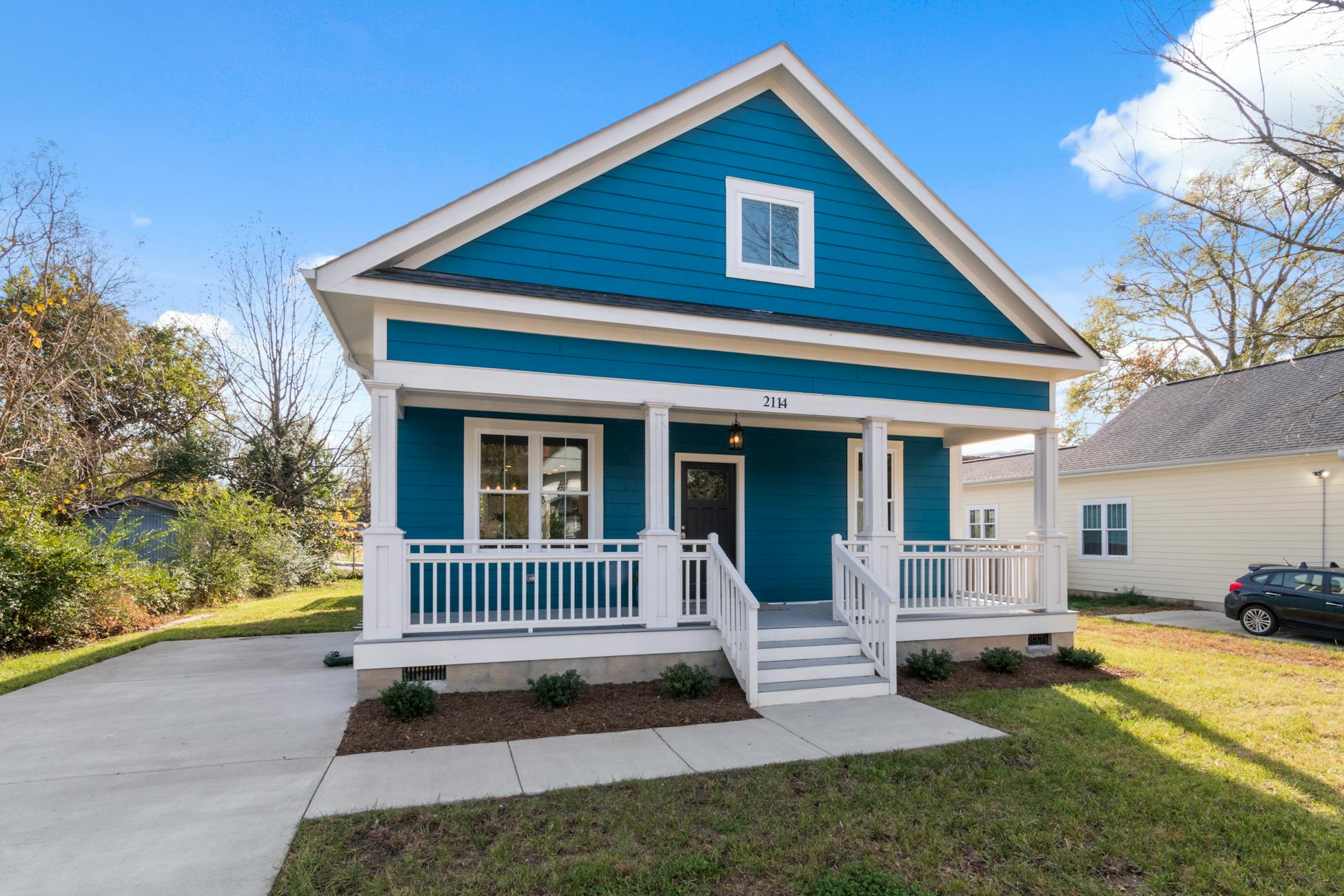
When my father called himself middle class, he meant something concrete. He meant a house he owned, not rented. He meant two weeks of vacation that he actually took. He meant a pension (small, but real) and Social Security that he believed would be there. He meant putting $200 a month into savings and watching it accumulate without touching it. He meant one car payment at a time, paid off in four years, then driving that car until the transmission gave out. He meant middle-class markers that were tangible, measurable, and within reach of anyone who worked full-time at a steady job.
I remember the specific texture of that life. Dinners that rotated on a weekly schedule (Monday was spaghetti, Thursday was chicken). New shoes at the start of school, one pair, chosen carefully. The thermostat set to 68 in winter and left there, with a blanket draped over the couch for anyone who wanted more warmth. It was modest. Nobody confused it with wealth. But it had a solidity to it, a particular blue-collar stability that I didn't appreciate until it was gone.
The word "middle class" still exists, of course. Politicians use it constantly. But the life it describes has shifted so dramatically that using the same term feels like calling a studio apartment and a three-bedroom ranch the same thing because they both have a front door.
The Quiet Repricing
What happened wasn't sudden. That's the cruelest part. Housing prices didn't triple overnight. Healthcare didn't become unaffordable in a single quarter. Education costs didn't explode in one academic year. It happened slowly, the way water rises in a bathtub when the drain is partially clogged. You don't notice for a while. Then you notice, and you're already wet.
Between 1996 and 2026, the cost of a four-year college degree increased dramatically. The median home price has risen substantially from its 1996 level. Childcare, which my parents barely paid for because my mother's part-time schedule aligned with school hours and a neighbor watched us for a modest fee, now represents a significant monthly expense per child in most metro areas. Every single pillar of the middle-class life my father built has been repriced, and wages, while they've grown, haven't kept pace with the specific basket of goods that defines a middle-class existence.
I earn three times his salary. But the life he provided costs roughly four to five times what it did when he was providing it. That gap, that persistent shortfall, is where the American middle class went. It didn't vanish. It got priced into a higher bracket while the paychecks stayed in the old one.

The Psychological Weight of Falling Short
Here's what nobody prepared me for: the shame. Because when you make $126,000 and you still feel like you're scrambling, there's a voice in your head (my father's voice, honestly) that says you must be doing something wrong. Spending too much on avocado toast or whatever the current accusation is. Living beyond your means. Lacking discipline.
Research suggests that economic stress directly shapes psychological well-being, and that the perception of falling behind a standard you were raised to expect creates a particular kind of distress. The standard my parents modeled wasn't extravagant. A house, healthcare, education for the kids, a small cushion for emergencies. When you can't reach that standard despite earning what looks like a good salary, the disconnect produces something close to grief.
I've talked to friends who describe the same feeling. One makes $95,000 and shares a two-bedroom apartment with a roommate at age 39. Another couple, combined income of $160,000, postponed having children for the fourth consecutive year because they can't figure out how to afford daycare and their mortgage simultaneously. These are people with graduate degrees, stable employment, no addiction issues, no lavish spending habits. They buy their clothes at Target. They cook at home most nights. And they still can't replicate what their parents built on half the income.
The Mobility Problem
My father grew up poorer than I did. His father worked in a factory, and they rented until my dad was in high school. By his mid-thirties, my father owned a home. He'd moved up, clearly and measurably, from where he started. That upward trajectory was central to his identity and to the story he told about America. Work hard, live modestly, and you'll do better than your parents.
I've done exactly that. And I haven't done better. I've done roughly the same, at triple the nominal cost. Research has found that urban sprawl and structural factors play significant roles in impeding intergenerational mobility. The reference point of your parents' standard of living shapes how you evaluate your own success, and when you can't reach that reference point despite doing everything you were told to do, the failure feels personal even when it's structural.
My father never questioned the system because the system worked for him. I don't question the system out of some ideological commitment. I question it because I have a calculator and his tax returns, and the numbers don't lie.
What Changed and Who Changed It
I want to be precise about this, because vague anger helps nobody. Several specific things shifted between my father's prime earning years and mine. Employer-provided pensions largely disappeared, replaced by 401(k) plans that transfer investment risk to the employee. Healthcare costs increased at roughly double the rate of overall inflation for three decades. Housing became an investment vehicle rather than primarily a place to live, with institutional buyers and speculative markets driving prices beyond what wage growth could match. And education, once affordable enough that my father paid for community college classes out of pocket while working, became a debt instrument that follows graduates for decades.
None of these changes were accidental. Each one involved policy decisions, market incentives, and regulatory shifts that benefited certain parties at the expense of others. The hidden costs accumulated so gradually that each individual change seemed manageable. In aggregate, they redefined what a middle-class income could purchase.
Dinner at the Old Table
Last Thanksgiving, I sat at my mother's table, in the house my father bought in 1993 for $127,000. She still lives there. The mortgage was paid off in 2013. Her property taxes have tripled, and she complains about that, rightfully. But she owns the house. The same house, in the same neighborhood, is now assessed at $385,000. If my father were starting today, on his 1996 salary adjusted for inflation, he could not buy the house he raised us in. He couldn't qualify for the mortgage. He couldn't make the down payment. The life he built, in the very building where he built it, would be out of his reach.
I think about that a lot. Not with bitterness, exactly, but with a kind of bewildered sadness. The dinners we ate in that house were simple. The life we lived there was ordinary. And ordinary has become aspirational, which is maybe the clearest sign that something fundamental broke while we were all busy working.
The New Definition
Middle class in 2026 means something different than it did in 1996. It means earning six figures and still renting. It means having health insurance and still avoiding the doctor because of deductibles. It means saving for retirement with the quiet awareness that fixed incomes erode faster than anyone projected. It means doing everything right by the old rules and discovering, slowly, that the rules were rewritten while you were following them.
My father died believing he'd given us a good life. He did. He gave us the version of a good life that was available to a man who made $42,000 in 1996 and lived in a country that still allowed that to be enough. I make three times what he made. I work harder than he did, by hours logged if not by physical toll. And I am further from the life he gave us than I have ever been.
The math works perfectly. That's the problem. The math has always worked. The economy just moved the decimal point and called it progress.