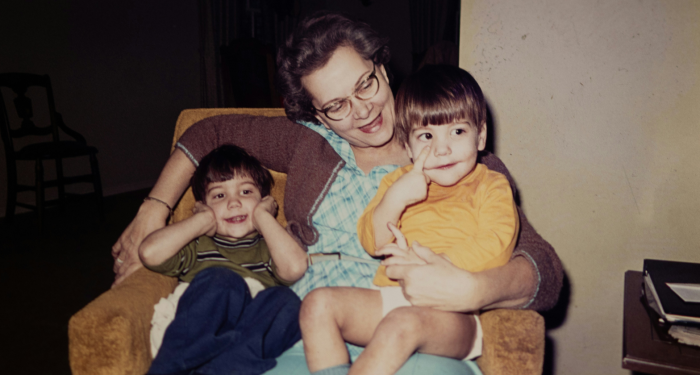
You can share a bed with someone every night, hear your children's voices every Sunday, and still feel like you're standing in a room where no one can actually see you.

Add VegOut to your Google News feed. 
Last Saturday night, I hosted eight people for dinner at my place—a 1920s bungalow in Austin with a kitchen barely big enough for two, let alone the kind of meal I'd planned. I made a coconut lemongrass soup from scratch, a recipe I learned from a street vendor in Bangkok's Ari neighborhood, and a charred broccolini dish with crispy shallots that I've been perfecting for months. Everyone stayed until almost midnight. There was wine and laughter and someone said, "This is exactly what I needed."
And when the last guest left and I stood at the sink scraping plates, the silence that followed was so enormous it had weight.
I am, by every visible measure, not alone. I have friends who show up when I cook. I have a group text that pings throughout the week. I have a neighbor who waves when I step outside to water the herbs on my porch. And I am the loneliest I have ever been in my entire life.
If you're reading this and something just shifted in your chest—some small recognition, some exhale you didn't know you were holding—I'm guessing you know exactly what I'm talking about. Not the loneliness of an empty house. The loneliness of a full one.
The Kind of Loneliness Nobody Warns You About
We talk about loneliness as though it's a problem of proximity. As though the fix is simply to add people. Make more friends. Go to the party. Join the group chat. Know your neighbors' names.
And for years, I believed that. Especially after my time working in luxury hospitality—surrounded by guests, colleagues, constant human contact—I thought loneliness was the absence of others. That if I could just arrange enough people around me, the feeling would dissolve like sugar in warm water.
But there's a kind of loneliness that doesn't come from being alone. It comes from being with people who are present in body but absent in the specific way you need them to be present.
Research published in the Personality and Social Psychology Bulletin calls this the difference between objective social isolation and perceived social isolation—and it's the perceived kind, the felt absence of meaningful connection even when surrounded by others, that actually predicts depression, cognitive decline, and mortality. Not whether someone is physically there. Whether you feel met.
That distinction wrecked me when I first read it. Because it named the thing I'd been circling for years without being able to pin down. I wasn't lacking people. I was lacking the experience of being known by them.
When the Gathering Replaces the Connection
Here's what I've come to understand about my dinner parties: they are rituals. And rituals can be beautiful—but they can also become the thing you do instead of the thing you actually need.
I host because I was trained to host. I spent years in professional kitchens learning under European chefs who taught me that feeding people is a form of love. And it is. But somewhere along the way, the dinners became a performance of connection rather than connection itself.
People come. We eat beautifully. We trade stories about work, dating, weekend plans. Someone compliments the food and I feel a warm flicker of something that almost passes for intimacy. We say "We should do this more" at the end, and we mean it—but it's the kind of warmth that floats on the surface, careful not to dive.
Nobody asks, "Are you actually okay?" Nobody says, "I had a weird week and I don't know how to talk about it." Nobody breaks the script.
And so the script becomes the friendship, and the friendship becomes a recurring social event that looks—from the outside—like closeness.
I don't blame my friends. I really don't. They're navigating their own lives, their own exhaustion, their own quiet forms of loneliness they probably haven't named yet. But the gap between being invited and being reached is vast, and I live in that gap most days.
The Minimalist Paradox
This is the part that's hardest to write. Because when you've built a life around intentional simplicity—when you've deliberately pared down your possessions, your commitments, your square footage—people assume you've also made peace with solitude. They hear "minimalist" and think "monk." They see the sparse bungalow and the clean counters and imagine a man who has transcended the need for mess, including the emotional kind.
When I lived in Bangkok for three years, I fell in love with the Thai concept of sabai—a state of ease, of being comfortable in your own skin, of not needing more than what's in front of you. I built my life around that philosophy when I came back to Austin. I stripped everything down. I thought if I could just remove the noise, I'd finally hear something true underneath.
And I did hear something true. I heard how quiet it really was.
Loneliness inside a deliberately simple life isn't about the simplicity being wrong. It's about discovering that you can curate a beautiful, intentional existence and still ache for the one thing that can't be designed or optimized: the raw, unpredictable experience of being deeply known by another person.
A study in Personal Relationships found that emotional loneliness is strongly associated with a perceived lack of responsiveness—the feeling that the people in your life don't truly understand or care about your inner experience, even if they're perfectly attentive to the social contract. They'll come to dinner. They'll text back. They'll ask how the new recipe turned out. But they won't ask what you're thinking about at 2 a.m. when you can't sleep—because that kind of asking requires a vulnerability that even good friendships often calcify against.
My friends are kind. My friends are consistent. My friends are here. And I am lonely in a way that has nothing to do with absence and everything to do with the particular ache of being surrounded by people who see the outline of you but not the interior.
The Neighbor's Wave and the Illusion of Community
I mention the neighbor because she represents something I think a lot of people mistake for community. She waves. I wave back. Sometimes we exchange a few words about the weather or the live oaks dropping leaves all over the sidewalk. It's pleasant. It's civilized. It is absolutely not the same as knowing someone.
We've built entire neighborhoods around this kind of surface pleasantry and then wonder why people feel isolated. Research from the University of British Columbia has shown that even brief but genuine social interactions—what they call "weak ties"—can boost well-being, but only when those interactions carry some degree of authentic exchange. A wave across a driveway doesn't qualify. It's a gesture that says I acknowledge you exist without any of the risk that real knowing requires.
And risk is the word, isn't it? Because the loneliness I'm describing isn't just about what other people aren't giving me. It's about what I've stopped being willing to ask for.
I spent years in hospitality asking what everyone else needed from me—anticipating desires before they were spoken, making other people's comfort my entire professional identity—and I trained myself out of the habit of naming what I needed in return.
The Loneliness That Lives in a Full Life
I think what makes this particular kind of loneliness so corrosive is that it doesn't look like loneliness from the outside. It looks like a life that's working. Dinner parties? Check. Active social life? Check. Friendly neighbor? Check. You could photograph my Saturday night and put it on Instagram and it would look like exactly the kind of connectedness we're all supposed to be striving for.
But loneliness isn't a problem of inventory. It's a problem of depth. You can have every box checked and still feel like you're living behind glass—visible to everyone, touched by no one.
A Lancet commission on mental health identified loneliness as one of the most significant predictors of poor health outcomes, noting that it operates independently of actual social network size. It's not about how many people are in your life. It's about whether any of them see you clearly enough to notice when you're disappearing.
And that's the cruelest part: the disappearing happens so slowly. You stop mentioning the things that bother you because it's easier. You stop sharing the strange thought you had while chopping cilantro at 7 a.m. because no one asked. You stop talking about the restlessness that wakes you up some nights—the sense that at thirty-six, you should have figured out something you clearly haven't—because everyone else seems to be managing just fine.
Piece by piece, you edit yourself into something manageable—something that fits neatly into a dinner party conversation or a group text thread or a wave across the driveway. Until one day you realize you can't remember the last time someone saw the unedited version of you. And you can't remember the last time you offered it.
What I'm Not Saying
I want to be clear: I'm not saying my friends are bad friends. I'm not saying my community is failing me. I'm not saying my neighbor should be doing more. None of these people are the problem—and framing it that way would let me off the hook for the part I've played in building this particular cage.
Because I built it, too. I stopped asking for what I needed because asking felt like burdening. I stopped going deep in conversations because the surface felt safer. I stopped showing up as my full, complicated, sometimes inconvenient self because I'd internalized the idea that being a good friend—a good host, a good guest, a good man—means being easy to be around.
The loneliness of a full life is a collaborative project. It's what happens when everyone agrees—silently, without ever discussing it—that the appearance of connection is enough. That the dinner was hosted, so intimacy was achieved. That the text was returned, so friendship is intact. That the hand raised in greeting across a strip of lawn means you have community.
Where I Am Now
I don't have a tidy resolution. I'm not going to tell you I found the answer, because I haven't. I'm still standing at the sink after the guests leave. I'm still sitting alone in my bungalow at midnight, in a house I designed to feel peaceful, wondering when peaceful started feeling so much like empty.
But I've started doing one thing differently. At my last dinner, after the plates were cleared and the conversation was winding into its usual safe harbor, I broke the script. I said, "Can I tell you guys something honest? I've been feeling really disconnected lately. Not from you specifically—just from everything. Like I'm performing a life instead of living one."
There was a pause. A real one. Not the scripted kind.
And then my friend across the table said, "God, yes. Me too."
It wasn't a solution. It was a crack in the glass. And maybe that's where it starts—not with grand gestures or dramatic confrontations, but with the terrifying, simple act of saying the true thing instead of the easy one.
I think one of the things I've been avoiding about myself is this: I am a person who needs to be deeply known, and I have spent most of my adult life making that as difficult as possible for the people around me. Not out of cruelty. Out of the quiet, corrosive belief that needing anything from anyone is a weakness I can't afford.
I can afford it. I've been paying for the alternative for years, and the cost has been far higher than I realized.
So if you have the dinner parties, and the group texts, and the waving neighbor—and you're still the loneliest you've ever been—I want you to know you're not ungrateful. You're not broken. You're not asking for too much.
You're asking for the thing that every human being needs and that no checklist of social connections can automatically provide: the experience of being truly, specifically, inconveniently seen.
And the terrifying truth is, the only way to get it is to let yourself be.