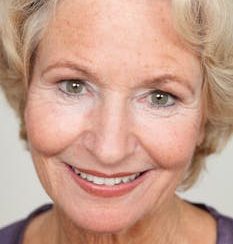
They don’t chase youth or try to hold onto who they used to be - they’ve made peace with the version of themselves that exists now. Instead of measuring their worth against the past, they’ve learned to redefine it in a way that fits the life they’re actually living.
The culture has a very specific idea about what aging well looks like. Stay active. Stay sharp. Stay relevant. The unspoken message underneath all of it is: stay young, or as close to it as you can manage. And if you start to slow down, if your body changes, if your world contracts, something has gone wrong.
But the research on who actually thrives after 70 tells a completely different story. The happiest older adults aren't the ones clinging to a younger version of themselves. They're the ones who've stopped measuring their current life against a version of themselves that no longer exists. And that release, which looks like giving up from the outside, turns out to be one of the most psychologically powerful transitions a person can make.
The Paradox of Aging
Stanford psychologist Laura Carstensen has spent decades studying what she calls the "paradox of aging". The paradox is this: virtually every factor that we assume produces happiness, physical health, social status, broad friendship networks, career relevance, declines with age. And yet, emotional well-being reliably improves. Older adults report fewer negative emotions, more gratitude, more empathy, greater forgiveness, and higher marital satisfaction than younger adults. Even during the pandemic, when older people were at significantly greater medical risk, they reported more positive and fewer negative emotions than younger people.
This finding has been replicated across diverse populations, from Norwegian adults to Catholic nuns to Chinese Americans. It isn't a cultural artifact. It's a consistent psychological pattern: the people who have the least, by conventional measures of success, often feel the best.
The question Carstensen set out to answer was why. And the answer turned out to be about what people stop doing, not what they start.
Socioemotional Selectivity Theory
Carstensen developed socioemotional selectivity theory to explain this pattern. The core idea is that when people perceive their remaining time as limited, their goals shift. Younger adults, who experience time as expansive, tend to prioritize future-oriented goals: acquiring knowledge, expanding networks, building credentials. Older adults, who recognize the finitude of their time, shift toward present-oriented, emotionally meaningful goals: savoring experiences, deepening existing relationships, and investing only in what genuinely matters to them.
This isn't decline. It's recalibration. The older adult who narrows their social circle isn't becoming isolated. Research shows they're actively pruning peripheral relationships and retaining emotionally close ones, creating smaller but more satisfying networks. The person who stops chasing new achievements isn't giving up. They're redirecting their finite attention toward experiences that produce actual contentment rather than the appearance of productivity.
Why "Staying Young" Can Backfire
The cultural pressure to "stay young" does something psychologically corrosive: it anchors your self-evaluation to a version of yourself that is, by definition, receding. Every birthday becomes a measurement of distance from the person you used to be. Your body is compared to the body you had at 40. Your energy is compared to the energy you had at 50. Your relevance is compared to the relevance you had when you were still working.
A systematic review in The Gerontologist examining the relationship between self-perception of aging and quality of life found a strong and consistent pattern across 32 studies: older adults who held positive perceptions of their own aging reported significantly higher quality of life. But the key finding wasn't that positive thinking was enough. It was that acceptance of aging, the willingness to acknowledge and adapt to age-related changes rather than resist them, functioned as a critical coping mechanism.
The people who struggled most were those whose self-concept was still tethered to a former self. They weren't depressed because they were old. They were depressed because they were measuring their current reality against a standard that no longer applied.
What Acceptance Actually Looks Like
Acceptance in this context isn't resignation. It's not "I'm old and nothing matters." It's closer to: "I am not who I was, and that's not a failure. It's a transition."
Research from UC Berkeley on acceptance and aging found that older adults who practiced acceptance of negative emotional experiences, meaning they allowed difficult feelings to exist without trying to fight or suppress them, reported lower negative affect, less daily distress, and greater life satisfaction. The researchers noted that this capacity appeared to increase with age, and that it partially explained the well-documented improvement in emotional well-being across the lifespan.
The mechanism makes sense once you think about it. If you spend your 70s resisting the reality that your body has changed, that your career is over, that your social world has contracted, you're burning psychological resources on a fight you can't win. If you accept those realities and redirect your energy toward what's still available to you, the warmth of a close relationship, the pleasure of a morning walk, the satisfaction of mastering something small, you're working with your circumstances instead of against them.
The Stability Effect
Recent research on self-representation stability in older adults found that older people demonstrate greater stability in their self-concept than younger adults, and that this stability is directly linked to higher well-being, particularly in measures of self-acceptance, purpose in life, and autonomy. In other words, the older adults who feel best about their lives aren't the ones constantly updating their self-image to compete with their past. They're the ones whose sense of self has settled into something consistent and reliable.
This finding inverts the cultural narrative entirely. We tell older adults to reinvent themselves, to find a new passion, to stay busy, to prove they're still vital. But the research suggests that the people who thrive are the ones who've stopped reinventing and started accepting. Not accepting limitations as defeat, but accepting themselves as whole, complete people whose worth doesn't depend on matching the output of a younger version of themselves.
What This Means in Practice
The happiest 70-somethings I've encountered, both in the research and in life, share certain qualities. They've let go of the comparison. They don't talk about what they used to be able to do. They don't treat their current body as a disappointing version of their former one. They've found a way to be present inside the life they have right now, rather than mourning the life that's behind them.
They prioritize depth over breadth. They choose fewer people but invest more in each one. They choose fewer activities but engage more fully in each one. They've replaced the anxiety of relevance with something quieter and more durable: the experience of being enough without having to prove it.
None of this means they've stopped growing. Many of them are learning new things, pursuing new interests, and engaging with the world in ways that surprise them. But the growth isn't motivated by the fear of decline. It's motivated by genuine curiosity and the recognition that time is finite and should be spent on what actually matters.
That's not staying young. That's something better. It's becoming the kind of person who doesn't need to.