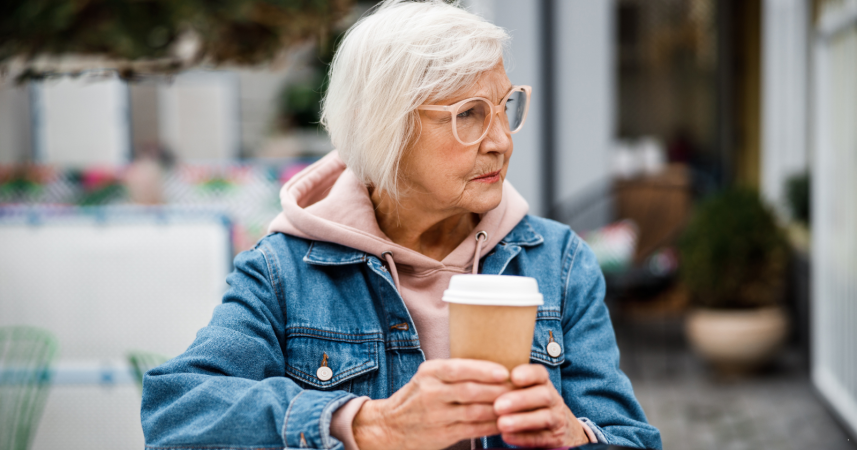
Psychology suggests many boomers don’t deny loneliness out of pride - but because they were taught that needing others meant something was wrong with them. For a generation raised to equate strength with self-reliance, admitting loneliness doesn’t just feel uncomfortable - it feels like failure.
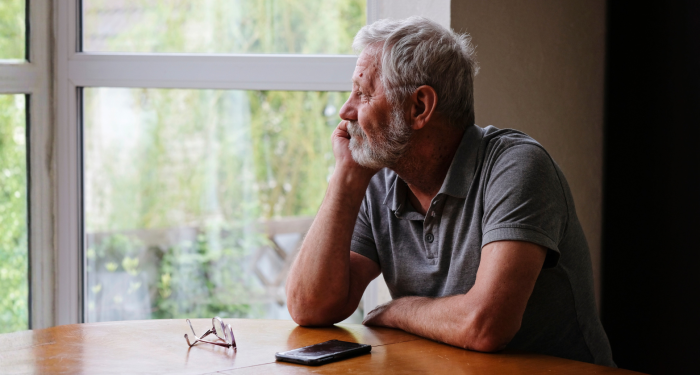
My neighbor Walter called me last Tuesday to say he was "just checking in." We talked for forty-five minutes. He told me about his garden, his bad knee, his opinions on the weather, a documentary he'd watched twice. What he did not say, not once, was that his wife had been gone for eight months and that he hadn't had a proper conversation in days. I know this because his daughter told me. Walter doesn't talk about being lonely. Walter talks about everything else.
I'm 70 years old. I taught high school English for 32 years, and I raised two children alone after my divorce at 28. I have sat with grief that came in waves and in silences I didn't expect. And still, I recognize in myself a version of what Walter carries: that old instinct to say "I'm fine" before the question is fully asked. It's not pride, exactly. It's something older and more complicated than pride. It's a definition of strength that got handed to an entire generation before they were old enough to question it.
What the Research Actually Shows
There has been a lot of noise in recent years about baby boomers being "the loneliest generation," and the reality is more nuanced than that headline suggests. Despite claims that aging boomers have become the loneliest generation in history, research published in the journal Psychology and Aging found that older adults today are not meaningfully lonelier than their counterparts were in previous generations. In fact, they might be a little bit less lonely. That's worth sitting with for a moment, because it cuts against the popular narrative.
But here is what those same studies also found, and this is the part that keeps me up at night. The increase in loneliness after age 75 is likely attributable to losses that are increasingly prevalent in older age, including declining mobility and independence, becoming a caregiver or widow, and grappling with the deaths of siblings and friends. In other words, loneliness doesn't necessarily strike earlier in life for boomers, but it is coming, quietly, and the question is whether they will know how to name it when it arrives.
And the stakes are not small. Meta-analyses have found that social isolation or loneliness in older adults is associated with a 50% increased risk of developing dementia and a 30% increased risk of incident coronary artery disease or stroke. The National Institute on Aging notes that as we age, many of us are alone more often than when we were younger, leaving us vulnerable to social isolation and loneliness, and related health problems such as cognitive decline, depression, and heart disease. Loneliness is not a mood. It is a medical condition with a body count, and treating it like a personal failing is exactly the problem.
A Generation Raised on a Different Definition of Strength
To understand why so many boomers refuse to admit they're lonely, you have to understand what they were handed as children. Those who came of age in the post-World War II era navigated rapid industrialization, cultural upheaval, and family structures that often prized stoicism over emotional processing. Their parents had survived the Depression and the war. Suffering in silence wasn't just a personality trait; it was a survival strategy that got passed down like good china.
"Many boomers were raised by parents who survived war, scarcity, and upheaval, where perseverance and endurance were core values," one psychologist told Newsweek. "Resilience was defined as pushing through discomfort, staying functional, and not stopping for emotional processing or self-reflection." That definition of resilience, it turns out, has a shadow side. "Endurance and resilience are not the same thing," the same expert said. "Many boomers learned to tolerate distress rather than examine or address it, which worked externally but often came at an internal cost."
I think about my own father, a mailman in a small Pennsylvania town, who walked his route through three decades of winters and never once used the word "lonely" in my hearing. Not because he was never lonely. Because that word was not in the vocabulary available to him. Feelings, for his generation and the one that followed, were largely secondary to function. You kept moving. You kept providing. You were fine until the day you weren't, and even then, you tried to be fine.
Being raised in a society with limited resources, limited jobs, and limited schooling inspired a generation of competitors: individuals who operated with a "work as hard as you can, then work even harder the next time" mindset. Identity for boomers was built on productivity, on being needed, on pulling one's own weight. Retirement, then, becomes not just a schedule change but an identity crisis. And loneliness, in that framework, looks uncomfortably like failure.
The Silence Isn't Stubbornness. It's Conditioning.
When I volunteer at the women's shelter teaching resume writing, I watch women in their sixties who have been told their whole lives that needing people is a weakness slowly begin to ask for help. It takes time. It takes a room where the cultural permission finally exists. For many boomers, that room has never been built.
Many cultural messages equate independence with strength. Men, specifically, are often socialized not to show weakness, so they may have more stigma around seeking help. These norms can create shame around needing anything at all, even when support is reasonable and deserved. But this isn't only a male problem, though it runs deepest there. Women of this generation were taught their own version of the same lesson: be the one who holds everything together. Being the one who needs holding together is a different matter entirely.
Psychology has a term for what happens to people who spend decades not naming their inner life. It's called alexithymia, which is difficulty identifying and expressing emotions. When nobody helped you understand that the tightness in your chest was anxiety or that the heaviness in your limbs was sadness, you never learned to recognize these signals. So when a boomer says "I'm fine," they may not be lying. They may genuinely not have the internal language to say anything else. The silence isn't a wall. It's a vocabulary problem with seventy years of reinforcement behind it.
This generation values independence so highly that they'd rather suffer in silence than admit they're desperately lonely. And yet that silence costs them. Research on traditional masculinity norms finds that men may so frequently endure in silence due to the societal belief that emotional vulnerability equates to weakness, putting them in a kind of double jeopardy where psychological anguish increases while readiness to ask for help decreases.
What Gets Lost, and What Can Still Be Found
I lost my second husband to Parkinson's after seven years of caregiving. There were days in that stretch when I was lonelier than I had ever been as a young divorced mother. But I had, by then, lived long enough to know that loneliness named is loneliness that can be addressed. Loneliness unnamed just becomes the background noise of a life. I had learned, the hard way and later than I would have liked, that asking for help isn't weakness. It is, in fact, the harder and braver thing.
The research suggests that connection, not self-sufficiency, is what actually protects us. "Good quality relationships are key to reducing loneliness," said researcher Louise Hawkley of the University of Chicago. That sounds almost embarrassingly simple. But for a generation that was handed a story about strength that left no room for need, it is actually a radical reframe.
I understand where that old definition of strength came from. I do. It came from the Depression, from the war, from real scarcity and real danger. But understanding where something came from does not obligate us to keep carrying it. The truth is that the model broke. It taught people to endure everything except the one thing that would have actually helped them, which was reaching toward another person and saying, plainly, that they were struggling. That is not a nuanced both-sides observation. It is what the research shows and what I have watched play out in living rooms and hospital corridors for decades. Needing people was never the opposite of strength. The definition that said otherwise was wrong, and it has cost this generation more than most of them will ever calculate.
My neighbor Walter called again yesterday. We talked for thirty minutes. Near the end, there was a pause, and he said something about the weather turning. Then he said goodnight. I sat with the phone in my hand afterward, thinking about all the things that live in the silences of a forty-five-minute conversation about nothing in particular. I don't know if Walter will ever say the word "lonely." I don't know if he can. And I am not sure, honestly, that the generation that taught him to swallow that word left him any realistic path back to it. That is not a problem with a tidy answer. It is just the shape of the thing.
If You Were a Healing Herb, Which Would You Be?
Each herb holds a unique kind of magic — soothing, awakening, grounding, or clarifying.
This 9-question quiz reveals the healing plant that mirrors your energy right now and what it says about your natural rhythm.
✨ Instant results. Deeply insightful.
Marlene Martin
Marlene Martin is a retired high school English teacher who spent 38 years in the classroom before discovering plant-based eating in her late sixties. When her daughter first introduced her to the idea of removing animal products from her diet, Marlene was skeptical. But curiosity won out over habit, and what started as a reluctant experiment became a genuine transformation in how she thinks about food, health, and aging.
At VegOut, Marlene writes about nutrition, wellness, and the experience of embracing new ways of eating later in life. She brings a teacher’s instinct for clarity and patience to topics that can feel overwhelming, especially for readers who are just beginning to explore plant-based living. Her writing is informed by personal experience, careful research, and a belief that it is never too late to change.
Marlene lives in Portland, Oregon, where she spends her mornings reading research papers, her afternoons tending a modest vegetable garden, and her evenings knitting while listening to audiobooks. She has three adult children and two grandchildren who keep her honest about staying current.
More Articles by Marlene