Picture this: you're at a dinner party, you decline the wine, and suddenly the whole table turns into a panel discussion about your personal life choices. "Are you pregnant?" "Are you in recovery?" "Come on, just one glass." You watch the host's face cycle through confusion, mild offense, and finally, reluctant acceptance. You've explained yourself three times in four minutes, and all you wanted was a sparkling water.
If you've been there, you already know the quiet relief that comes the day you just... stop explaining. Not because you're being mysterious or difficult. But because you're exhausted from turning a two-second personal choice into a group therapy session every single time.
The Science of Why You're Tired of Justifying Yourself
There's actual behavioral science behind that exhaustion. First formally characterized by researchers like Roy Baumeister and Kathleen Vohs, decision fatigue is a distinct psychological phenomenon where the act of making numerous or difficult choices depletes an individual's mental resources, leading to a measurable decline in the quality of subsequent decisions. A landmark Vohs and Baumeister study found that making many choices impairs subsequent self-control, drawing from a limited-resource model of self-regulation and executive function. Now apply that same principle to social negotiations. Every time a non-drinker has to explain, defend, and re-explain their choice, they're burning through real cognitive and emotional energy. It's not just annoying. It's genuinely draining.
And it happens a lot. According to research on non-drinkers' social experiences, participants reported that not drinking alcohol is generally questioned, and non-drinkers are almost always asked to justify their non-consumption. Almost always. Not occasionally. Not once in a while at a particularly rowdy work happy hour. Nearly every single time. At some point, a reasonable person's brain starts filing that particular social exchange under "not worth it."
What makes the dynamic even more exhausting is the unwritten hierarchy of acceptable excuses. Studies have highlighted how nondrinkers are compelled to legitimize abstinence, citing reasons that are viewed as "valid," such as religion, health issues, or an athletic lifestyle. Personal preference, apparently, doesn't make the cut. You need a hall pass. You need a good enough reason. As if choosing not to put something in your body requires external approval from the people at your table.
Why Non-Drinkers Make Drinkers Uncomfortable
Here's the part that doesn't get talked about enough: the discomfort isn't really about you. Scientists who interviewed drinkers about their attitudes toward people who abstained from alcohol in social situations found three recurring themes: a threat to fun, where drinkers felt that those who weren't drinking might judge them negatively; a threat to connection, where drinkers found it difficult to bond socially with non-drinkers; and a threat to self, where being around a non-drinker prompted unwanted self-reflection about their own drinking habits. This framework, explored in detail by research on drinkers' attitudes toward abstainers, suggests the stigma directed at non-drinkers may be enacted as a defense against that unwanted self-reflection.
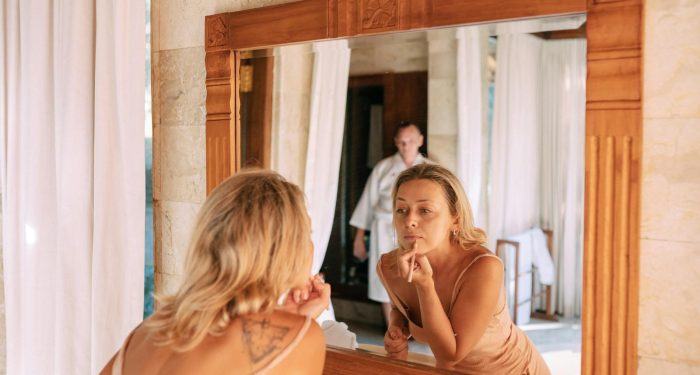
That last one is doing a lot of heavy lifting. Someone nursing their third cocktail doesn't love being reminded, by your existence alone, that drinking is a choice. The interrogation you're on the receiving end of is often less about genuine curiosity and more about managing someone else's cognitive dissonance. You became a mirror they didn't ask for. And rather than sit with that discomfort, it's easier to pressure you into joining in, so the mirror goes away.
A study published in PMC found that students who limited or abstained from drinking were labeled with explicitly derogative terms and were expected to provide a justification for not drinking, with acceptable reasons including being an athlete or being broke. Choosing not to drink because you simply don't want to? That one, apparently, still needs a better pitch.
Stopping the Explanation Is a Form of Boundary-Setting, Not Rudeness
My friend Marcus went sober a couple of years ago after years of using alcohol to smooth over social anxiety. For the first six months, he had a different excuse ready at every event: "I'm on medication." "I have an early morning." "I'm driving." Each excuse was a small betrayal of his own decision, a way of making his choice palatable for everyone else in the room. One day he just stopped. No explanation, no apology. He'd pour himself a soda, smile, and redirect the conversation. Predictably, the people who knew him well adjusted immediately. The people who pushed back were, as he put it, "really telling on themselves."
Psychology backs him up. You don't have to explain your decisions about drinking to everyone you socialize with. According to one study, non-drinkers had the best experience with self-disclosure when the benefits of sharing that they were intentionally abstaining from alcohol outweighed the risks. That's a crucial reframe. Disclosure isn't the default. It's a choice, made strategically, for relationships that can actually hold it.
There's also something deeper going on with the language itself. Research from behavioral science suggests that framing matters enormously. When non-drinkers say "I can't drink," they're positioning themselves as restricted. When they simply act on a choice without performing an explanation, they're operating from a place of self-directed identity rather than social permission. A qualitative study of non-drinking students found that for non-drinkers who displayed outward confidence in social situations, their decision not to drink was respected. Less pressure was applied when they stood firm. Confidence, it turns out, is its own explanation.
The Shift That's Already Happening
The culture is, slowly, moving. As NIAAA Director George F. Koob, PhD noted, the sober curious phenomenon has "helped to create a cultural space for exploring and changing drinking behavior." More people are opting out for more reasons, and the reasons are becoming increasingly mundane and lifestyle-based rather than medical or religious. That normalization is genuinely changing how these conversations go.
The sober curious movement is broadly defined as the introspective practice of questioning one's personal relationship with alcohol, prioritizing physical and mental well-being without the need to adopt a label of absolute abstinence or addiction recovery. The key word there is introspective. It's a private process. And yet the expectation that it must be narrated publicly, on demand, at every social gathering, hasn't fully caught up to the shift.
There's something worth sitting with in all of this. When someone stops explaining why they don't drink, they're not being cold or withholding or passive-aggressive. They've simply done the math. They've handed over that explanation dozens of times, watched it get second-guessed or debated or met with unsolicited opinions, and concluded that their peace of mind is worth more than the social comfort of people who, frankly, weren't offering them much comfort to begin with.
The decision not to explain is, in its own quiet way, the most honest answer of all. It says: this choice belongs to me, and I've stopped asking for your approval of it. And the people in your life who truly respect you? They'll already understand that.
If You Were a Healing Herb, Which Would You Be?
Each herb holds a unique kind of magic — soothing, awakening, grounding, or clarifying.
This 9-question quiz reveals the healing plant that mirrors your energy right now and what it says about your natural rhythm.
✨ Instant results. Deeply insightful.

Jordan Cooper
Jordan Cooper is a food and culture writer based in Venice Beach, California. Before turning to writing full-time, he spent nearly two decades working in restaurants, first as a line cook, then front of house, eventually managing small independent venues around Los Angeles. That experience gave him an understanding of food culture that goes beyond recipes and trends, into the economics, labor, and community dynamics that shape what ends up on people’s plates.
At VegOut, Jordan covers food culture, nightlife, music, and the broader cultural forces influencing how and why people eat. His writing connects the dots between what is happening in kitchens and what is happening in neighborhoods, bringing a ground-level perspective that comes from years of working in the industry rather than observing it from the outside.
When he is not writing, Jordan can be found at live music shows, exploring LA’s sprawling food scene, or cooking elaborate meals for friends. He believes the best food writing should make you understand something about people, not just about ingredients.
More Articles by Jordan