
Add VegOut to your Google News feed. 
People who were always the strong one in the family often become the loneliest person in the room after 65.
Nobody sees it coming. Least of all them.
They spent decades being the one everyone called. The one who held it together when someone else fell apart. The one who managed the crisis, absorbed the emotion, made the plan, and never once said: actually, I'm not okay either.
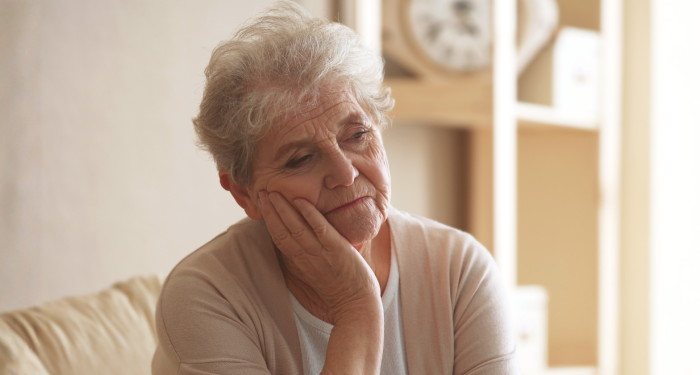
And then one day the calls slow down. The kids are grown. The parents are gone. The siblings have settled into their own lives. And the strong one is sitting in a quiet house, realizing that the role that defined them for fifty years has quietly expired.
Not with a bang. With a dial tone.
How the role gets built
Psychologists have a term for what happens when a child takes on emotional responsibilities that should belong to the adults in the family. It's called parentification.
The concept was first explored by family therapist Salvador Minuchin and later developed extensively by researcher Gregory Jurkovic at Georgia State University, whose work distinguished between two forms: instrumental parentification (handling practical tasks like cooking or managing bills) and emotional parentification (becoming a parent's confidant or emotional anchor).
Emotional parentification is the more damaging of the two. Because the child doesn't just learn to help. They learn, at a fundamental level, that their value comes from being needed.
That lesson gets carried into adulthood. Into marriages. Into friendships. Into careers. And by the time you're 65, it's so deeply wired that you don't even recognize it as a pattern. It just feels like who you are.
The loneliness of being surrounded
Here's the cruel part. The strong one isn't usually isolated in the traditional sense. They often have family. Friends. People who care about them.
But the relationships are almost always one-directional. They give. Others receive. And nobody thinks to reverse the flow because the strong one never taught anyone how to care for them. They wouldn't know how to accept it even if it was offered.
Research by Louise Hawkley and John Cacioppo at the University of Chicago found that perceived social isolation — feeling lonely regardless of how much social contact you actually have — is a stronger predictor of cognitive decline, depression, and mortality than objective isolation.
It's not about how many people are around you. It's about whether you feel truly seen by any of them.
The strong one can be at a full dinner table and still feel completely alone. Because everyone at that table knows them as the capable one, the together one, the one who doesn't need anything. And that image, built over a lifetime of service, becomes a prison.
Why it hits hardest after 65
Several things converge in later life that make this pattern particularly devastating.
The work identity disappears. For many strong ones, the job was another arena where being needed gave them purpose. Retirement strips that away.
The caregiving role shifts. Parents die. Children become independent. The strong one's primary function — taking care of others — is no longer required in the same way.
And the body changes. Health issues emerge. Energy declines. For the first time, the strong one might actually need help. But they have no practice asking for it, and the people around them have no practice offering it.
A study using data from the National Social Life, Health, and Aging Project — a population-based survey of over 3,000 older adults — found that perceived isolation was more closely linked to mental health problems than actual social disconnection. The researchers found that loneliness was a key predictor of depression among older adults specifically, and that perceived social support mattered more for mental health than network size or frequency of contact.
You can have a big family. You can have regular visitors. And you can still be profoundly lonely if none of those relationships involve someone asking how you're really doing — and meaning it.
The contract nobody signed
The strong one built every relationship in their life on an unspoken contract: I take care of you, and in exchange...
Well, there was never an "in exchange." That's the whole problem.
They never learned to complete that sentence because completing it would have felt selfish. And selfish was the one thing they could never afford to be.
Research on parental bonding and loneliness in older adults, published in BMC Psychology, used data from the English Longitudinal Study of Ageing to examine whether early family dynamics predicted loneliness later in life. They found that poor parental bonding in childhood was associated with loneliness even in adults over 50 — and that this association persisted regardless of how socially connected those adults were.
The pattern was set early. The child who learned to prioritize everyone else's needs became the adult who couldn't receive care without anxiety. And that adult became the older person sitting in a quiet living room, surrounded by photographs of everyone they held together, wondering why nobody is holding them.
The five-year study that proved it
Cacioppo and Hawkley's five-year longitudinal study published in Psychology and Aging tracked 229 adults aged 50 to 68 and found that loneliness predicted subsequent increases in depressive symptoms — but depression didn't predict subsequent loneliness.
In other words, loneliness comes first. It's not a symptom of depression. It's a cause.
And for the strong one — the person who spent a lifetime making sure everyone else was okay while quietly suffocating inside their own competence — that loneliness has been accumulating for decades. It just wasn't visible until the structure of daily life fell away and there was nothing left to distract from it.
What the strong one needs to hear
If you're this person — or if you love this person — here's what I think matters.
The role was real. The sacrifice was real. The strength was real. Nobody is diminishing that.
But the role was also a cage. And the lock was on the inside.
You are allowed to need things. You are allowed to say "I'm not okay." You are allowed to sit in a room full of people and admit that you're lonely even though you're the one who held them all together for forty years.
That admission isn't weakness. It's the first honest thing the strong one has said in decades.
And for the people around them: don't wait to be asked. The strong one will never ask. They don't know how. They were never taught.
Just show up. Sit down. And say the five words they've been waiting their whole life to hear:
"How are you, really?"
And then actually listen. Because for the first time, they might tell you the truth.