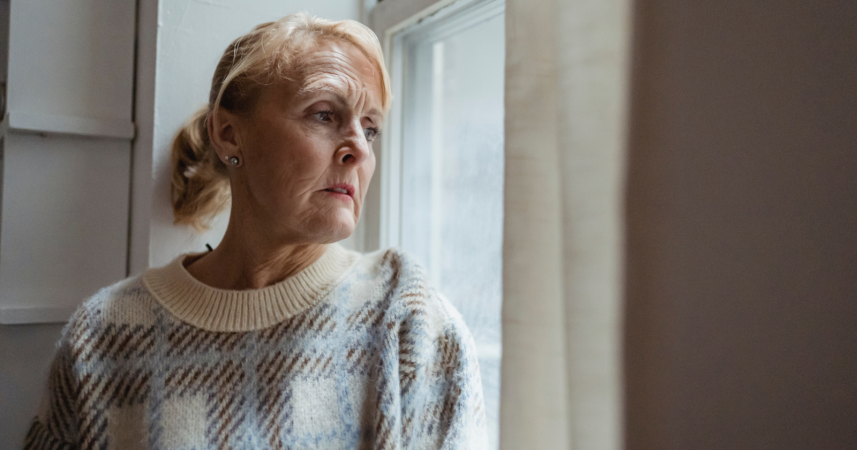
It’s not the physical decline that stings most—it’s realizing you’ve earned hard-won clarity about life, only to find there’s no real place to pass it on. The gap isn’t just age—it’s relevance, where experience feels invisible in a world that rarely stops to listen.

Add VegOut to your Google News feed. 
I am 70 years old and there is nothing wrong with my knees that was not wrong with them at 60. My memory is fine. I occasionally lose a word mid-sentence, but I lost words mid-sentence at 40 too, I just did not notice because nobody had told me to watch for it yet. The physical stuff is manageable. It is annoying, it is slow, it is occasionally humbling, but it is manageable.
The hard part is something else entirely.
The hard part is that I have spent 70 years accumulating a very specific kind of knowledge, the kind you can only get by living long enough to see how things actually turn out, and I am surrounded by people who do not want it. Not because they are arrogant. Not because they think I am stupid. But because they are at a stage of life where my experience feels irrelevant to their situation, and no amount of me insisting otherwise is going to change that.
I finally know what matters. And absolutely no one under 50 wants to hear it.
What I know now
I know that the career crisis my daughter is going through at 38 is going to resolve itself within two years and will seem almost trivial by the time she is 45. I know this because I went through the same thing, and so did every person I know who lived long enough to look back on it. I know that my nephew's obsession with buying a bigger house is going to deliver approximately six months of satisfaction followed by 25 years of maintenance. I know that the friendship my son is neglecting because he is too busy will be the thing he misses most when his schedule finally opens up, except by then it will be too late.
I know all of this with the certainty of someone who has watched the entire movie. And the people I am trying to tell are still in act one, and they do not want spoilers.
Why they do not want to hear it
Research on aging, wisdom, and decision-making has found that older adults show a significant information processing bias toward positive rather than negative information, a phenomenon confirmed by meta-analysis. Older adults attend to and remember positive information to a greater extent than younger adults. This is not cognitive decline. It is a shift in priorities driven by a shorter perceived time horizon. But it creates a gap in how older and younger people evaluate the same situation. The younger person is focused on maximizing. The older person is focused on meaning. Those are different languages, and they do not translate well across the generational divide.
Research on wisdom and aging notes that having critical life experiences is considered a necessary condition for the development of wisdom, but so is the willingness to reflect on those experiences. Wisdom is not simply knowledge. It is knowledge that has been processed through reflection, loss, correction, and time. The problem is that this processing takes decades. You cannot shortcut it with a conversation. And the person under 50 has not yet had the experiences that would make my wisdom legible to them.
When I tell my daughter that her career crisis will pass, she does not hear reassurance. She hears dismissal. When I tell my nephew that the house will not make him happy, he does not hear wisdom. He hears an old person who does not understand the market. The content of what I am saying is accurate. The delivery mechanism, a 70-year-old telling a 38-year-old how to feel about their life, is fundamentally broken.
The generativity problem
Erik Erikson, the developmental psychologist who mapped the stages of human life, identified the central psychological task of later adulthood as generativity versus stagnation. Generativity is the desire to contribute to the next generation, to pass on what you have learned, to leave something useful behind. Research on wisdom and aging in society describes how older adults appear to have acquired the dispositions and skills to handle interpersonal conflicts and life planning more effectively than younger people, and that they can be a good source of advice particularly in the areas of relationships and uncertainty, providing a qualitatively different contribution than any other age group.
The research validates the instinct. Older adults genuinely do have something to offer. The generative drive is not delusion. But the research also reveals the mechanism problem: the contribution requires a willing recipient. And the willing recipient, for reasons that are developmental rather than personal, is often not there.
Younger adults are in the stage Erikson called intimacy versus isolation, or in the middle of industry and identity formation. They are building. They need to build. And building requires the belief that your choices matter, that your path is unique, that the decisions you are making right now are consequential in ways that nobody else can fully appreciate. Accepting an older person's wisdom at this stage feels like conceding that your experience is not unique. And that concession, even when it would save you years of unnecessary suffering, is developmentally premature.
The loneliness of seeing clearly
This is the part that nobody prepares you for. You spend your thirties and forties and fifties accumulating experience, making mistakes, learning from them, and slowly building a framework for understanding how life actually works. And then you arrive at 70 with this extraordinarily useful framework, and you discover that the people who would benefit most from it are the people least equipped to receive it.
A systematic review of life regret and well-being found that the content of people's regrets shifts across the lifespan, with older adults focusing more heavily on family and relationship regrets. The research also found that older adults evaluate their regrets as less likely to change and less under their personal control. That is not helplessness. It is clarity. You can see what mattered, you can see what was wasted, and you can see those same patterns forming in the people you love. The clarity is a gift. The inability to transfer it is the tax.
Research on regret in older adults aged 79 to 98 found that participants most commonly reported feeling regret due to things they had not done. Not the mistakes they made. The chances they did not take, the words they did not say, the people they did not prioritize. I see my children heading toward the same regrets I carry, and I cannot stop them, because they are not making mistakes. They are making the same perfectly reasonable decisions I made at their age, for the same perfectly reasonable reasons, and they will arrive at the same conclusions I did, 30 years too late to change course.
What I have learned to do instead
I have learned to stop volunteering my wisdom. Not because it is wrong, but because uninvited wisdom is not wisdom. It is intrusion. The person under 50 does not need me to tell them what matters. They need me to be available when they figure it out for themselves.
That means being the person they call at 11pm when the career crisis hits rock bottom. Being the person who says "I know" instead of "I told you so." Being the person who holds the space for them to arrive at the conclusion I could have handed them five years ago, without making them feel stupid for not getting there sooner.
Research on wisdom and mental health in old age identifies three dimensions of wisdom: cognitive (understanding oneself and others), reflective (self-examination and multiple perspectives), and compassionate (empathy and care for others). The compassionate dimension is the one that matters most at 70. Not the knowing. The caring. Not the insight. The patience to let the insight be discovered rather than delivered.
The hardest part of aging is not the body. The body is doing what bodies do. The hardest part is the gap between what you can see and what you can share. It is knowing that the most valuable thing you own, a lifetime of processed experience, has no market among the people who need it most. And the only way to make it useful is to stop trying to sell it and start being the kind of person others come to when they are finally ready to buy.
I am 70. My knees are fine. My memory is fine. What hurts is the distance between what I know and what I can give. And the only thing that makes it bearable is the hope that one day, when my daughter is 70 and her children will not listen to her either, she will remember that I was there. Not lecturing. Not correcting. Just there. And maybe that will be enough.
What’s Your Plant-Powered Archetype?
Ever wonder what your everyday habits say about your deeper purpose—and how they ripple out to impact the planet?
This 90-second quiz reveals the plant-powered role you’re here to play, and the tiny shift that makes it even more powerful.
12 fun questions. Instant results. Surprisingly accurate.