Money came and went - but what stayed constant was how people treated others when there was nothing on the line. In the end, class isn’t about status or success - it’s revealed in the quiet moments where kindness brings no reward at all.
I used to teach at a private academy where parents pulled up in Range Rovers and dropped off kids who'd never set foot in a public library. Then I taught at an inner-city school where some of my students didn't know if they'd eat dinner that night. The kids weren't that different. But the parents? That's where I saw something that changed how I understood what real class means.
Here's what nobody tells you about money: having it doesn't make you a better person, and losing it doesn't make you worse. I've been on both sides. I grew up in a tiny Pennsylvania town where my father carried mail and my mother took in sewing. We had enough, barely. Then I married young, divorced at 28, raised two kids on a teacher's salary while clipping coupons and saying no to things I desperately wanted to say yes to. Later, I remarried a man who'd done well in business. For seven years, I didn't look at price tags. Then he got sick, the medical bills came, and I learned all over again what it means to count pennies.
Through all of it, I kept noticing the same thing: the kindest people weren't always the ones with the most resources. And the cruelest ones came from every tax bracket.
The Waiter Test Never Lies
There's an old saying that you can judge someone's character by how they treat the waiter. I'd expand that. Watch how someone treats the janitor. The cashier who's moving too slowly. The customer service rep who can't fix their problem. The neighbor whose lawn isn't as nice as theirs. Anyone who can't do a single thing for them in return.
During my years at that private academy, I watched a mother berate a cafeteria worker for ten minutes because her daughter's sandwich had mayo when she'd requested mustard. The next week, that same mother donated $50,000 to the library fund and got her name on a plaque. She wasn't a monster. She just believed some people mattered more than others. That's not wealth talking. That's character, or the lack of it.
Meanwhile, one of my students at the public school had a mother who cleaned office buildings at night. She'd arrive at parent-teacher conferences in her work uniform, apologizing for how she looked. But she learned every teacher's name, asked how our families were doing, brought homemade cookies she couldn't really afford to make. She treated us like we mattered. Because to her, we did.
What I Learned From Being on Both Sides
When you've had money and lost it, you learn something important: people treat you differently. Not everyone. But enough that you notice. Some friends quietly disappear. Invitations dry up. Conversations shift when you mention you're budgeting or can't afford something.
Research backs this up. A study published in the Proceedings of the National Academy of Sciences found that people from upper-class backgrounds were more likely to engage in unethical behavior, including lying and cheating. The researchers suggested that wealth can create a sense of entitlement that makes people less attuned to others' needs. I saw this play out in small ways every day, both in myself when I had money and in others.
Having resources can insulate you from other people's struggles. You forget what it's like to need help. You stop seeing the person bagging your groceries as someone's tired mother working a second job. It's not malicious. It's just forgetting. But that forgetting is the enemy of class.
The Invisible People
Real class shows up in who you see. Not just who you notice, but who you truly see as human, as worthy of your time and kindness and respect.
I volunteer now at a women's shelter, teaching resume writing. These women are in crisis. They're scared, exhausted, often ashamed. And you can tell within minutes which volunteers see them as projects and which ones see them as people. It's in the eye contact. The listening. The way someone asks a question and actually waits for the answer.
According to research from UC Berkeley's Greater Good Science Center, compassion isn't just a feeling, it's a skill that can be developed. But it requires practice and, critically, it requires seeing others as worthy of our compassion regardless of their circumstances. The women I work with don't need pity. They need to be treated like the capable humans they are, just during the hardest chapter of their lives.
Small Moments, Big Tells
Watch for the small moments. They reveal everything. How does someone react when a store clerk makes a mistake? Do they become patient or impatient? How do they speak to someone whose first language isn't English? Do they slow down or speed up, getting irritated? What happens when they're in the express lane and someone in front of them clearly has more than ten items?
I learned this from my mother, who took in sewing from wealthier women in town. Some would come to our house, look around our small rooms, and hand her their clothes like she was a coat rack. Others would sit down, ask about her life, admire her work. Guess which ones tipped? Not always the richest ones. Usually the ones who'd struggled themselves, or who just had enough emotional intelligence to know my mother was a person, not a service.
A study in Psychological Science found that people of lower socioeconomic status are actually better at reading others' emotions. When you've had to depend on others' kindness, you get better at seeing people. You develop empathy not as a virtue project but as survival.
What Money Can't Buy
I'm 71 now. Comfortable enough, though not what I was. And I can tell you the richest moment of my life wasn't in a nice restaurant or on a vacation. It was three years ago, when I was coming out of the grocery store struggling with bags after my husband had died. A teenage kid I didn't know stopped, took my bags, walked me to my car, loaded everything in, refused a tip, and said, "My grandma taught me better."
That kid had class. Real class. The kind that has nothing to do with money and everything to do with seeing an old woman who needed help and deciding she was worth two minutes of his time when there was nothing in it for him.
According to research from the National Institutes of Health, acts of kindness actually benefit the giver as much as the receiver, releasing oxytocin and creating what researchers call a "helper's high." But I don't think that kid was thinking about brain chemistry. He was just being decent to someone who couldn't do anything for him in return.
That's the whole measure, really. How you treat people when the transaction is one-sided. When there's no benefit to you. When no one's watching. When they can't help you climb any ladder or make you look good or return the favor.
My father used to say you could tell everything about a man by whether he picked up litter in a parking lot when nobody was looking. Not because he was being paid to. Not because someone might see him and think well of him. Just because it was the right thing to do and he was a person who did right things.
I've been rich and I've been broke and I've learned this: money changes your comfort level, but it doesn't have to change your character. Class isn't about what you have. It's about who you are when there's absolutely nothing to gain from being kind. And those moments, the unrewarded ones, are the only ones that really count.
If You Were a Healing Herb, Which Would You Be?
Each herb holds a unique kind of magic — soothing, awakening, grounding, or clarifying.
This 9-question quiz reveals the healing plant that mirrors your energy right now and what it says about your natural rhythm.
✨ Instant results. Deeply insightful.
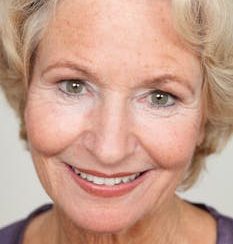
Marlene Martin
Marlene Martin is a retired high school English teacher who spent 38 years in the classroom before discovering plant-based eating in her late sixties. When her daughter first introduced her to the idea of removing animal products from her diet, Marlene was skeptical. But curiosity won out over habit, and what started as a reluctant experiment became a genuine transformation in how she thinks about food, health, and aging.
At VegOut, Marlene writes about nutrition, wellness, and the experience of embracing new ways of eating later in life. She brings a teacher’s instinct for clarity and patience to topics that can feel overwhelming, especially for readers who are just beginning to explore plant-based living. Her writing is informed by personal experience, careful research, and a belief that it is never too late to change.
Marlene lives in Portland, Oregon, where she spends her mornings reading research papers, her afternoons tending a modest vegetable garden, and her evenings knitting while listening to audiobooks. She has three adult children and two grandchildren who keep her honest about staying current.
More Articles by Marlene