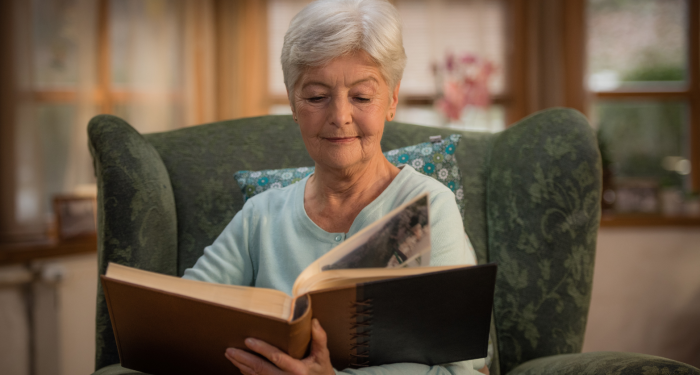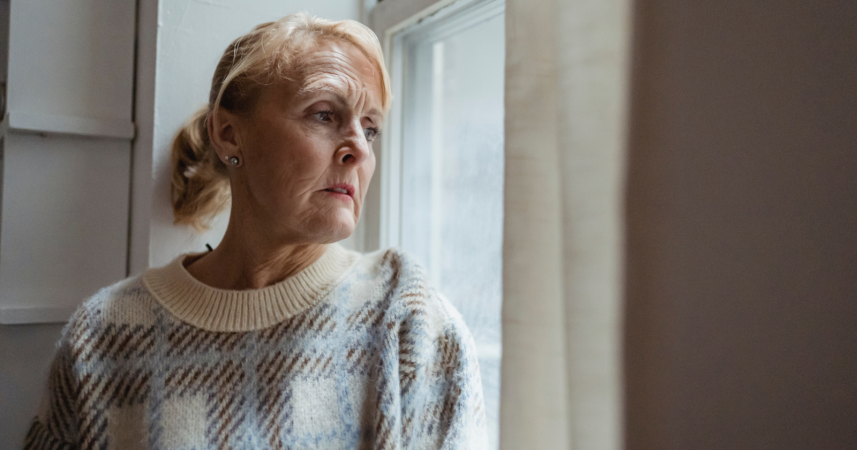
For decades, I mistook productivity, responsibility, and being needed for a meaningful life - until I realized I’d built an identity around usefulness, not joy. Now, at 70, I’m confronting the quiet grief of a life spent doing everything right while barely noticing how little of it actually felt like mine.

Add VegOut to your Google News feed. 
I turned 70 last spring. We had a party. There were flowers and a cake and a room full of people who love me, and I smiled all evening and felt warm and grateful and surrounded.
And somewhere around 10pm, sitting quietly in the corner while everyone else was laughing, a thought slid in that I haven't been able to shake since: when was the last time I actually felt joy?
Not gratitude. Not relief. Not the particular satisfaction of being needed. Not the buzz of a full calendar or the glow of being told you're doing a good job. I mean the real thing. The kind of joy that doesn't have a purpose attached to it.
I sat there and genuinely couldn't remember.
I've had a full life. Good marriage. Kids who turned out well. A career that mattered. I've been useful and productive and, honestly, pretty well-liked. People have always counted on me and I've always showed up. If you'd asked me at 45 whether I was happy, I would have said yes without hesitating. Looking back now, I think what I was actually saying was: I'm busy. I'm needed. I'm not sad. Therefore, happy.
Turns out those are very different things.
Busyness wore a very convincing disguise
There's interesting research on this. Psychologists have found that being busy doesn't actually correlate with genuine fulfillment or happiness, and that high levels of busyness are linked to lower quality of life and poorer mental health outcomes. But here's the twist: it feels like happiness in the moment. Staying busy keeps the mind occupied, away from difficult thoughts, running on what feels like purpose.
I was a master of that. Morning routine, work, family logistics, obligations, commitments. Always something. And when there wasn't something, I'd find something. A project. A problem to solve. A person who needed help. The stillness felt wrong, so I filled it.
A study published in PLOS ONE found that people who kept busy with mindless tasks felt more frustrated, and even when they were happy in those moments, they felt less fulfilled. The researchers noted the distinction clearly: busyness riles you up and keeps you moving, but meaningful activity, doing what you actually love, calms you down and satisfies you in a deeper way. Simply keeping busy, they said, isn't satisfying.
I read that and felt like I'd been caught.
I confused appreciation for joy
Being appreciated feels wonderful. I'm not going to pretend otherwise. When my kids call to thank me for something, when a colleague says I made a real difference, when someone tells me I'm the most reliable person they know, there's a warmth to that. A real one.
But here's what I've slowly understood: appreciation is about what you do. Joy is about who you are. And for most of my life, I was so focused on the doing that I completely lost track of the being.
Every happy moment I can recall from the past few decades has a function attached to it. Pride at my son's graduation. Relief when my husband's health scare turned out to be nothing. Satisfaction when a project came together. These are real feelings and I'm not dismissing them. But they're all conditional. They depend on something happening, something going right, something being achieved or avoided.
That's not the same as joy. Joy, at least the kind I'm now chasing at 70, is the feeling that doesn't need anything to justify it. You're just glad to be here. The light through the window is enough. The coffee is enough. You are enough.
I don't think I've felt that since I was about eight years old.
The hedonic treadmill got me good
There's a psychological concept called the hedonic treadmill, and once you understand it, you can't unsee it in your own life. The basic idea is that humans adapt quickly to both positive and negative events, and return to roughly the same emotional baseline no matter what happens. Win a prize? Feel great for a bit, then back to normal. Survive a scare? Relief, then normal. Big promotion? Briefly elated, then... normal.
What this meant for me is that I spent 50 years chasing the next hit of happiness, each time thinking this is the thing that will finally make me feel settled. The house. The job title. The milestone. And each time, the feeling would fade, and I'd be back where I started, already looking toward the next horizon.
I wasn't unhappy. I just wasn't ever there. I was always somewhere slightly in the future.
The Harvard study said something I wish I'd heard at 40
The Harvard Study of Adult Development, which followed 724 people over nearly 80 years, found something surprising when all the data came in: it wasn't achievement, income, or status that predicted who ended up happy and healthy in old age. It was the warmth and quality of their relationships. The director of the study, psychiatrist Robert Waldinger, put it bluntly: "Loneliness kills. It's as powerful as smoking or alcoholism."
What struck me wasn't just the finding itself. It was that the people in the study who had been workaholics, who had poured themselves into careers and productivity and achievement at the expense of connection, were described as some of the saddest participants when they looked back on their lives at 80. Filled with regret. Not because they hadn't succeeded, but because they hadn't been present for the parts that actually mattered.
I recognize myself in that description more than I'd like to admit.
Exhaustion isn't a personality trait, even if it felt like one
For years I wore being tired like a badge. Busy people are important people. That's the unspoken message we get from everywhere, and I absorbed it fully. My worth was tied directly to how much I was doing and how much other people needed me to be doing it.
The exhaustion became so constant that I stopped noticing it. It was just the background hum of being alive. I'd forgotten there was another way to feel.
And the thing about chronic exhaustion, especially emotional exhaustion from always being useful, always being on, always managing something, is that it crowds out joy completely. You can't feel delight when you're running on empty. You can't be present to a beautiful moment when your mind is already three tasks ahead. Joy requires a kind of spaciousness that a fully booked life doesn't allow.
So what now?
I want to be honest: I don't have a tidy answer. I'm 70 and I'm basically learning this for the first time, and that's both humbling and, on good days, a little exciting.
What I'm trying to do is notice when something feels genuinely good versus when something just feels useful. There's a difference, and I've started paying attention to it. A walk by myself with no destination and no purpose. A book I'm reading slowly because I'm actually enjoying it, not because I should finish it. A conversation where I'm not trying to fix anything or be helpful, I'm just there.
Small things. But they feel different from what I've been doing for half a century.
I think the saddest part of all this isn't that I spent so long being busy instead of happy. It's that I genuinely didn't know there was a difference. The busyness was so loud and so constant and so rewarded by everyone around me that I never stopped long enough to ask what I actually wanted. What would feel good just for its own sake, not because it was useful or productive or appreciated.
If you're younger than me and reading this, I hope you take it seriously. Not in a panicked way, but in a quiet, honest way. Ask yourself: when did you last feel joy that didn't have a job to do? When did you last feel good without needing a reason?
And if you're around my age, then maybe you know exactly what I'm talking about. Maybe you're also sitting in the corner at a party, surrounded by people who love you, quietly wondering when it was that you stopped actually feeling things and started managing them instead.
It's not too late. That's the other thing the Harvard researchers found, by the way. Waldinger noted that people in the study found love and close friendship in their 70s and 80s, when they least expected it. One man had a lonely life and a miserable marriage and found the closest friends he'd ever had when he joined a gym after retirement.
People keep changing. People keep opening up. It's never too late to start asking better questions about what you actually want from whatever time you have left.
I'm 70. I'm starting now. Better late than never feels like a cliche, but from where I'm sitting, it also just feels true.
If You Were a Healing Herb, Which Would You Be?
Each herb holds a unique kind of magic — soothing, awakening, grounding, or clarifying.
This 9-question quiz reveals the healing plant that mirrors your energy right now and what it says about your natural rhythm.
✨ Instant results. Deeply insightful.

Marlene Martin
Marlene is a retired high school English teacher and longtime writer who draws on decades of lived experience to explore personal development, relationships, resilience, and finding purpose in life’s second act. When she’s not at her laptop, she’s usually in the garden at dawn, baking Sunday bread, taking watercolor classes, playing piano, or volunteering at a local women’s shelter teaching life skills.
More Articles by Marlene