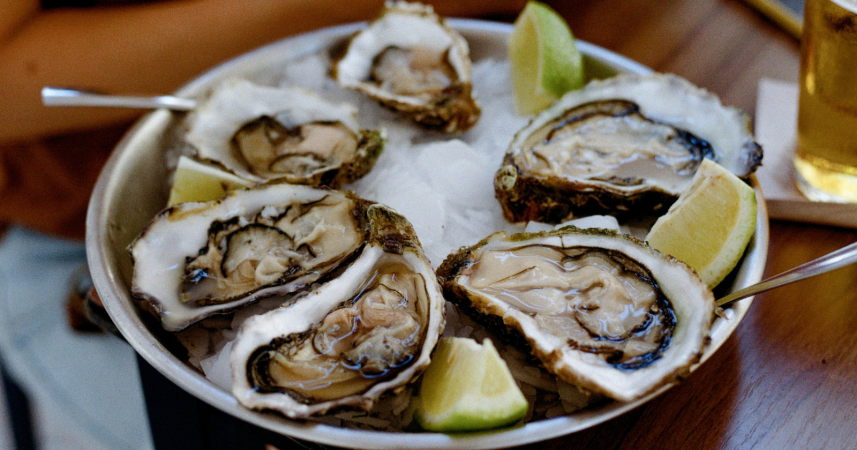
The oyster debate reveals something fascinating about how we draw ethical lines and what veganism really means to each of us.
Here's a question that can turn a peaceful vegan dinner party into a philosophical battleground: Are oysters vegan?
Depending on who you ask, you'll get answers ranging from "obviously not" to "actually, they might be the most ethical food on the planet."
The oyster debate has been simmering in vegan circles for years. It touches on everything from neuroscience to environmental ethics to the very definition of what it means to avoid animal products.
And honestly? Both sides make compelling points. Let's dig into why this humble mollusk creates such a rift in a community that usually agrees on the big stuff.
The case for eating oysters
The pro-oyster argument centers on one key claim: oysters almost certainly don't feel pain. Unlike fish, pigs, or chickens, oysters lack a central nervous system. They have no brain. Research on bivalve sentience suggests they don't process pain the way other animals do.
If the core of veganism is reducing suffering, the argument goes, eating oysters causes none. They're more like plants than animals in terms of conscious experience. Add in the environmental benefits, and the case gets stronger.
Oyster farms actually clean waterways and create marine habitats. They require no feed, no freshwater, and produce zero waste.
The case against eating oysters
The anti-oyster camp has equally valid points. First, there's the precautionary principle. We don't know with absolute certainty that oysters can't suffer. Science has been wrong before about animal consciousness. Why take the risk when plant foods exist?
Then there's the slippery slope concern. If vegans start making exceptions for oysters, where does it end? Mussels? Clams? Shrimp? The bright line of "no animal products" becomes blurry fast. For many vegans, maintaining that clear boundary matters. It simplifies decisions and keeps the movement's message consistent.
What the science actually says
Let's get specific about what we know. Oysters have a simple nervous system with ganglia, which are clusters of nerve cells. But they lack the centralized brain structures associated with pain perception in other animals. Studies on invertebrate pain remain inconclusive for bivalves specifically.
They do respond to stimuli.
Poke an oyster and it closes its shell. But response doesn't equal suffering. Plants respond to stimuli too. The question is whether there's subjective experience behind the reaction. Most researchers lean toward no, but nobody can say for certain. We're dealing with a genuinely open scientific question.
The identity question underneath it all
Here's what I find most interesting about this debate. It's really about how we define veganism itself. Is it a strict dietary category? A harm-reduction framework? An identity? A political stance?
If veganism means "no animal products, period," then oysters are out. Full stop. But if it means "minimize suffering and environmental harm," oysters might actually score better than some plant crops that destroy habitats and kill field animals during harvest. Your answer depends on which definition resonates with you. Neither is wrong.
They're just different frameworks for the same underlying values.
The social dynamics at play
I've noticed something at vegan meetups over the years. The oyster question often reveals deeper tensions about purity versus pragmatism. Some folks worry that "ostrovegans" make the movement look inconsistent. Others think rigid rules alienate potential allies who might reduce animal consumption if given more flexibility.
There's also a class element. Oysters aren't cheap. The debate sometimes carries undertones of who gets to define "real" veganism. These social dynamics matter because veganism is a community, not just a diet. How we handle disagreement shapes the movement's culture and accessibility.
Final thoughts
I'm not here to tell you whether to eat oysters. That's genuinely your call.
What I find valuable about this debate is how it forces us to examine our assumptions. Why are we vegan? What principles guide our choices? How do we handle uncertainty?
The oyster question doesn't have a clean answer because ethics rarely does. You can be a thoughtful, committed vegan who eats oysters. You can be an equally thoughtful, committed vegan who refuses them. Both positions reflect genuine engagement with the underlying values.
Maybe the real takeaway is that veganism is less about following rules and more about wrestling with hard questions. The oyster just happens to be a particularly fascinating one to wrestle with.
What’s Your Plant-Powered Archetype?
Ever wonder what your everyday habits say about your deeper purpose—and how they ripple out to impact the planet?
This 90-second quiz reveals the plant-powered role you’re here to play, and the tiny shift that makes it even more powerful.
12 fun questions. Instant results. Surprisingly accurate.