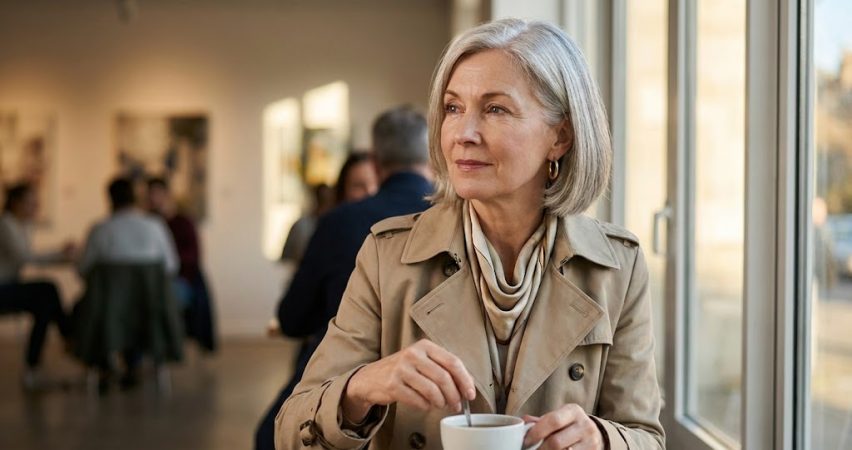
At 70, she discovered the secret nobody tells you about aging: every obligation shed, every performance dropped, every mask removed doesn't diminish you—it reveals the essential self who's been waiting patiently beneath decades of exhausting pretense.
Most people assume aging is subtraction. You lose mobility, relevance, people, purpose — and what remains is a lesser version of what came before. This is the story we've been sold so thoroughly that we rarely question whether it's true.
It isn't. Or at least, it isn't the whole truth, and the part it leaves out might be the part that matters most. There's a version of getting older where the shedding of obligations, performances, and borrowed identities doesn't leave you diminished. It leaves you, for the first time, approximately yourself. Not a better self or a wiser self necessarily — just the one that was always there, buried under decades of trying to be legible to other people.
I'm 70 years old, and I didn't plan to arrive here feeling more real than I did at 35. But here I am.
The exhausting performance of younger years
Do you remember the weight of trying to be everything to everyone? For 32 years, I stood in front of high school students performing the role of Perfect Teacher despite knees that screamed and exhaustion that felt bone-deep. I wore sensible pumps that murdered my feet because teachers should look professional. I graded papers until 2 AM because good teachers never fall behind. I apologized constantly for taking up space in faculty meetings, prefacing every suggestion with "This might be silly, but..."
The performance extended everywhere. After my first husband left, I became a single mother to two toddlers and added another role to my repertoire: Woman Who Has It All Together. Nobody knew about the nights I ate toast for dinner so my kids could have proper meals, or how I'd cry silently in the shower because it was the only place they couldn't hear me. I performed strength so convincingly that when a colleague once said, "I don't know how you do it all," I almost believed my own lie that it was easy.
Even my grief, years later when my second husband died, felt like something I needed to stage-manage for others' comfort. People want widows to be sad but not too sad, broken but not beyond repair, grateful for their concern but not needy. It's exhausting being a character in everyone else's story of how loss should look.
When your body becomes your teacher
My body forced the first real shedding.
Two knee replacements at 65 and 67 meant I literally couldn't stand and deliver anymore. The retirement at 64 wasn't planned, wasn't graceful, wasn't the victory lap I'd imagined. But here's what nobody tells you about physical limitations: they can be liberating.
When you can't do everything, you finally have permission to choose something. When you can't be everywhere, you get to decide where actually matters. My arthritic hands can't write lengthy comments on essays anymore, but they can still write. Just differently. More deliberately. The words I choose now matter more because they cost more.
I think of my mother, who developed Alzheimer's. She taught me about patience and anticipatory grief. Now I understand she wasn't losing complexity; she was finding essence. Every interaction was still made with the same love, just without the unnecessary complications.
The surprising gift of invisibility
Somewhere around 65, I became invisible to a certain segment of the world. Store clerks looked through me. Men stopped assessing me with that quick up-and-down glance. Advertisers forgot I existed except when selling medication or life insurance.
Initially, this invisibility stung. Was I really so diminished that I'd disappeared? But then something shifted. If nobody's watching, you can stop performing. If nobody's judging, you can stop defending. If nobody cares what you're wearing, you can finally dress for your own comfort and pleasure. Last week, I wore my slippers to the grocery store. Not because I'm giving up, but because my feet hurt and I needed milk and why should I suffer for the opinion of strangers who don't even see me? I'll say it plainly: the invisibility is better than the visibility was. The visibility came with a cost I didn't fully understand until I stopped paying it. The freedom of not being watched, not being assessed, not being measured against some standard I never agreed to — it isn't consolation. It's an upgrade. This isn't depression or decline. It's what happens when you stop confusing being seen with being known.
Learning to disappoint people (and being okay with it)
Have you ever noticed how much of our lives we spend managing other people's feelings about our choices? I spent decades as the daughter who called daily, the teacher who never said no to extra duties, the friend who always hosted, the mother who fixed everything.
Aging gave me permission to disappoint people. Not cruelly, not carelessly, but honestly. I don't babysit every time my daughter asks anymore. I leave parties when I'm tired, not when it's polite. I skip the book club selections I know I'll hate. Each small disappointment I cause creates space for something authentic.
My son recently said, "Mom, you've changed. You're more... yourself." He meant it as an observation, possibly even a mild complaint about my new unwillingness to drive across town for every minor crisis. But I took it as the highest compliment I've received in years.
The alchemy of accumulated wisdom
Virginia Woolf wrote about the androgynous mind that comes with age, where the battle between masculine and feminine finally quiets. I feel this integration happening in ways that surprise me. I'm both softer and firmer than I've ever been. More accepting and less tolerant. More loving and less nice.
The wisdom isn't grand or mystical. It's practical, lived-in, sometimes uncomfortable. I know now that most emergencies aren't. That saying "I don't know" is often the smartest response. That love doesn't always look like sacrifice; sometimes it looks like boundaries. That my granddaughter's anxiety about starting middle school is the same fear I had about retiring, just dressed in different clothes.
This accumulated knowing doesn't make life easier, but it makes it clearer. Like looking through reading glasses for the first time, suddenly the close-up details come into focus while the distant background blurs. And maybe that's exactly the right prescription for this stage of life.
The unexpected expansion
Here's what surprises me most about getting older: I'm becoming more myself, not less. Every obligation I release, every mask I remove, every borrowed identity I return creates space for something I didn't know was waiting.
At 67, I started learning piano. Not well, not impressively, but with the kind of joy I haven't felt since childhood. My fingers are stiff, my timing is questionable, and I will never perform for anyone. That's precisely the point. The music is entirely mine.
I write now too, something I'd dreamed about during those 32 years of teaching but never had the energy to pursue. My stories aren't about grand adventures or dramatic transformations. They're about the small revelations that come with age, the quiet freedoms that accumulate when you stop performing your life and start living it.
Final thoughts
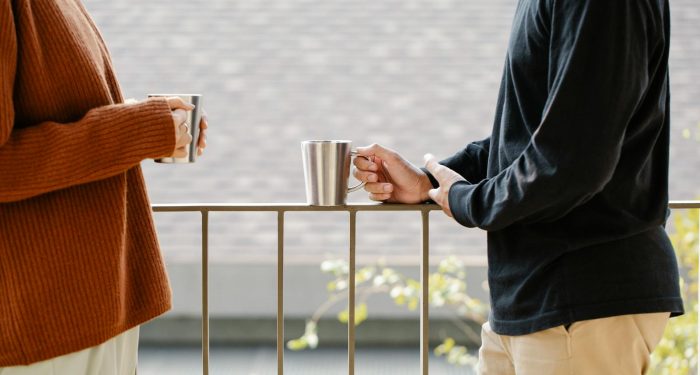
Yesterday, I sat with my Thursday morning coffee group, my neighbor and others, and we laughed until our faces hurt about something I can't even remember now. Not polite laughter, not social laughter, but the kind that comes from your belly and doesn't care if it's too loud.
Yes, things hurt that didn't used to hurt. Yes, I've lost people I loved. Yes, sometimes I feel every one of my 70 years. And yes, I also feel like I'm finally inhabiting my own life fully, without apology or performance. The shedding continues, layer by layer.
I don't know what it's revealing. Some days it feels like the essential self that was always there, patient and waiting. Other days it feels like just another story I'm telling myself — a kinder one than decline, but a story nonetheless. I can't always tell the difference, and I've stopped being sure I need to.