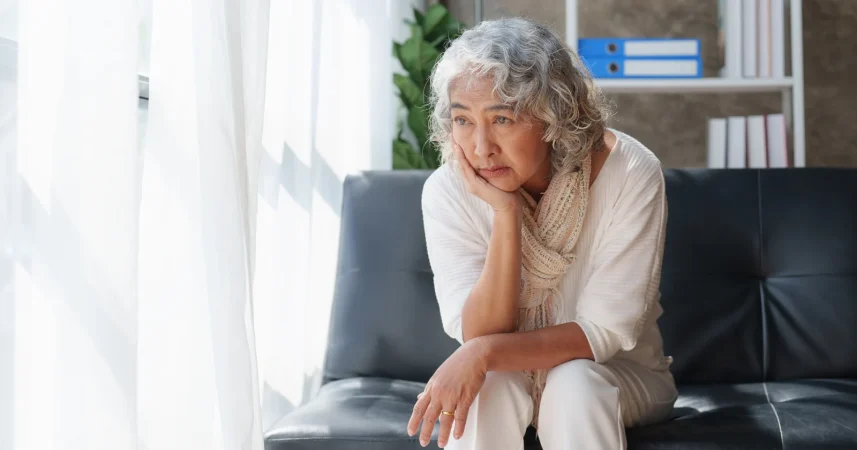
When she stood in the grocery store realizing she hadn't needed a family-size lasagna pan in fifteen years, she understood that every life skill she'd taught her children—from making breakfast to solving problems independently—had been a small goodbye disguised as a lesson.
My daughter called yesterday between meetings. I could hear her typing while we talked, the modern soundtrack of love multitasking. She was solving three problems at once—a work crisis, her daughter's dance recital costume, her husband's birthday dinner. Her voice was breathless and efficient, and I recognized my own frantic decades in every word.
"Mom, I'm sorry, I know we haven't talked in two weeks, but things have been insane—"
I watched her name flash on my phone and felt the familiar pull. Pride and longing, arriving together as they always do now. My children are thriving. They're building careers, raising families, contributing to their communities. They are everything I worked to help them become: capable, independent, gloriously busy. And their packed calendars, their important meetings, their soccer practices and school conferences. All of it is proof that I succeeded. The cruel joke is that this proof comes in the form of declined dinner invitations and postponed visits.
The price of teaching independence
When my son was eight, I taught him to make his own breakfast because I had to leave for work before dawn. When my daughter was ten, she learned to pack her own lunch, check her homework, set her alarm. Every life skill I passed on was a small goodbye disguised as a lesson. I was so focused on making sure they could stand on their own two feet that I didn't realize I was teaching them to walk away.
Psychology Today notes that "Empty nest syndrome refers to the distress and other complicated emotions that parents often experience when their children leave home." But what they don't tell you is that the nest starts emptying long before they physically leave. It empties with every milestone of self-sufficiency, every problem they solve without calling you first, every decision they make that proves they've internalized your voice so thoroughly they don't need to hear it anymore.
The irony burns sometimes. We spend eighteen years in constant motion. Driving to practices, attending concerts, helping with projects, staying up through fevers and heartbreaks. We become expert jugglers of schedules, masters of the quick dinner, champions of the last-minute science fair save. Then suddenly, the very busyness we modeled, the very commitment to showing up that we demonstrated day after day, becomes the reason they can't make it home for Sunday dinner.
When success feels like loss
I cut her off with the same words my mother used to say to me, words I swore I'd never need: "Honey, I understand. You're busy."
Pew Research Center found that 71% of parents believe their children's successes and failures reflect on their parenting. But what about when their success is precisely what creates the distance? What about when their thriving is measured in missed calls and rain-checked visits?
That realization never stops arriving.
I think about this when I see my grandchildren on video calls, their faces glowing in laptop light as they show me art projects while simultaneously eating dinner. They're growing up scheduled and enriched, with opportunities I couldn't have dreamed of providing. Piano lessons, coding camp, travel soccer. The whole magnificent spread of modern childhood. And every activity, every opportunity their parents work so hard to provide, is another afternoon they won't spend at Grandma's house.
The empty nest that keeps emptying
Cleveland Clinic explains that "Empty nest syndrome isn't a clinical diagnosis. Instead, it's a phenomenon in which parents experience feelings of sadness and loss when the last or sole child leaves home."
But here's what the articles don't mention: the nest doesn't empty just once. It keeps emptying in stages you don't see coming. First, they leave for college. Then they get their own apartments. Then careers in different cities. Then marriages and children who become the new centers of their universes. Each stage is another degree of separation, another layer of distance that proves you raised them right.
I remember my mother in her sixties, how she would light up when I managed to visit, how she would say "Don't worry about me" while holding my hand a little too tight. I remember thinking I would do better, visit more, call daily. I remember not understanding that my own busyness was her report card, that every rushed call was evidence of her success. I remember the way she kept the kitchen stocked with my favorite crackers even when months passed between visits, how the box would be there on the counter before I'd even set my bag down, and how I never once thought to ask what it felt like to buy those crackers week after week for a daughter who might not come.
Now I'm the one saying "Don't worry about me" while keeping my phone volume on high, just in case.
Finding grace in the paradox
Do you know what I've learned in these years of successful emptiness? That love shapeshifts. It adapts to distances and time zones, to quick texts and delayed responses. It learns to celebrate the very independence it mourns. It finds ways to stay connected that don't require presence. Shared photos, funny memes, voice messages left between meetings.
I've also learned that this is what we signed up for, even if no one showed us the fine print. We raised humans, not possessions. We built adults, not eternal children. Every time they choose their partner's family for Thanksgiving, every time they handle a crisis without calling me, every time they pass on the lessons I taught them to their own children. This is the dividend on my investment.
Better Health Channel states that "Empty nest syndrome refers to the grief that many parents feel when their children move out of home." But grief isn't quite the right word for this feeling. It's more complex than that. Pride mixed with loneliness, satisfaction tinged with longing, the bittersweet taste of a job well done.
Final thoughts
Last month, my son sent me a video of his granddaughter learning to ride a bike. He was running beside her, one hand hovering near the seat, ready to catch her but trying not to. "You've got this," he kept saying. "I'm right here, but you've got this."
I watched him teaching her to leave him, just as I taught him to leave me, and felt the beautiful, terrible circle of it all.