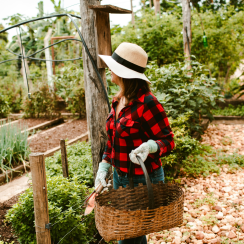
After decades of being measured by test scores, performance reviews, and others' expectations, retirees are discovering the radical freedom of caring deeply about things—garden stones, bird feeders, sourdough starters—that matter to absolutely no one but themselves.
When my neighbor spent four days repositioning a single garden gnome until it caught the morning light just right, I understood something profound about retirement that I'd been dancing around for years. Here was a former CEO of a healthcare company, a woman who once managed thousand-person teams, dedicating the better part of a week to a twelve-inch ceramic figure. The old me, the one grading essays at midnight while making tomorrow's lesson plans, would have called this a waste. The current me recognized it as something else entirely: the first decision she'd made in forty years where her own satisfaction was the only metric that mattered.
The weight of constant measurement
I think about the evaluation forms that shaped my decades in the classroom. Student progress reports, standardized test scores, parent satisfaction surveys, principal observations with their neat little checkboxes. Everything I did from September to June existed in relation to someone else's rubric. Even summer "vacations" were spent in professional development workshops where they graded our participation.
The measurement didn't stop at the schoolhouse door. I remember timing how long it took to make dinner (efficiency mattered with papers to grade). I compared my children's milestones against developmental charts. When my garden grew, I noticed it mainly when neighbors complimented the roses or when the tomatoes produced enough to share, as if external validation made the growth real.
Virginia Woolf wrote about needing a room of one's own. What she didn't mention was needing a room where you get to decide what success looks like. For most of our working lives, we don't have that room. We live in spaces defined by other people's expectations, and we become so accustomed to external scorecards that we forget we once had our own.
Learning the language of personal satisfaction
Have you ever watched someone discover they're allowed to like something without justification? Last week, I saw it happen to my friend Robert, a retired physicist, as he explained his new obsession with watercolor painting. "They're not good," he kept insisting, showing me his careful studies of morning light on water. "I'll never sell them. I'll never display them." He said this like an apology, like he needed to justify spending six hours painting something only he would see.
But here's what psychologists are starting to understand: those six hours represent something revolutionary. For possibly the first time in his adult life, Robert is creating something where the only critic who matters is himself. The painting is successful when Robert decides it's successful. It's complete when he feels complete. After forty years of peer-reviewed papers and grant applications, he's learning a new language, one where personal satisfaction needs no external translation.
The Sunday ritual that changed everything
My sourdough starter lives on the kitchen counter in a jar my grandmother would have recognized. I started it during a particularly hard winter, not because artisanal bread was trendy (though my daughter insists on calling me "hipster grandma"), but because I needed something in my life that operated entirely outside the realm of efficiency.
You can't rush sourdough. Believe me, I've tried. It rises when it wants to rise. Some days the kitchen is too cold and it sulks. Other days it's so active it nearly escapes the jar. After decades of bell schedules and curriculum deadlines, I find myself consulting something that has its own timeline, its own needs, its own mysterious logic.
When I feed it each morning, stirring in flour and water with the same wooden spoon I've used since I started, I'm practicing something I couldn't have understood in my teaching days: patience without a deadline. The bread will be ready when it's ready. And I'll know it's good not because someone else tells me, but because it satisfies something in me that has nothing to do with external standards.
Why the small things matter so much
My bird feeder hangs exactly seventeen inches from the kitchen window. I know because I measured it. Then I moved it to sixteen inches. Then eighteen. Then back to seventeen. This took the better part of an afternoon, and when I told my son about it during our weekly call, there was a pause that said more than words could.
"Are you okay, Mom?" he finally asked. "Do you need... more to do?"
How do you explain that this is more? That choosing the perfect placement for a bird feeder, with no committee to approve it, no form to file, no one else's opinion to consider, feels like a radical act? That when the cardinal arrives each morning at 7:15, landing exactly where I knew he would, I experience a satisfaction that has nothing to do with achievement and everything to do with authorship?
The garden as an experiment in freedom
This morning I spent two hours moving three stones in my garden path. Two hours. The stones were not wrong where they were. No one had complained. They hadn't failed any objective measure of stone placement. But walking the path yesterday evening, something felt off to me. Just to me. And for the first time in my professional life, that was enough reason to change something.
In my previous post about finding purpose after loss, I wrote about how grief teaches us what actually matters. But retirement teaches us something equally profound: we get to decide what matters. The stone path matters because I decide it does. The perfect distance between lavender plants matters because it satisfies my particular sense of balance.
My retired neighbor Carol, former CFO of a major bank, waters her orchids with a turkey baster. She could afford any watering system imaginable, but she likes the control, the intimacy, the daily decision of how much each plant needs. "People think I'm crazy," she says, "but those fifteen minutes each morning? They're completely mine."
The community of the quietly obsessed
We meet for our weekly supper club, five retired women who've discovered the secret: personal satisfaction is a skill you have to develop. We call it supper club, but really we're practitioners of the same art, studying the craft of caring about things that matter only to us.
Last week, Susan spent twenty minutes describing her new system for organizing recipe cards. Not digital files, actual cards, handwritten, sorted by season and mood rather than any logical category. The old us would have suggested efficiency improvements. The current us understood: the system is perfect because Susan says it's perfect.
There's Dorothy, who's learning calligraphy at seventy-one. She'll never be a master. She'll never sell her work. But watching her practice letterforms with the focus of a neurosurgeon, I see someone conducting an experiment in pure satisfaction. Each letter is judged by her hand, her eye, her personal sense of beauty.
The inheritance we didn't know we were leaving
My granddaughter visited last weekend, stressed about college applications, about being impressive enough, about standing out. I taught her to make bread. Not efficiently. Not to put on her resume. Just to make bread.
"But what if it doesn't turn out?" she asked, watching the dough refuse to rise on schedule.
"Then it doesn't turn out," I said. "And you'll decide if that's okay."
The look she gave me suggested I'd spoken in a foreign language. And maybe I had. The language of personal satisfaction, of internal metrics, of being your own judge. It's a language many of us don't learn until retirement, when the external scorecards finally stop arriving.
Final thoughts
Yesterday, I adjusted my bird feeder for the fifth time. My neighbor watched from his porch, probably thinking I'd lost my mind. But when the finches arrived this morning, landing exactly where I'd hoped, accessing the seeds at precisely the right angle, I felt a satisfaction that would have seemed impossible during my teaching years. Not because the placement was objectively perfect, but because I decided it was perfect.
These retirement obsessions aren't trivial. They're not time-fillers or symptoms of boredom. They're radical acts of self-determination by people who spent decades living by external metrics. Every perfectly risen sourdough, every ideally placed garden stone, every bird feeder hung just so represents something profound: the revolutionary decision to measure success by our own satisfaction.
After thirty-two years of evaluation forms and performance reviews, we're finally free to care deeply about things that matter to nobody but ourselves. And in that freedom, we're discovering what we actually like, what actually satisfies us, what success means when we get to define it.
The bird feeder is perfect because I say it is. That's not a small thing. That's everything.