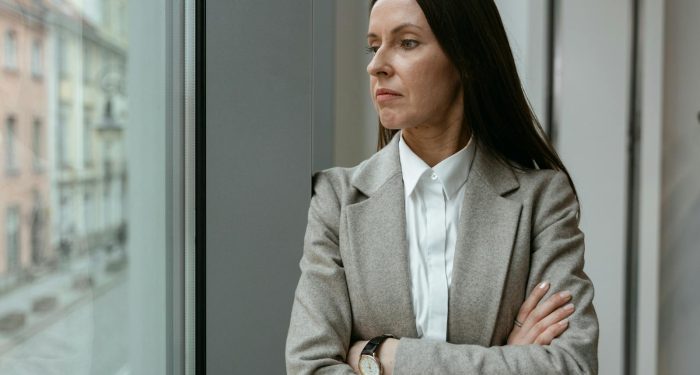
The twin peaks of social comparison — at 16 when we're desperately figuring out who we are, and at 66 when we're anxiously tallying who we became — reveal an uncomfortable truth about how we construct and evaluate our identities against others' lives.
I've watched this pattern play out countless times, both in my own life and in the lives around me. At 15, I remember meticulously cataloging who made varsity, who got asked to prom, who earned the highest grades. At 70, having recently retired from teaching, I find myself doing a different kind of accounting: whose retirement looks more fulfilling, whose children call more often, whose health remains intact.
Why we keep score when we're young
Psychology Today Staff notes that "Social comparison is generally most potent for the young." This makes evolutionary sense — teenagers need to understand their place in the social order, to figure out where they fit as they construct their identities.
I remember sitting in the high school cafeteria at 16, mentally ranking everyone's clothes, relationships, and social status. It felt like survival depended on knowing exactly where I stood. The intensity of that need surprised even me. Every interaction became data for comparison: who laughed at whose jokes, who sat where, who seemed most confident.
What strikes me now is how that comparison served a purpose.
But there was something else happening during those teenage years that I only understand now. A study found that adolescents' social comparisons, influenced by income inequality and social media, impact their social identity development and well-being, with coping mechanisms varying based on context and individual characteristics. We weren't just comparing — we were constructing ourselves through comparison, building our identities brick by brick against the template of our peers.
The unexpected return in later life
Fast forward fifty-four years. I'm sitting with a group of recently retired friends, and the conversation sounds eerily familiar. Instead of comparing SAT scores, we're comparing retirement portfolios. Instead of tracking who's dating whom, we're noting whose marriages survived and whose grandchildren visit most often.
The similarity isn't coincidental. Samuel L. Pauker, M.D., and Miriam Arond observe that identity confusion doesn't end in adolescence — "Young adulthood, midlife transitions, retirement, and major relationship changes often reignite questions of purpose and meaning."
When I retired six years ago, the comparison instinct hit me like a wave I hadn't seen coming. Suddenly, I was measuring my 32-year teaching career against everyone else's accomplishments. Did I make enough of a difference? Did I save enough money? Did I raise successful enough children? The questions felt both urgent and unanswerable.
What makes the second peak different
Here's what nobody tells you about the retirement-age comparison surge: it carries a finality that teenage comparison never could. At 16, when I compared myself unfavorably to the cheerleading captain, I could tell myself I had time to bloom. At 70, when I compare my modest retirement to a former colleague's world travels, that comfort evaporates.
Psychology Today Staff reminds us that "Social comparison theory was first put forth in 1954 by psychologist Leon Festinger, who hypothesized that we make comparisons as a way of evaluating ourselves." But evaluation at 70 feels like a final grade, not a progress report.
I've noticed how retirement communities can become subtle arenas for this comparison. During water aerobics class, conversations drift to whose children have more impressive careers. At book club, we somehow end up discussing whose husbands are still healthy, who takes the most medications, who maintains the sharpest memory. Even decline becomes competitive.
The role of social media in amplifying both peaks
If teenage comparison was intense in my pre-internet era, I can barely imagine navigating adolescence today. Research indicates that age moderates the relationship between social comparisons on Instagram and identity processes, with significant differences observed between adolescents and emerging adults in how social comparisons influence identity development.
But here's the twist: social media has also transformed retirement-age comparison. My generation, often dismissed as technologically challenged, has embraced Facebook with surprising enthusiasm. Now we can compare ourselves not just to our immediate circle but to every acquaintance from the past fifty years. I see the girl who sat behind me in chemistry class posting photos from her yacht. I see my first boyfriend's seemingly perfect grandchildren. The comparison pool has become an ocean.
Samuel L. Pauker, M.D., and Miriam Arond capture this perfectly: "In a world dominated by texting, emails, social media, and virtual assistants, meaningful human connection is often diluted. Face-to-face conversations are replaced by curated online personas."
Finding a different measuring stick
I've started asking myself different questions: Instead of "How does my retirement compare?" I ask "What brings me joy today?" Instead of "Are my grandchildren as accomplished as hers?" I ask "What unique gifts do my grandchildren possess?"
A study demonstrated that social comparison effects on academic self-concepts are influenced by peer characteristics, with certain peers playing a more significant role in shaping adolescents' self-perceptions. The same is true in retirement — we can choose our comparison group more consciously. I've deliberately sought friends who value creativity over accumulation, presence over performance.
Final thoughts
The twin peaks of social comparison — adolescence and pre-retirement — share the same root: identity uncertainty. At 16, we don't know who we are yet. At 66, we're trying to figure out who we were. Both moments make us vulnerable to the measuring stick of others' lives.
Understanding this pattern doesn't make it disappear, but it does offer perspective. When I catch myself comparing my modest retirement to someone else's grand adventures, I remind myself that this urge is as predictable as it is misleading. The scoreboard we imagine everyone watching exists primarily in our own minds. The real question isn't how we measure up but whether we're measuring what actually matters.
If You Were a Healing Herb, Which Would You Be?
Each herb holds a unique kind of magic — soothing, awakening, grounding, or clarifying.
This 9-question quiz reveals the healing plant that mirrors your energy right now and what it says about your natural rhythm.
✨ Instant results. Deeply insightful.
Marlene Martin
Marlene Martin is a retired high school English teacher who spent 38 years in the classroom before discovering plant-based eating in her late sixties. When her daughter first introduced her to the idea of removing animal products from her diet, Marlene was skeptical. But curiosity won out over habit, and what started as a reluctant experiment became a genuine transformation in how she thinks about food, health, and aging.
At VegOut, Marlene writes about nutrition, wellness, and the experience of embracing new ways of eating later in life. She brings a teacher’s instinct for clarity and patience to topics that can feel overwhelming, especially for readers who are just beginning to explore plant-based living. Her writing is informed by personal experience, careful research, and a belief that it is never too late to change.
Marlene lives in Portland, Oregon, where she spends her mornings reading research papers, her afternoons tending a modest vegetable garden, and her evenings knitting while listening to audiobooks. She has three adult children and two grandchildren who keep her honest about staying current.
More Articles by Marlene