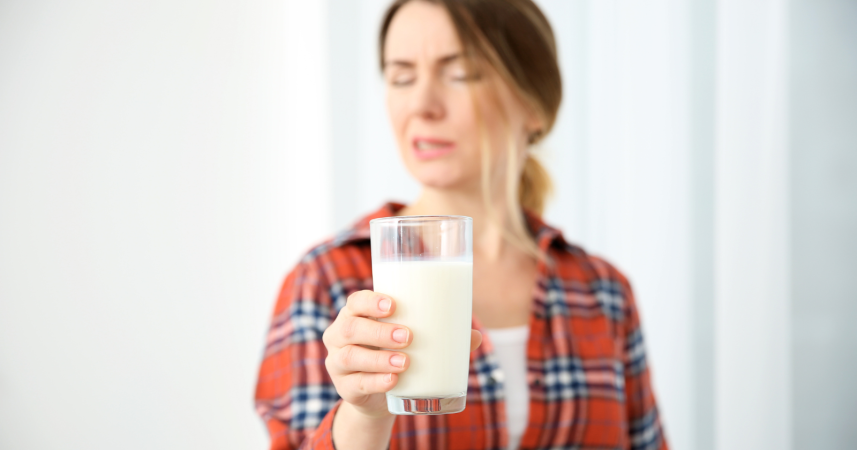
That innocent carton in your fridge carries a story most people never hear about.
Milk has this wholesome reputation. It's in cereal commercials, school cafeterias, and countless childhood memories. For most of us, it just exists as a neutral, everyday thing. You grab it without thinking.
But when you start pulling at the thread, the story gets complicated. Vegans aren't avoiding dairy because they hate the taste or want to be difficult at dinner parties.
There are specific, concrete reasons why that glass of milk raises serious ethical and environmental red flags. And once you know them, it's hard to unknow them. So let's talk about what's actually happening behind the scenes.
The cycle that keeps the industry running
Here's something that surprises a lot of people: cows don't just produce milk automatically. Like all mammals, they only lactate after giving birth. So dairy cows are impregnated repeatedly throughout their lives to keep the milk flowing.
After a cow gives birth, her calf is typically removed within hours or days. Male calves often end up in the veal industry since they can't produce milk.
Female calves usually become the next generation of dairy cows. This separation causes documented distress for both mother and calf. Cows have been observed calling for their babies for days afterward.
This isn't a rare practice at some sketchy farm. It's standard procedure across the industry. The milk we drink depends on this cycle continuing.
What happens to the cows themselves
Modern dairy cows have been selectively bred to produce far more milk than their bodies were designed for. A typical dairy cow today produces around 20,000 pounds of milk per year. That's roughly ten times what a cow would naturally produce for her calf.
This takes a serious physical toll. Mastitis, a painful udder infection, affects a significant percentage of dairy cows. Lameness from standing on concrete floors is common. Many cows are physically exhausted by age four or five, even though their natural lifespan would be around twenty years.
When their milk production drops below profitable levels, they're sent to slaughter. So even if you're vegetarian and avoiding meat, dairy consumption still contributes to animals ending up at the slaughterhouse.
The environmental footprint most people miss
Climate conversations often focus on beef, but dairy has its own significant impact. Producing a single glass of cow's milk generates roughly three times the greenhouse gas emissions of most plant-based alternatives.
Then there's water usage. Dairy farming requires enormous amounts of water for the cows themselves, for growing their feed, and for processing. Land use is another factor. Vast areas are dedicated to growing crops that feed dairy cows rather than feeding people directly.
When you zoom out and look at the full picture, that carton of milk carries a much heavier environmental cost than its simple packaging suggests. Oat milk, soy milk, and other alternatives consistently perform better across nearly every environmental metric.
The marketing we grew up with
Remember those "Got Milk?" ads? The milk mustache celebrities? That wasn't just clever advertising. The dairy industry has spent decades and billions of dollars positioning milk as essential for health, especially for kids.
But here's the thing: most of the world's adult population is actually lactose intolerant to some degree.
The ability to digest lactose into adulthood is a genetic mutation that's most common in people of European descent. For everyone else, dairy can cause real digestive problems.
And the calcium argument? Dark leafy greens, fortified plant milks, tofu, and beans all provide calcium without the ethical baggage. You don't need cow's milk to build strong bones. That message was marketing, not nutritional science.
Final thoughts
Nobody's saying you're a bad person for putting milk in your coffee. Most of us grew up without ever questioning where it came from. The information just wasn't part of the conversation.
But once you see the full picture, the repeated pregnancies, the separated calves, the exhausted cows, the environmental impact, it becomes harder to view milk as harmless. It's a product with real consequences that happen out of sight.
The good news? We live in an era with genuinely good alternatives. Oat milk froths beautifully. Soy milk has protein. Cashew milk makes incredible ice cream.
You can make the switch without sacrificing much of anything. And every time you do, you're opting out of a system that depends on people not looking too closely.
What’s Your Plant-Powered Archetype?
Ever wonder what your everyday habits say about your deeper purpose—and how they ripple out to impact the planet?
This 90-second quiz reveals the plant-powered role you’re here to play, and the tiny shift that makes it even more powerful.
12 fun questions. Instant results. Surprisingly accurate.