As the list of must-haves for happiness shrinks from dozens to just a handful, those who've lived longest reveal a startling truth: we spend decades adding prerequisites for joy, only to discover that contentment was hiding in our morning coffee all along.
Yesterday morning, I watched my neighbor load her SUV with enough equipment for a small expedition: yoga mat, special water bottle, protein bars, wireless earbuds, fitness tracker. She was going to the park for what she calls her "wellness routine." Meanwhile, I sat on my porch with regular coffee in a chipped mug, watching the sunrise paint the sky pink. Both of us were starting our day right. The difference? She needed twelve things to feel ready for joy. I needed one.
There's something profound that happens as we age, something I couldn't have understood at forty or even sixty. The complicated formula for happiness that we spend decades perfecting slowly simplifies itself until the equation becomes so basic it almost seems too easy to be true. What once required a symphony now needs only a single, clear note.
The weight of our younger expectations
Do you remember making those mental lists in your thirties and forties? The conditions that had to align before you could exhale and think, "Yes, this is a good life"? Mine was exhausting: successful career, happy marriage, well-adjusted children, tidy home, active social life, regular exercise routine, creative hobbies, volunteer work, and somehow still time for self-care and spiritual growth. Each year seemed to add new requirements rather than subtract them.
Psychology Today captures this shift beautifully: "Happiness becomes less the high-energy, totally-psyched experience of a teenager partying while his parents are out of town, and more the peaceful, relaxing experience of an overworked mom who's been dreaming of that hot bath all day."
That resonates deeply. In my teaching years, happiness meant standing ovations at the school play I directed, glowing parent conferences, and students getting into their dream colleges. Now? Happiness is the first sip of morning tea when the house is quiet and the cat is purring in my lap. The transformation isn't about lowering standards; it's about finally understanding what standards actually matter.
Learning through loss
My education in subtraction began when I wasn't looking for it. When my husband was dealing with Parkinson's, I remember sitting in the hospital waiting room during one of his treatments. The doctor had just explained that recovery would be long and uncertain. In that sterile room with its buzzing fluorescent lights, something shifted. All those prerequisites for a good day suddenly seemed absurd. I didn't need the perfect dinner party or the European vacation we'd been planning. I needed him to wake up. I needed his hand to squeeze mine back.
Marlene Martin writes, "They didn't accumulate more - they stripped things back until only what truly mattered remained. What looks like happiness is often the result of letting go, where simplicity creates the space for a more grounded, meaningful life."
He recovered from that particular crisis, thankfully, but I never forgot that lesson. When you've sat in enough waiting rooms, attended enough funerals, watched enough friends navigate loss, you begin to understand that most of what we think we need for happiness is just decoration around the essential truth: we need very little, but that little we need absolutely.
The surprising science of aging well
What fascinates me is that research backs up what my bones already know. Science Daily reports that nearly one in four adults aged 60 and older who initially reported poor well-being managed to regain a state of optimal well-being within three years, with physical activity, healthy weight, good sleep, and emotional support playing crucial roles in recovery.
Notice what's not on that list? Career achievements. Perfect homes. Impressive bank accounts. The research strips happiness down to its core components: move your body, rest it well, connect with others. That's it. That's the whole secret we spend decades trying to complicate.
Robert Waldinger, Director of the Harvard Study of Adult Development, puts it even more simply: "The people who were the most satisfied in their relationships at age 50 were the healthiest at age 80. Loneliness kills. It's as powerful as smoking or alcoholism."
Finding glimmers in the ordinary
Last week, I had lunch with a former colleague who retired the same year I did. She spent the entire meal lamenting everything she can't do anymore: can't travel like she used to, can't keep up with technology, can't understand her grandchildren's music. I understood her frustration, but I also wanted to shake her gently and point out what she missed: we were sitting in sunshine, eating fresh strawberries, talking without watching the clock.
Deb Dana, author of Glimmers Journal, offers a beautiful concept: "A glimmer could be as simple as seeing a friendly face, hearing a soothing sound, or noticing something in the environment that brings a smile. … Glimmers are a cue in the day, either internal or external, that sparks a sense of wellbeing."
These glimmers are everywhere once you stop requiring fireworks. The grocery clerk who remembers your name. The smell of bread from the bakery next door. Your joints cooperating enough for a short walk. A text from an old friend. These aren't consolation prizes for a life that can no longer produce big moments. They're the moments that were always there, waiting patiently for us to notice them.
The daily choice of contentment
I wrote a piece last month about finding purpose after retirement, and what strikes me now is how much simpler purpose becomes when you stop needing it to be grand. Henri J.M. Nouwen reminds us: "Joy does not simply happen to us. We have to choose joy and keep choosing it every day."
But here's what I've learned: choosing joy gets easier when the criteria for joy gets simpler. When I was forty, choosing joy meant juggling fifty balls and keeping them all in the air. Now, choosing joy means noticing that my morning coffee tastes good, that my back doesn't hurt today, that the sun came out after three days of rain.
edsutton, a community member at Mayo Clinic Connect, asks the perfect question: "Happiness is a feeling, a very pleasant feeling. Do we need a reason to justify feeling happy? How about the real fact that happiness feels good, and empowers us to do and live better?"
Wisdom in the letting go
Christine Meinecke Ph.D. shares a scene that captures this perfectly: "The other night at the local custard shop, my husband and I saw two beaming young parents place a banana split in front of their little girl. The expression on her face, one of awe and pure joy, would have been enough to meet any parent's expectations."
That child's joy came from ice cream. Just ice cream. Not ice cream plus perfect weather plus the right companions plus the ideal setting. We're born knowing that simple pleasures are enough. We spend forty years forgetting it. Then, if we're lucky, we spend our later years remembering.
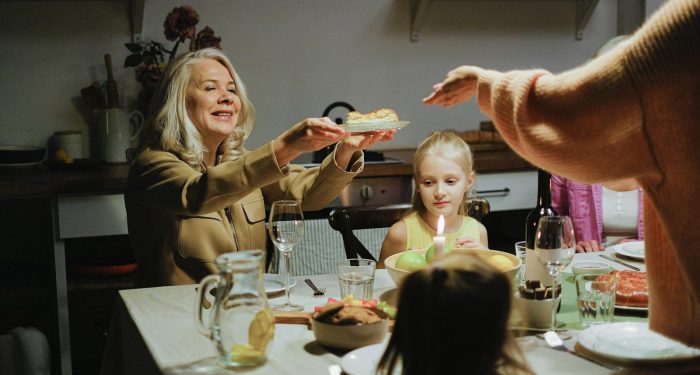
The friends I treasure most now are the ones who understand this. We don't need elaborate dinners or expensive outings. We need Tuesday coffee and honest conversation. We need to know someone will answer the phone at 9 PM when we can't sleep. We need to laugh about our failing memories and creaking joints without pretending we're not getting older.
Catrina Stiller captures the essence: "Aging with emotional ease is not about avoiding challenges but about cultivating the supports and practices that help us move through them."
Final thoughts
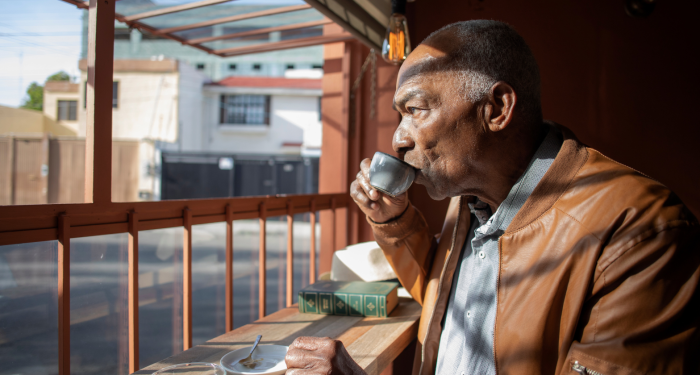
This morning, like most mornings, I woke before dawn. Not because I had to, but because my body has settled into this rhythm. I made tea, sat by the window, and watched the world wake up. No agenda. No goals. No prerequisites except consciousness itself.
The list of what I need for a good day has shortened to almost nothing: breath in my lungs, a roof over my head, someone to love and who loves me back, something to read, something to eat. Everything else is bonus.
This isn't resignation or giving up. It's the deepest form of wisdom I know: understanding that joy was never meant to be complicated. We're the ones who complicated it. And we're the ones who can uncomplicate it, one released requirement at a time, until we arrive where we started, knowing the place for the first time. A good day isn't a day when everything goes right.
A good day is just a day you're here to witness.