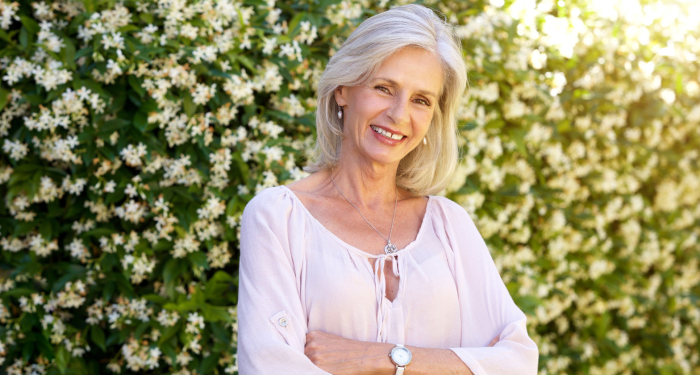
While most people fear the decline that comes with aging, these eight surprisingly simple daily abilities reveal whether you're among the exceptional 5% who are truly thriving in their later years—not running marathons, but mastering the real measures of vitality that matter most.

Add VegOut to your Google News feed. 
Last week at the grocery store, I watched a woman who must have been in her eighties bend down to help a young mother whose toddler had scattered cereal boxes across the aisle. She moved with such ease, laughing as she handed each box back, that I found myself thinking about what it really means to age well. It's not about running marathons or looking decades younger than your years. It's about maintaining those everyday abilities that keep us independent, engaged, and truly living rather than just existing.
After spending these past years observing my peers and reflecting on my own journey through my seventies, I've noticed that those who thrive share certain capabilities. These aren't extraordinary feats - they're simple, daily actions that many take for granted until they can no longer do them.
1. Walking up a flight of stairs without stopping to catch your breath
Remember when stairs were just stairs, not mountains to be conquered? If you can still climb a full flight without pausing halfway, gripping the handrail like a lifeline, or needing to sit down at the top, you're ahead of the game.
I think of my yoga practice, which I started at 58, never imagining how crucial those sun salutations and warrior poses would become. The strength and breath control I developed then serves me now in ways I couldn't have predicted. Even after my knee replacements at 65 and 67, I rebuilt my ability to navigate stairs confidently. The physical therapist told me something I'll never forget: "Stairs are the first thing people avoid and the last thing they recover." If you're still taking them in stride, literally, your body is telling you something wonderful about your physical reserves.
2. Getting down on the floor and back up without assistance
Can you still sit on the floor to play with grandchildren or retrieve something that rolled under the couch? More importantly, can you get back up without furniture-surfing your way to standing?
This simple movement pattern predicts so much about our overall functionality. It requires flexibility, strength, balance, and coordination all working together. Every morning when I unfurl my yoga mat on the floor, I'm grateful for this ability. Some mornings are easier than others, sure, but the fact that I can still lower myself down and rise back up means I haven't surrendered to the recliner just yet.
3. Remembering what you had for breakfast yesterday
Quick - what did you eat yesterday morning? If you can recall without much effort, your working memory is functioning beautifully. It sounds trivial, but this type of recall involves multiple brain processes that often decline with age.
I keep my mind sharp through my morning journaling ritual. Every day at 5:30 AM, I'm up with my tea and notebook, recording thoughts, observations, and yes, sometimes what I'm planning to eat. This practice isn't just about memory; it's about staying mentally present and engaged with the details of daily life. When you can remember the small stuff without strain, it usually means the important things are sticking too.
4. Driving at night without anxiety
Night driving becomes increasingly challenging as we age. Reduced contrast sensitivity, slower pupil response, and increased glare sensitivity all conspire against us. If you can still navigate after dark without white-knuckling the steering wheel or avoiding it altogether, your visual system is holding up remarkably well.
I still take my evening walks around the neighborhood regardless of weather or season, which means winter walks happen in darkness. Being comfortable moving through low-light conditions, whether walking or driving, reflects good vision, spatial awareness, and confidence - a powerful trifecta at any age.
5. Learning something new on your smartphone or computer
Technology evolves at breakneck speed, and if you can still figure out a new app, update your phone's settings, or troubleshoot a computer issue without immediately calling for help, you're demonstrating cognitive flexibility that many lose.
Just last month, I taught myself to use a new garden planning app. Was it frustrating at times? Absolutely. But the ability to push through that frustration, to think logically through new interfaces, and to adapt to different ways of doing things keeps our brains plastic and responsive. As Virginia Woolf wrote, "The mind of man is capable of anything."
6. Standing on one foot for 10 seconds
Try it right now - stand on one foot and count to ten. No wobbling? No need to grab onto something? This simple test reveals volumes about your proprioception, core strength, and neurological health.
Balance is one of those things we never think about until it starts to go. In my yoga practice, tree pose has become my daily balance barometer. Some days I'm steady as an oak; others, I sway like a sapling in the wind. But the fact that I can still find that center of gravity, that I can still trust my body to hold me upright on half the usual foundation, is something I don't take for granted.
7. Having a genuine belly laugh
When did you last laugh so hard your stomach hurt? Not just a polite chuckle or a gentle smile, but a real, uncontrolled burst of joy? The ability to find humor, to let go enough to really laugh, indicates emotional resilience and social connection.
Laughter requires us to be present, to be open, to momentarily forget our aches and worries. If you're still capable of being ambushed by joy, of finding the absurd in the everyday, you've maintained something precious that no medicine can replicate. The woman in the grocery store I mentioned? She was laughing as she helped with those cereal boxes, and that laughter was more telling than any medical test about how well she was aging.
8. Making plans for next year
Do you still mark future dates in your calendar with anticipation rather than dread? Planning for the future - whether it's next year's garden layout or a trip to see old friends - demonstrates hope, cognitive function, and the belief that tomorrow holds promise.
I've been working on my English cottage garden for 30 years now, and each winter I still pour over seed catalogs, sketching out new combinations, planning improvements. This forward-thinking, this assumption that I'll be here to see the delphiniums bloom again, keeps me rooted in life rather than simply enduring it.
Final thoughts
If you found yourself nodding along to most of these points, congratulations - you're navigating these later years with remarkable grace. But even if some of these activities have become challenging, remember that aging well isn't about perfection. It's about adaptation, acceptance, and finding joy in what we can do rather than mourning what we can't.
The real secret isn't in the abilities themselves but in approaching each day with curiosity and determination. Every morning we wake up is another chance to use what we have, to push gently against our limitations, and to celebrate the magnificent machinery of our bodies that has carried us this far.