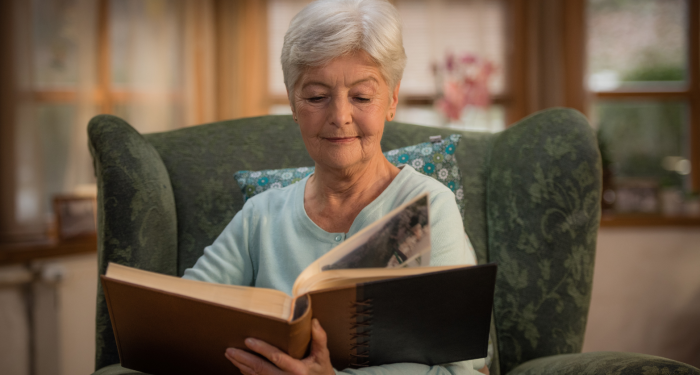
As someone who spent decades collecting the final reflections of dying colleagues, patients, and loved ones—including my husband's tearful confession about choosing sixty-hour workweeks over his children's soccer games—I've discovered that the deepest end-of-life regrets share one haunting pattern that changed how I live every single day.

Add VegOut to your Google News feed. 
Last week, I found myself sorting through old journals in my study when I stumbled upon a leather-bound notebook from my teaching days. Inside, I'd kept notes from conversations with a colleague who was dying of cancer. She'd been the school's beloved art teacher for twenty-five years, and during her final months, she'd share these profound reflections during our lunch breaks. "You know what I keep thinking about?" she'd said one afternoon, her eyes bright despite everything. "It's not the salary disputes or the mortgage payments. It's all the times I said 'not now' to the people I loved."
That conversation has haunted me in the best possible way for over a decade. After thirty-two years of teaching, seven years caring for my husband through Parkinson's, and countless conversations with people nearing the end of their lives, I've noticed the same patterns emerging. The regrets that surface in those final chapters rarely involve bank accounts or investment portfolios. They're almost always about the currency of the heart.
1. Not spending enough time with loved ones
Have you ever noticed how we treat time with family like it's an endless resource? We assume there will always be another birthday, another holiday gathering, another chance to visit. But time has this sneaky way of accelerating when we're not paying attention.
During my husband's illness, I watched him struggle with this particular regret. He'd spent decades working sixty-hour weeks, missing school plays and soccer games. "I thought I was being a good provider," he told me one evening, tears streaming down his face. "But what they needed was me, not just my paycheck." Those final years taught us both that presence is the only gift that truly matters. Now when my grandchildren visit, everything else gets pushed aside. The dishes can wait. The emails can wait. These moments cannot.
2. Not expressing feelings and love openly
Why are we so stingy with our "I love yous"? It's as if we believe we have a limited supply, that we need to ration them carefully. Growing up in a reserved household where affection was implied but rarely stated, I carried this pattern into my adult life. It wasn't until I became a widow that I understood the weight of unspoken words.
These days, I've become almost embarrassingly generous with my affection. I tell the grocery store clerk she has beautiful eyes. I thank my mail carrier for his consistency. I leave voicemails for old friends just to say they crossed my mind. Some people might find it excessive, but I've learned that unexpressed love is like a gift that never gets unwrapped. What good does it do sitting there, hidden away?
3. Working too much at the expense of life experiences
During my teaching career, I prided myself on being the first to arrive and the last to leave. I graded papers through family dinners and spent summers planning the perfect curriculum. Looking back, I wonder what adventures I traded for those extra hours of work that, truthfully, made little difference in the grand scheme.
One of my former students recently became a teacher herself, and when she asked for advice, I surprised us both by saying, "Leave at contract time at least twice a week. Take the sick days. Use your vacation." The work will always be there, endlessly regenerating like laundry. But the chance to watch a sunset with someone you love, to take that spontaneous road trip, to sit in comfortable silence with an old friend—these opportunities have expiration dates we can't see.
4. Not being true to themselves
Have you ever felt like you're wearing a costume through life, playing a role someone else wrote for you? For years, I did exactly that. I stayed in a marriage that had run its course because that's what "good women" did. I pursued teaching because it was respectable, even though my heart yearned to write. I kept my opinions polite and my dreams small.
It wasn't until my sixties, after my husband's death, that I finally asked myself who I wanted to be when I grew up. The answer surprised me. I wanted to be someone who wrote honestly, who traveled solo, who wore red lipstick to the grocery store if I felt like it. Authenticity, I've discovered, is like finally taking off shoes that have been too tight for years. The relief is immediate and profound.
5. Holding onto grudges and not forgiving
My mother and I didn't speak for three years over something so trivial I can barely remember the details now. Three years. That's over a thousand days of stubborn silence, of missed conversations, of love put on hold. She died before we fully reconciled, and that weight sits in my chest like a stone.
Forgiveness isn't about saying what happened was okay. It's about choosing to stop drinking poison and expecting the other person to get sick. These days, I practice forgiveness like it's a muscle that needs regular exercise. Every evening in my gratitude journal, right after listing what I'm thankful for, I write down one thing I'm letting go of. Sometimes it's a decades-old hurt. Sometimes it's the driver who cut me off that morning. The size doesn't matter; the practice does.
6. Not taking care of their health
"I'll start exercising when things calm down." "I'll eat better after this stressful period." "I'll get that checked next month." Sound familiar? We treat our bodies like rental cars, assuming we can trade them in when they break down. But this is the only vehicle we get for the entire journey.
Watching my husband's body betray him taught me that health isn't just about longevity; it's about quality. It's about being able to pick up grandchildren, walk on the beach, dance at weddings. Now, at my age, I've finally learned to treat my body like the faithful friend it's been. I walk every morning, not to lose weight, but because my legs still can. I eat vegetables not as punishment but as gratitude for a digestive system that still works. Health, I've learned, is the foundation that makes every other experience possible.
7. Not pursuing their dreams and passions
In my desk drawer, I keep a folder labeled "Someday." For decades, it held clippings about writing workshops, novel-writing guides, submission guidelines for magazines. Someday, I told myself, when I retired. Someday, when I had more time. Someday, when I felt ready.
You know what I learned? Someday is a day that never appears on the calendar. After my husband passed, I finally opened that folder and wept. Not just for him, but for all the stories I'd never told, all the words I'd swallowed, all the creativity I'd deferred. That's when I started writing, really writing, at sixty-six years old. Was it too late? Maybe for some dreams, but not for the dream of finally doing what I loved.
Final thoughts
As I write this, sitting in my study surrounded by those old journals and new manuscripts, I realize that regrets are really just teachers in disguise. They show us what matters, what deserves our finite energy and attention. Money, despite what we're told, rarely makes the list. Instead, it's always about connection, authenticity, forgiveness, and courage. The beautiful thing is that unlike money, which we can lose and never recover, it's never too late to start spending our time and love more wisely. The best time to start, I've learned, is always now.
If You Were a Healing Herb, Which Would You Be?
Each herb holds a unique kind of magic — soothing, awakening, grounding, or clarifying.
This 9-question quiz reveals the healing plant that mirrors your energy right now and what it says about your natural rhythm.
✨ Instant results. Deeply insightful.
Marlene Martin
Marlene is a retired high school English teacher and longtime writer who draws on decades of lived experience to explore personal development, relationships, resilience, and finding purpose in life’s second act. When she’s not at her laptop, she’s usually in the garden at dawn, baking Sunday bread, taking watercolor classes, playing piano, or volunteering at a local women’s shelter teaching life skills.
More Articles by Marlene