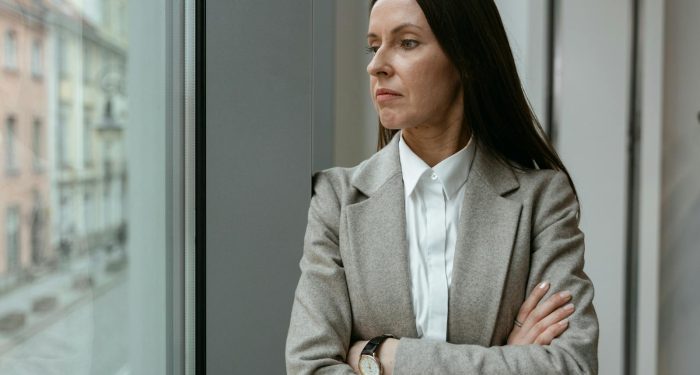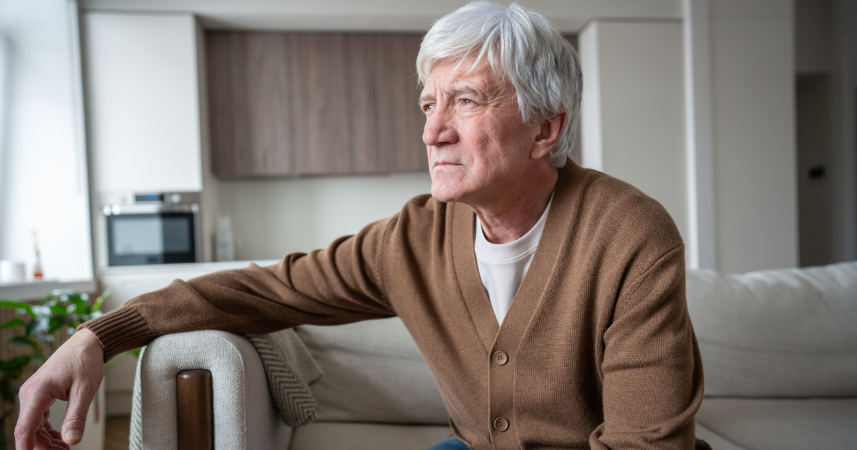
We plan for the money. We plan for the healthcare. But almost nobody plans for the silence that follows - and that silence is where retirement actually begins.
Financial retirement planning is a form of emotional avoidance. That's the contrarian claim, and I believe it's true. Every spreadsheet column, every projection, every color-coded binder about withdrawal rates and healthcare costs is, at some level, a way of not confronting the real question: who are you when the job stops telling you?
I know this because I did it for four decades. I retired six years ago after thirty-two years of teaching high school English. I had a good pension, a modest savings account, and a financial advisor who'd built me a tidy green spreadsheet showing exactly how much I could spend each month for the rest of my life. I had binders. I had projections. I had a filing system that would have impressed my most organized students. What I did not have was a single idea about what I'd do on a Tuesday morning.
And then the alarm stopped mattering, and I sat at my kitchen table with a cup of tea and thought: now what?
The question nobody asks you
Here's what I've noticed in the six years since I retired, and in the conversations I've had with dozens of friends and acquaintances who've done the same. Everyone asks you the money questions. Your employer, your accountant, your financial planner, your brother-in-law who read a book about index funds. They all want to know if you've run the numbers.
Almost nobody asks you the other question. The one that actually determines whether retirement feels like freedom or like falling.
What are you going to do with yourself?
Not in the vacation sense. Not the first three months when you're sleeping in and reading novels and feeling deliciously rebellious about grocery shopping on a Wednesday. I mean after that. When the novelty wears off and you're standing in your kitchen at ten in the morning realizing that nobody needs you to be anywhere, and that this is now every day for the rest of your life.
That moment is when retirement actually begins. And most of us walk into it completely unprepared.
What happened to me
I should tell you what my first year looked like, because I think it's more common than people admit.
The first two months were wonderful. I slept. I gardened. I read books I'd been putting off for years. I visited my grandchildren without watching the clock. I took long walks and didn't grade a single essay. It felt like summer break, extended and earned. Then autumn arrived, and with it a feeling I wasn't prepared for. The structure that had held my life together for thirty-two years was gone. Not just the schedule - the identity. I was Mrs. Patterson who taught English. I was the teacher who ran the creative writing club and organized the book fair and stayed late on Thursdays to help struggling readers. That person had a purpose that renewed itself every September. Without it, I didn't know who I was. And I don't say that for dramatic effect - I mean it literally.
I would wake up and feel a kind of blankness that I'd never experienced in my working life, even on the worst days. At least the worst days had a shape to them.
I spent about six months in that fog. I didn't tell anyone because it felt ungrateful. I had my health. I had my pension. I had grandchildren who wanted to see me. What right did I have to feel lost?
What I've learned since
I came out the other side, but not by accident. It took effort, and honesty, and a willingness to build a new life from materials I hadn't used before.
The first thing I learned is that retirement isn't an ending. It's a transition, and transitions require the same kind of attention we give to any other major life change. We wouldn't move to a new country without learning something about the culture and the language. But we retire - which is arguably a bigger identity shift than relocation - with nothing but a financial plan and a vague notion that we'll "finally have time."
Purpose doesn't care about your pension balance.
Time, it turns out, is not the gift we imagine it to be when we don't have enough of it. Time without structure, without purpose, without the rhythm of being needed - that kind of time can feel less like freedom and more like exile.
The second thing I learned is that purpose doesn't just appear. You have to go looking for it, and the looking itself is uncomfortable. After my husband passed and I was alone in the house, I had to actively resist the pull of the couch and the television and the comforting numbness of routine without meaning. I started volunteering at the women's shelter, teaching resume writing. I joined a hiking group. I began writing personal essays at sixty-six because a friend told me I had stories worth sharing.
None of those things replaced teaching. Nothing could. But each one gave me a small piece of what teaching had provided - the feeling that someone, somewhere, was a little better off because I'd shown up that day.
What I wish I'd done differently
If I could go back and talk to myself at sixty-three, standing on the edge of retirement with my spreadsheets and my binders, here's what I'd say.
Start building your next life before you leave your current one. Don't wait until you're retired to figure out what you care about beyond work. Try things while you still have the structure of employment holding you up. Volunteer somewhere. Take a class. Join a group. Plant seeds before the garden is the only thing you have.
I'd also tell myself to grieve. Because retirement is a loss, even when it's chosen. You're losing colleagues, routine, identity, the daily feeling of being competent at something. Those losses deserve acknowledgment. Pretending they don't exist doesn't make you grateful - it makes you confused about why you feel so hollow when everything looks fine on paper.
And I'd tell myself to talk about it. The loneliest part of my first year of retirement was the silence around the struggle. Everyone assumed I was having the time of my life. I assumed everyone else was having the time of theirs. It took a conversation with a neighbor - a retired postal worker who admitted he'd spent his first six months reorganizing his tools just to feel useful - to realize I wasn't the only one sitting in a quiet house wondering what had happened to my sense of self.
The conversation we need to have
I think our culture has a retirement problem, and it's not financial. It's existential.
We've built an entire industry around retirement planning that treats it as a math problem. Save this much. Invest in that. Withdraw at this rate. And all of that matters - I'm not dismissing it. My pension keeps my lights on and my garden growing. Financial security is not nothing.
But financial security is also not everything. And the fact that we pour decades of energy into the money side of retirement while barely glancing at the meaning side is, I think, one of the reasons so many retirees struggle in ways they never expected and rarely admit.
Studies consistently show that the biggest predictors of wellbeing in retirement aren't financial - they're social connection, sense of purpose, and daily structure. The things no spreadsheet can provide. The things you have to build for yourself, with intention, the same way you once built a career.
What I do now
My life at seventy looks nothing like I imagined it would. I volunteer twice a week. I write essays that sometimes find their way to people who needed to read them. I take my grandchildren to the library every other Saturday. I grow an English cottage garden that I've been tending for thirty years. I bake bread on Sundays. I'm learning Italian, badly but joyfully. I have a supper club with five women who have become the kind of friends I didn't know I still had the capacity to make at this age.
My days have structure now, but it's structure I chose rather than structure that was assigned to me. That distinction matters more than I can express. The difference between a day that someone else fills for you and a day you fill for yourself is the difference between employment and freedom. But freedom, real freedom, only works if you know what to do with it.
I still have mornings where the blankness creeps in. Where I sit with my tea and feel the absence of the classroom, the students, the particular kind of tiredness that comes from doing something that matters. Those mornings are fewer now, but they visit. I've learned not to fight them. I sit with the feeling, acknowledge it, and then I get up and do something. Water the garden. Call my daughter. Write a paragraph. Show up somewhere, for someone.
So here's my challenge, and I mean it literally. Imagine you never have to work again, starting now. Next Tuesday is yours completely. Name three specific things you'd do with it. Not "relax." Not "travel someday." Three concrete, actual things you'd do between waking up and going to sleep on an ordinary Tuesday with no obligations and no one expecting you anywhere.
If you can answer that quickly, you're more prepared for retirement than most people I know. If you can't — if your mind goes blank, or drifts to errands, or reaches for "I'd figure it out" — then you have the same gap I had. The spreadsheet is not the plan. The Tuesday is the plan. And most people haven't written it yet.
If You Were a Healing Herb, Which Would You Be?
Each herb holds a unique kind of magic — soothing, awakening, grounding, or clarifying.
This 9-question quiz reveals the healing plant that mirrors your energy right now and what it says about your natural rhythm.
✨ Instant results. Deeply insightful.
Marlene Martin
Marlene Martin is a retired high school English teacher who spent 38 years in the classroom before discovering plant-based eating in her late sixties. When her daughter first introduced her to the idea of removing animal products from her diet, Marlene was skeptical. But curiosity won out over habit, and what started as a reluctant experiment became a genuine transformation in how she thinks about food, health, and aging.
At VegOut, Marlene writes about nutrition, wellness, and the experience of embracing new ways of eating later in life. She brings a teacher’s instinct for clarity and patience to topics that can feel overwhelming, especially for readers who are just beginning to explore plant-based living. Her writing is informed by personal experience, careful research, and a belief that it is never too late to change.
Marlene lives in Portland, Oregon, where she spends her mornings reading research papers, her afternoons tending a modest vegetable garden, and her evenings knitting while listening to audiobooks. She has three adult children and two grandchildren who keep her honest about staying current.
More Articles by Marlene