Dependability is a kind of cage that everybody congratulates you for building. They hand you employee-of-the-month plaques and call you the backbone of the family and tell you they don’t know what they’d do without you, and the whole time you’re standing there thinking: neither do I. Neither do I know what I’d do without […]
Dependability is a kind of cage that everybody congratulates you for building. They hand you employee-of-the-month plaques and call you the backbone of the family and tell you they don’t know what they’d do without you, and the whole time you’re standing there thinking: neither do I. Neither do I know what I’d do without being this. And that question, the one you keep pushing down beneath the next quarterly report, the next kid’s soccer game, the next mortgage refinancing, that question is a fuse. It burns slowly. It took mine about thirty-five years to reach the powder.
I was sixty-two when the insurance company downsized and I retired. I was sixty-three when the depression hit so hard I couldn’t get out of bed some mornings without Lottie licking my hand and Margaret quietly setting coffee on the nightstand. And I was sixty-four when I packed a bag, drove to Springer Mountain in Georgia, and started walking north. I didn’t tell Margaret. I didn’t tell Sarah, Michael, or Emma. I left a note on the kitchen counter that said I’m safe. I need to do something. I’ll call when I can. Then I turned my phone off.
Three months. Over two thousand miles. And a question I should have asked myself decades earlier: who am I when nobody needs me to be anything?
The Architecture of Dependable
My father was a factory worker and a Vietnam veteran. He showed up. That was his defining quality. Double shifts, holidays, through the fog of what I now suspect was undiagnosed PTSD. He showed up, and he expected the same from his five kids. Dependability wasn’t a personality trait in our household. It was oxygen. You didn’t get praised for breathing, but God help you if you stopped.
So I built a career on it. Thirty-five years at the same insurance company. Claims adjuster to middle management. Three corporate restructures survived. One employee-of-the-month award in all that time, which tells you something about how invisible reliability becomes. I was the guy who stayed late, who covered shifts, who never missed a deadline. My boss once said, at a retirement luncheon, “Farley is the most consistent man I’ve ever worked with.” He meant it as the highest compliment. It landed like an epitaph.
Psychology research on authenticity suggests that there is a deep human motivation to develop and nurture choices consistent with the true self. What happens when the identity others depend on and the identity you actually possess start to diverge? You get a man who looks perfectly fine from the outside, who hits every mark, who shows up at every Sunday dinner and every Wednesday coffee date, and who is quietly dissolving inside because the role has consumed the person.
I’ve written before about how retirement doesn’t create an identity crisis so much as it reveals the one that was always there. That’s true, but it’s only half the story. The other half is what you do when the crisis arrives and you’re sitting in a quiet house at 2:14 PM, listening to the refrigerator cycle on, and you realize you have absolutely no idea who you are outside of your usefulness to other people.
The Breaking Point
It wasn’t dramatic. No single moment. It was cumulative, the way erosion works. A thousand small recognitions that the man everyone saw and the man I actually was had been diverging for years, maybe decades, and the gap had finally become unbearable.
I’d joined a hiking group after my knee surgery at sixty-one. Physical therapy had gotten me mobile again, and someone at the community center mentioned Saturday morning hikes. I went expecting exercise. What I found was silence. Long stretches of trail where nobody asked me to fix anything, decide anything, or be anything. My chronic back pain actually eased on those mornings. I started looking forward to Saturdays with an intensity that scared me, because what kind of man looks forward to being alone more than being with his family?
The answer, I’ve learned, is a man who has carried so much for so long that putting the weight down feels like a betrayal. I knew Margaret needed me present, especially after everything we’d been through in her late forties with the breast cancer. I knew Michael was still fragile after his divorce. I knew Emma had just moved to Seattle and was adjusting. Being needed was the one thing I was good at. Walking away from it, even temporarily, felt like structural failure.
But staying was its own kind of failure. I was showing up to poker nights with Bob and Dave and the guys, making the right jokes, shuffling the cards, and feeling like I was watching myself perform from somewhere outside my own body. Margaret and I would sit at our Wednesday morning coffee date at the café, and she’d talk about the grandkids or the garden, and I’d nod and say the right things, and inside I was screaming because I didn’t know if any of the words coming out of my mouth were mine or just habits wearing a human face.
What the Trail Taught Me
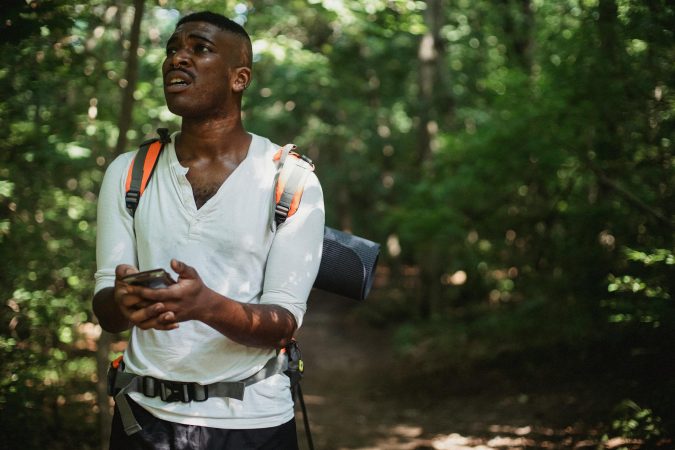
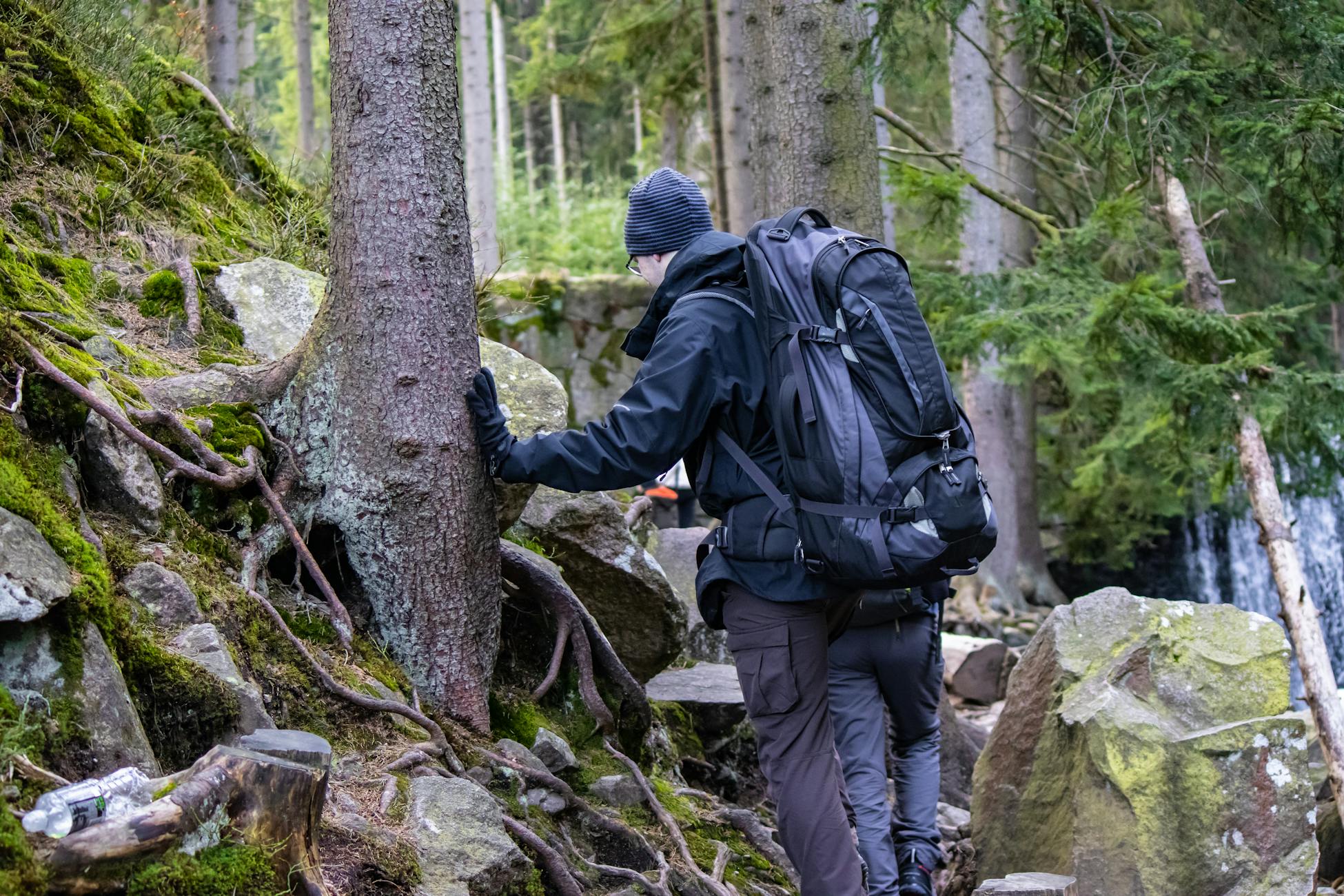
The Appalachian Trail has a way of stripping you down. No title. No history. No one on the trail cared that I’d survived three corporate restructures or that I could be counted on to show up at the homeless shelter the first Saturday of every month. Out there, I was just a sixty-four-year-old man with a bad knee, a thirty-pound pack, and a question.
The first week was terrible. Not physically, though that was bad enough. Emotionally. The guilt was a physical weight in my chest, heavier than anything in my pack. Margaret must be furious. The kids must be worried. I almost turned around on day three, outside Franklin, North Carolina, when I found a payphone and nearly called home.
I didn’t.
And somewhere around the second week, something shifted. I stopped thinking about who was worrying about me and started noticing things. The particular green of new fern growth. The way my breathing synchronized with my footsteps. How my body, despite the knee and the back and the sixty-four years of wear, still knew how to carry me forward if I just let it. I started talking to other hikers, not as Dependable Farley from Ohio, but as nobody. As a man without context. And the conversations I had with strangers on that trail were more honest than conversations I’d had with people who’d known me for thirty years.
One evening in Virginia, a woman in her fifties asked me what I did. Not what I used to do. What I do. And I said, “Right now, I’m walking.” And she said, “That’s enough.” And I sat by the fire that night and cried, because nobody had ever told me that just existing, just being present without producing anything or supporting anyone, was enough.
Research on masculinity and health has increasingly examined how the rigid performance of male dependability, the stoic provider role, comes at a measurable psychological cost. Men my age were raised to believe that being solid meant being silent about what the solidity was costing us. We were supposed to be foundations, not people.
The Reckoning
I called Margaret from a trail town in West Virginia, six weeks in. She picked up on the first ring. She wasn’t furious. She was something worse: she was calm. “I knew this was coming,” she said. “I just didn’t know what shape it would take.”
She told me the kids had been calling. Sarah was angry. Michael was worried. Emma, from two thousand miles away in Seattle, had apparently called her brother for the first time in months just to talk about me. Margaret said, “They’re scared because you’ve never done anything unpredictable in your entire life. They don’t know what to do with a father who surprises them.”
That sentence hit me harder than anything on the trail. Forty years of marriage, and Margaret understood something I was only beginning to see: I had made myself so predictable, so dependable, so completely defined by my function in other people’s lives, that the moment I stepped outside that function, everyone panicked. Including me.
Writers on this site have explored the phenomenon of survival responses hardening into personality, and that’s exactly what had happened. My dependability wasn’t a choice anymore. It was a calcified reflex. The agreeableness, the efficiency, the emotional steadiness: none of it was chosen. It was automatic. And on the trail, away from every trigger and expectation, I had to sit with the terrifying possibility that there was someone underneath all that architecture.
Coming Home
I finished the trail in Maine, at the summit of Mount Katahdin, on a Tuesday in late October. I weighed fifteen pounds less. My knee ached. My beard was the longest it had ever been. I felt like a stranger in my own skin, which was, paradoxically, the most like myself I’d felt in decades.
Coming home was harder than leaving. Margaret and I sat at the kitchen table for a long time that first night. Lottie kept bumping her nose against my hand, not quite believing I was back. Margaret didn’t ask me to explain or apologize. She asked me one question: “Did you find what you were looking for?”
I told her the truth. I told her I hadn’t been looking for anything. I’d been running from the unbearable weight of being the same man in every room I entered for forty years. And what I’d found, out in the woods, wasn’t an answer. It was permission. Permission to be inconsistent. To be unreliable for a few hours, or a few months, and have that be part of the same life as the man who never missed a deadline.
I still walk Lottie at 6:30 every morning. I still make Sunday pancakes when the grandkids visit. I still show up to poker on Friday nights. But I’ve stopped believing that showing up is the sum total of what I owe the world or myself. I took up woodworking after I got back, and some mornings I go out to the garage and just stand there with a piece of walnut in my hands, not building anything, not producing anything, just feeling the grain under my fingers and letting that be enough.
Margaret and I started marriage counseling again. Not because anything is broken. Because I want to learn how to be honest in real time instead of waiting until the pressure builds to a point where I have to walk two thousand miles to relieve it. We’re working on that. Some days are better than others.
The contradiction between who I had to be and who I wanted to be didn’t resolve itself on the Appalachian Trail. It just became visible. And visibility, I’m learning at sixty-five, is where the real work begins. I’m still the dependable man. I’m also the man who disappeared. Both are true. Both are me. And I’m done pretending only one of them is allowed to exist.