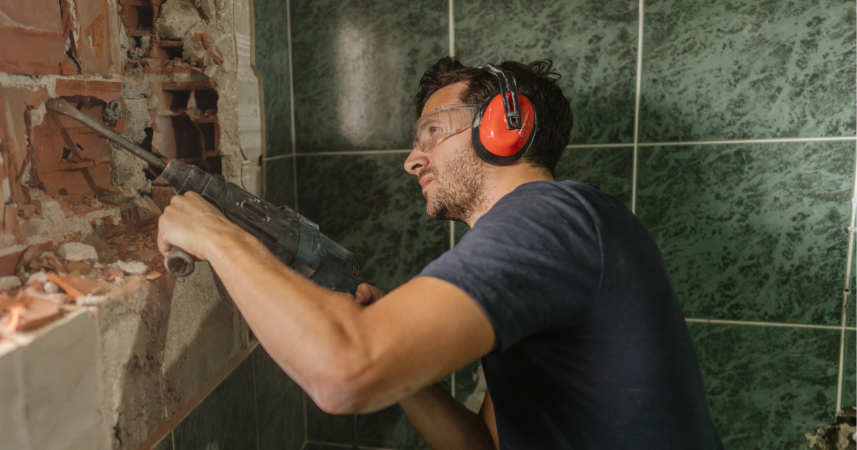
When calling a professional stops feeling like an extravagance and starts feeling like common sense, you've probably crossed into upper middle-class territory
I grew up watching my dad fix everything. Leaky faucet? He'd be under the sink with a wrench. Broken fence? Saturday morning project. The idea of calling someone to handle these things felt almost shameful, like admitting you couldn't handle basic adulting.
Now I live in Venice Beach, and the calculus has completely changed.
It hit me last month when my partner suggested we call someone about a flickering light fixture. My immediate thought was "I can YouTube that." But then I realized something: the people in our building don't think twice about calling professionals for things my dad would've handled before breakfast.
This isn't about being helpless or lazy. It's about something more subtle, a shift in how we value time versus money, and what counts as a reasonable DIY project versus a job for the experts.
Here are seven home repairs that signal you've crossed into upper middle-class territory, where the first instinct is to find a professional rather than rally the family troops.
1) Anything involving the electrical panel
My Sacramento childhood was full of weekend projects. My dad would tackle almost anything with the confidence of someone who grew up when "calling a professional" meant you were either rich or incompetent.
But electrical panels? That's where even the most confident DIYers in my family drew the line.
Upper middle-class households don't mess around with electrical work, period. It's not just about capability, it's about risk assessment. When you have the financial cushion to pay for peace of mind, you do it.
I learned this the hard way when I mentioned casually replacing an outlet in my apartment. My neighbor, a tech executive, looked at me like I'd suggested performing my own appendectomy. "Just call an electrician," he said. "What's it going to cost, two hundred bucks?"
The math changes when two hundred dollars is annoying but not devastating. You stop weighing whether you can do something and start weighing whether you should.
2) Appliance repairs beyond the basics
There's a YouTube video for everything. I've watched enough of them to know I could probably figure out how to fix a dishwasher that won't drain or a refrigerator making weird noises.
But I won't.
The upper middle-class approach to appliance repair is simple: if it's not working and it's not something you can fix by cleaning a filter or resetting a breaker, you call someone. The cost of the repair call is less than the cost of potentially breaking it worse or spending your entire Saturday wrestling with a machine.
My grandmother raised four kids on a teacher's salary and could coax another year out of any appliance through sheer determination and a limited budget. That was necessity. What I'm describing is choice.
When my partner's parents visited from the suburbs, they were baffled that we'd paid someone to look at our washing machine. "It's probably just the belt," his dad said. Maybe it was. But neither of us felt compelled to find out.
3) Plumbing issues beyond a simple clog
I've used a plunger. I've even snaked a drain. These feel like acceptable DIY territory, the kind of thing anyone with running water should be able to handle.
But a leaking pipe? A toilet that keeps running? Anything involving the words "water heater"?
That's when upper middle-class homeowners reach for their phones, not their toolboxes.
The calculation here is about consequences. A botched plumbing job can mean water damage, mold, or worse. When you have hardwood floors and furniture you actually care about, the stakes of getting it wrong feel much higher.
I've mentioned this before but this connects to something I read in behavioral science research: people with more resources tend to be more risk-averse with their possessions. They have more to lose, so they protect it by outsourcing the risk to professionals with insurance.
4) HVAC maintenance and repairs
Nobody in my family growing up would've dreamed of calling someone to look at the furnace or air conditioner unless it completely died. My dad would change filters, check thermostats, and generally tinker until things worked again.
In my Venice Beach apartment complex, there's a guy who comes quarterly to service all the HVAC units. It's built into the rent. Nobody questions this.
Upper middle-class households treat HVAC like they treat their cars: regular maintenance by professionals, not weekend projects. The systems are complex, often under warranty, and the cost of professional service is just part of the budget.
When I mentioned to a friend that my childhood home's air conditioner was maintained exclusively by my dad, she was genuinely confused. "But don't you need certification for that?" she asked. Technically, no. Culturally, in her world, yes.
5) Roof and gutter work
This one's about safety as much as skill. Getting on a roof is dangerous. Cleaning gutters is dangerous. Installing or repairing anything up there is dangerous.
But here's the thing: upper middle-class people don't frame it as danger. They frame it as inefficiency.
"Why would I spend my Saturday on a ladder when I could pay someone whose job this is?" That's the mindset. The risk is almost secondary to the time calculation.
My parents' generation would rent a ladder and spend a Sunday cleaning gutters. My neighbors hire a service that comes twice a year. The cost is negligible compared to the value they place on their weekends.
This shift represents something bigger than home maintenance. It's about how you view your time and what you consider a worthwhile use of it.
6) Painting entire rooms or exteriors
Painting is theoretically easy. Buy paint, buy brushes, buy rollers, spend a weekend transforming a space. Plenty of people do this.
But upper middle-class households? They hire painters.
Not because they couldn't do it themselves. Not even because it's particularly difficult. They hire painters because the opportunity cost of spending two days painting a room is higher than the cost of hiring someone to do it in four hours.
I learned about opportunity cost in behavioral economics books, but I see it play out in my building constantly. People who could absolutely paint their own apartments don't even consider it. The question isn't "Can I do this?" It's "What else could I be doing with that time?"
When I was younger and broke, I painted every apartment I lived in. Now I have the flexibility to choose, and honestly? I'd rather spend that time on photography or working on articles. The math has changed.
7) Landscaping beyond basic mowing
My dad could trim hedges, edge lawns, plant trees, and build garden beds. Weekend yard work was just part of homeownership. Nobody thought twice about it.
The upper middle-class approach treats landscaping like interior design: something that requires expertise and regular professional attention.
It's not just about having a yard service mow the lawn, though that's part of it. It's about hiring someone to design and maintain the entire outdoor space as an extension of the home's aesthetic value.
This is where class signaling becomes most obvious. A professionally maintained yard announces that you value your property enough to invest in its appearance and that you have the resources to do so without thinking too hard about the monthly cost.
I don't have a yard in Venice Beach, but I've watched my partner's parents transform their suburban landscape from "nice enough" to "magazine-worthy" through the consistent work of professionals. Could they do it themselves? Probably. But that's not how people in their economic bracket approach their homes anymore.
Conclusion
Here's what I've realized: none of these choices are about capability. They're about priorities and resources.
My dad wasn't more capable than the people in my building who call professionals for everything. He just had different constraints and different values around self-sufficiency. In his world, doing it yourself was a point of pride. In the upper middle-class world I now inhabit, knowing when to call a professional is the mark of wisdom.
The shift from DIY to delegating represents more than just having extra money in the budget. It represents a fundamental change in how you value your time, what you consider an acceptable use of your weekend, and how you think about home maintenance in general.
Neither approach is inherently better. But recognizing where you fall on this spectrum tells you something about your economic reality and the invisible ways class shapes our daily decisions.
What’s Your Plant-Powered Archetype?
Ever wonder what your everyday habits say about your deeper purpose—and how they ripple out to impact the planet?
This 90-second quiz reveals the plant-powered role you’re here to play, and the tiny shift that makes it even more powerful.
12 fun questions. Instant results. Surprisingly accurate.