Some songs don’t just play; they open a trapdoor under your feet and drop you straight into a year—sticky summer nights, shag carpet, orange Tupperware lids that never die. If you grew up in the 1970s, you don’t need a time machine.
You need thirty seconds of a chorus, an 8-track click, and the smell of vinyl sleeves.
Here are ten tracks that still flick the projector on.
If these make your skin remember—roller rinks, station wagons, basement rec rooms—you were there.
1. “Stayin’ Alive” — Bee Gees
The first five seconds might be the most recognizable strut in pop history. You can almost see the mirrored ball and feel the rink breeze on your forearms. “Stayin’ Alive” wasn’t just disco—it was posture. Chin up. Shoulders loose. Sudden confidence in a polyester shirt that didn’t breathe.
I can’t hear that hi-hat without picturing someone’s older cousin teaching a precise two-finger point, as if direction were the whole dance. For a lot of families, this was the soundtrack to Saturday chores and the reward after: pizza, soda, and late-night TV with laugh tracks you can’t explain to Gen Z. If your feet start moving before your brain does, that’s the 70s talking.
2. “Hotel California” — Eagles
Every garage band learned it, every older brother tried to decode it, and every road trip got at least one full play with an argument about what it “meant.” The guitar outro is a long, slow sunset; even now it makes a highway feel cinematic.
My uncle swore the lyrics were a riddle for grown-ups and paused the tape deck to “teach.” I nodded like I understood. What I really got was the feeling—windows cracked, headlights sliding by, adults talking in low voices up front. Mystery was part of growing up then; songs left space for you to wonder.
3. “Bohemian Rhapsody” — Queen
Chaos in six acts. Opera in your parents’ Pontiac. The 70s got weird in the best way, and this is Exhibit A. One minute you’re swaying to a piano ballad, the next you’re headbanging at a red light, ignoring your mom’s rule about “no drumming on the dashboard.”
Everyone remembers where they first tried to nail the “Galileo” stack with friends, missing every harmony and laughing anyway. The magic wasn’t precision; it was permission—to be dramatic, to be ridiculous, to make the inside of a car feel like a stage.
4. “Dancing Queen” — ABBA
Few songs can levitate a room like this one. The opening piano glitters, and suddenly the kitchen is a dance floor, the TV stand a DJ booth. It’s one of those tracks that makes people who “don’t dance” at least tap, and people who do dance suddenly perform like there’s an audience.
Joy sneaks in through the side door. If you grew up with “Dancing Queen,” you learned that joy could be simple—a chorus you didn’t translate, just felt. It’s the unofficial anthem of pretending a wooden spoon is a microphone.
5. “September” — Earth, Wind & Fire
Do you remember, indeed. The horn line is confetti, the groove is a trampoline, and the word “Ba-de-ya” means exactly what it sounds like: stop overthinking and move. This is wedding-reception immortal, but it started as Saturday-morning clean-the-house fuel.
The 70s knew how to blend musicianship with pure fun—tight rhythm sections, arrangements that snap. If your body can’t stay still by the end of the first chorus, that’s muscle memory from a decade that taught entire neighborhoods to dance as a survival skill.
6. “Born to Run” — Bruce Springsteen
Teenage restlessness in 4 minutes and 30 seconds. This is the smell of gasoline and hope. You didn’t need a driver’s license to understand it—just a sense that life was wider than your zip code. The wall of sound makes even a short drive feel like a jailbreak.
I remember riding shotgun with a friend’s older sister who stomped the accelerator during the sax solo like it was part of the instrument. Windows down.
Everyone shouting “Tramps like us!” as if the neighbors needed to know. It wasn’t rebellion; it was permission to want more.
7. “American Pie” — Don McLean
Eight-plus minutes that turned kids into lyric detectives. You learned verses in chunks—at school lunch tables, on porches, in living rooms where somebody’s dad had a cheap acoustic guitar and a willingness to keep going through the “good old boys” part twice.
The 70s gave us long songs that asked you to stay—no skip button, no algorithm to pull you elsewhere. If you remember whole car rides built around whether the tape would flip before the last chorus, you’ve earned your stripes.
8. “I Will Survive” — Gloria Gaynor
A lesson in leaving on your own terms, wired to a bassline that turns heartbreak into cardio. It’s karaoke titanium now, but in its moment it was the training montage for getting yourself back together after anything—from a breakup to a bad day at school.
The energy is resilience made audible. You didn’t need to be in love to sing it hard. You just needed something to push off from. If your inner posture straightens with the first string swipe, you’ve carried this one a long time.
9. “Lean on Me” — Bill Withers
Simplicity that still levels you. Three chords, a voice like kind advice, and a reminder that being strong includes asking. So many of us learned harmony on this song—soprano, alto, tenor, bass—badly, beautifully, together.
It’s homemade-music friendly: no flash, just heart. If you grew up in the 70s, you probably heard it in living rooms during power outages, on transistor radios at parks, in school assemblies where the teacher with the good ear tried to get 200 kids to clap on two and four. Even now, it’s the friend you call when everything else is noise.
10. “Dreams” — Fleetwood Mac
A drum heartbeat, a bassline that walks like it knows a secret, and a voice that turns weather systems into sentences. The 70s did a lot of glam; it also did a lot of adult feelings wrapped in warm production. This song is the smoothest proof.
One rainy afternoon, my mom let the record play while she folded laundry, and for once nobody talked over it.
The house just… listened. I didn’t understand the lyrics yet, but I knew grown-up sadness could sound beautiful, and that music could hold a room together for four minutes at a time.
The little things that make these songs feel like a decade
-
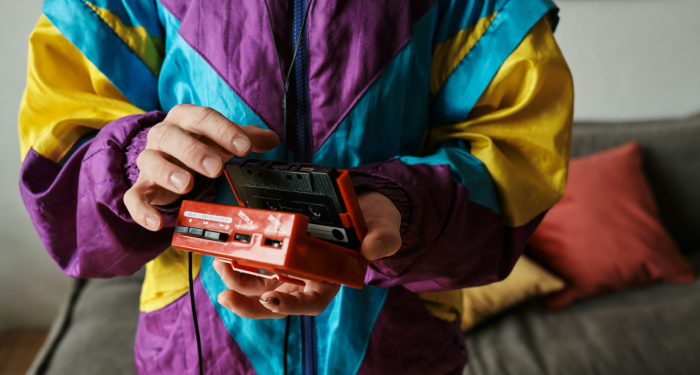
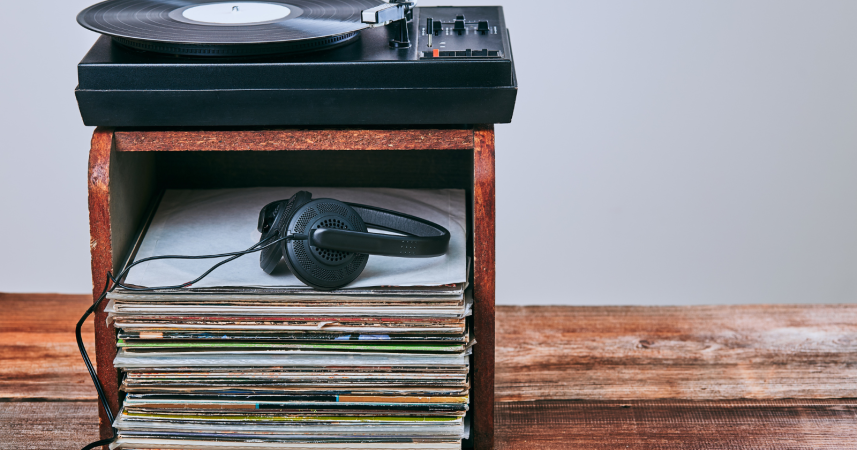
Format matters. The thunk of an 8-track switching tracks mid-chorus. The ritual of flipping an LP. The hiss of a cassette on its 200th play. Those sounds are part of the memory.
-
Rooms matter. Basement rec rooms with paneling. Roller rinks that smelled like popcorn and new wheels. Back seats with no seatbelts, heads leaning on cool glass as the radio did its best through static.
-
People matter. Older cousins teaching you dance moves. Parents singing off-key while chopping onions. Friends who knew only half the words and sold the rest with confidence.
Why these tracks still hit (even if you weren’t there)
The 70s carried contradictions: polish and grit, swagger and sincerity, spectacle and soul. These songs stuck because they let regular people feel big feelings—together.
They’re engineered for collective joy (and the occasional collective sigh). Play them now and the room organizes itself—someone dances, someone air-guitars, someone stares out the window like they’re in a movie.
If you’re reading this and nodding—smelling vinyl, tasting orange soda, counting ceiling tiles at the skating rink while ABBA poured from crackling speakers—you don’t just remember the music. You remember who you were becoming: a little braver, a little weirder, a little more yourself.
Bottom line: if “Stayin’ Alive,” “Hotel California,” “Bohemian Rhapsody,” “Dancing Queen,” “September,” “Born to Run,” “American Pie,” “I Will Survive,” “Lean on Me,” and “Dreams” light up your nervous system faster than caffeine, you grew up in the 1970s.
The good news? The time machine still works. Drop the needle, press play, and let the room change.
If You Were a Healing Herb, Which Would You Be?
Each herb holds a unique kind of magic — soothing, awakening, grounding, or clarifying.
This 9-question quiz reveals the healing plant that mirrors your energy right now and what it says about your natural rhythm.
✨ Instant results. Deeply insightful.