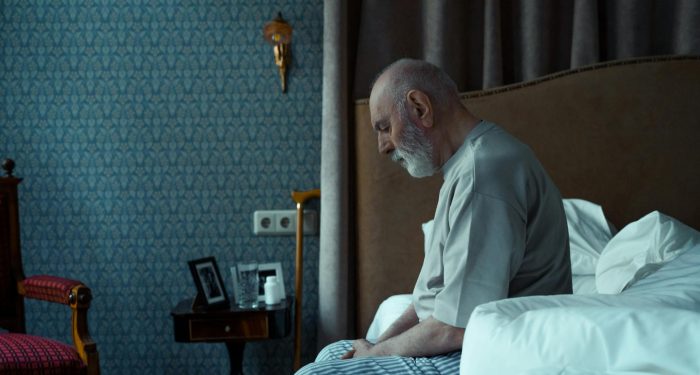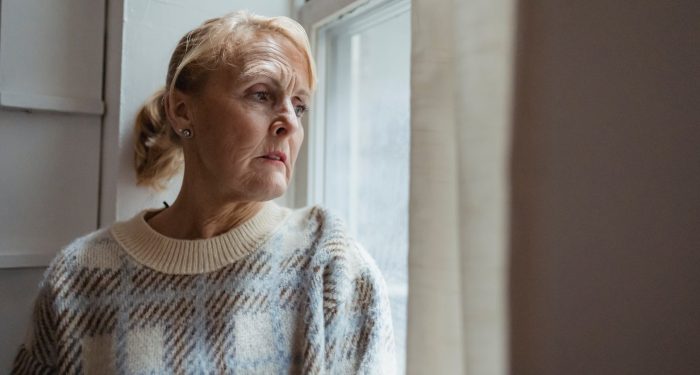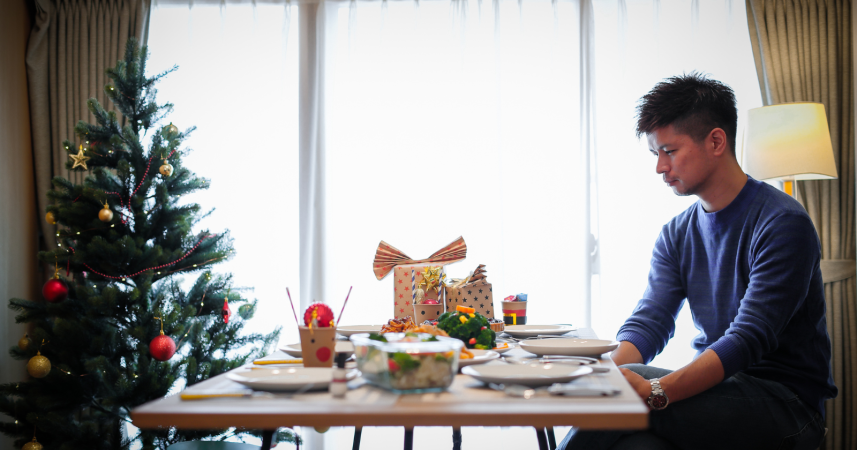
Christmas loneliness doesn't always announce itself dramatically—sometimes it shows up in subtle behavioral shifts you might not even notice at first

Add VegOut to your Google News feed. 
Last December, I found myself scrolling through Instagram at 11 PM, watching everyone else's perfect Christmas moments while sitting alone in my Venice Beach apartment. My partner was visiting family across the country, and suddenly every feed was flooded with twinkling lights, family gatherings, and group photos of people who seemed genuinely happy.
I closed the app feeling worse than when I opened it.
That's when I realized something had shifted in me over the past few weeks. I wasn't just missing my partner or feeling a little down about the holidays. Christmas loneliness had crept in so gradually that I didn't notice the behavioral changes until they'd already taken root.
Here's the thing about loneliness during the holidays: it doesn't announce itself with a big dramatic entrance. Instead, it shows up in subtle shifts in how you act, think, and move through your day.
If you're wondering whether Christmas loneliness is affecting you, these eight behavioral changes might be showing up without you even realizing it.
1) You're scrolling more, connecting less
I noticed it first with my own Instagram habit. What used to be a quick five-minute check turned into hour-long scrolling sessions, watching other people's lives instead of living my own.
When loneliness hits during Christmas, there's this paradox that happens. You crave connection, but instead of reaching out to actual people, you end up consuming more social media. It feels like connection, but it's really just observation.
Your brain becomes hyper-aware of what you don't have. Every holiday card photo, every group dinner pic, every family gathering video reinforces the gap between their Christmas and yours.
The shift is subtle but telling. You might find yourself checking social media first thing in the morning and last thing at night. You're engaging less, fewer comments, fewer posts of your own, but consuming more. You're watching life happen through a screen instead of participating in it.
This isn't about judgment. It's about recognizing that when you're spending more time observing other people's holidays than experiencing your own, something's off.
2) Your sleep schedule has completely fallen apart
When I was going through that rough December, I'd stay up until 2 or 3 AM for no real reason. Not because I was doing anything important. Just because sleep felt harder to come by, and being awake alone felt somehow less lonely than lying in bed with my thoughts.
Christmas loneliness messes with your sleep in ways that feel almost invisible at first. You might find yourself staying up later, sleeping in longer, or experiencing fragmented sleep where you wake up multiple times during the night.
The change shows up as pure inconsistency. One night you're exhausted and in bed by 8 PM. The next night you can't fall asleep until dawn. Your wake-up time varies wildly. You might start napping during the day to compensate, which then makes nighttime sleep even harder.
There's something about being lonely during a season when everyone's supposed to be together that keeps your mind racing when it should be resting. Your thoughts won't quiet down. Your body won't relax. Sleep becomes this elusive thing you chase rather than something that comes naturally.
If your sleep has become unpredictable and chaotic specifically during the Christmas season, it might be loneliness manifesting rather than just holiday stress.
3) You're withdrawing from plans you used to enjoy
There's a coffee shop on Abbot Kinney that does this amazing open mic night every Thursday. I used to go religiously, even if I went alone. But during that lonely December, I found myself canceling on myself. I'd get dressed, ready to walk out the door, and then I'd just not go.
This is one of the more insidious changes that Christmas loneliness creates. You start avoiding the very activities that could help you feel less isolated. The invitation to your coworker's holiday party? You decline. The community volunteer event at the local shelter? You skip it. Even solo activities you normally love, like your weekly hike or that pottery class, start feeling like too much effort.
What's happening is that loneliness creates this protective withdrawal reflex. Your brain is essentially saying, "Social situations might lead to rejection or disappointment, so let's just avoid them entirely." It feels safer to stay home.
But here's the trap: the more you withdraw, the more isolated you feel. The more isolated you feel, the harder it becomes to push yourself back into social situations. You get stuck in this cycle where loneliness feeds more loneliness.
If you're finding reasons not to go to things you'd normally attend, or if you're saying yes to invitations and then bailing at the last minute, that's worth examining. Christmas loneliness might be pulling you inward when you actually need to push outward.
4) You're either eating way more or barely eating at all
Food became weird for me during that lonely Christmas season. Some days I'd make elaborate vegan meals for one, like I was trying to prove something to myself. Other days I'd realize at 6 PM that I'd only eaten a handful of almonds and some coffee.
Loneliness doesn't just affect your mood, it affects your relationship with food. And during Christmas, when food is so central to celebration and tradition, the changes around eating become even more pronounced.
Some people respond to Christmas loneliness by overeating. The kitchen becomes a source of comfort when human connection feels scarce. You might find yourself mindlessly snacking throughout the day, eating past the point of fullness, or using food as your primary way of dealing with difficult emotions.
Others go the opposite direction. Appetite disappears entirely. Cooking for one feels pointless. Eating becomes something you forget to do rather than something you enjoy.
For me, it swung between both extremes. I'd spend three hours making cashew mac and cheese for myself, trying to recreate the feeling of a shared meal. Then the next day I'd barely eat anything because what was the point?
If your eating patterns have shifted dramatically during the Christmas season, especially if food was previously a source of pleasure for you, it's worth considering whether loneliness is the underlying cause.
5) You're making impulsive decisions you normally wouldn't make
I've seen this pattern in myself and in people I know. During periods of Christmas loneliness, decision-making changes. Not in obvious ways, but in subtle shifts that reveal a deeper restlessness.
You might find yourself making purchases you don't need. Booking trips impulsively. Reaching out to an ex you haven't talked to in years. Signing up for dating apps at midnight. Making big life decisions, like quitting your job or ending a relationship, during the holiday season when you'd normally think things through more carefully.
What's happening here is that loneliness creates discomfort, and impulsive decisions temporarily relieve that discomfort. Your brain is essentially searching for something, anything, that might fill the void or create change or provide distraction.
I remember one night during that December scrolling through flight deals at 1 AM, seriously considering booking a solo trip to Thailand for New Year's Eve. Would it have been fun? Maybe. Was it a well-thought-out decision based on actual desire to travel? Absolutely not. It was me trying to run from loneliness rather than address it.
If you're normally deliberate and thoughtful but suddenly making decisions that surprise even you, Christmas loneliness might be affecting your judgment more than you realize.
6) You're getting sick more often
During that December, I got three colds back to back. At the time, I blamed it on "holiday season germs." Looking back, I realize there was more to it than that.
This is one of the more surprising changes because it shows up physically. You're calling in sick more, you're spending more time dealing with minor illnesses, you're feeling physically run down in a way that goes beyond typical holiday fatigue.
There's something about loneliness that seems to lower your body's defenses. Maybe it's the stress, maybe it's the disrupted sleep, maybe it's that you're not taking care of yourself the way you would if you felt more connected. Whatever the mechanism, the pattern is real.
You catch every cold going around. That sore throat lingers for weeks. You feel exhausted even after sleeping ten hours. Your body feels heavy and sluggish in a way that's hard to explain.
If you're noticing that you've been sick more frequently during the holidays, or that minor illnesses seem to linger longer than usual, it might not just be bad luck. Christmas loneliness could be manifesting in your physical health.
7) You're ruminating constantly
The worst part of that lonely December wasn't the external isolation. It was what was happening inside my head. I couldn't stop replaying conversations, analyzing social interactions, wondering what was wrong with me, questioning past decisions.
Your thoughts get stuck in a loop, cycling through the same negative patterns without resolution. And Christmas loneliness turbocharges this tendency.
You might find yourself obsessing over why certain friendships have faded. Replaying last Christmas and comparing it to this one. Analyzing every social interaction for signs of rejection. Wondering if people actually like you or if they're just being polite. Questioning whether you'll always be alone during the holidays.
The change shows up as distraction and preoccupation. You're physically present but mentally elsewhere. People have to repeat themselves when talking to you. You lose track of time while lost in thought. You have trouble focusing on tasks because your mind keeps drifting back to the same concerns.
I'd be editing an article about kombucha fermentation and suddenly realize I'd spent twenty minutes staring at the screen, lost in thoughts about whether I'd said something awkward at Thanksgiving three years ago. It was exhausting and pointless, but I couldn't seem to stop.
If you're noticing that your thoughts have become repetitive and negative during the Christmas season, loneliness might be affecting your mental patterns more significantly than you realize.
8) You're unusually irritable or emotionally reactive
My partner called me from their family gathering that December, excited to tell me about something funny that had happened. I snapped at them for no reason. Later, a barista got my oat milk latte order slightly wrong, and I felt disproportionately upset about it.
Christmas loneliness doesn't just make you sad. It can make you angry, frustrated, and emotionally volatile in ways that don't match your usual temperament.
You might find yourself getting annoyed at small inconveniences that normally wouldn't bother you. Feeling defensive when someone asks innocent questions. Having outsized emotional reactions to minor setbacks. Snapping at people who don't deserve it. Feeling a general sense of irritation that colors your entire day.
It's like loneliness removes this buffer you normally have between minor frustrations and your emotional response. Everything feels more intense. Everything bothers you more. You don't have the patience or perspective you usually rely on.
I noticed I was getting irrationally angry at holiday marketing emails. At couples walking hand-in-hand on the beach during my photography walks. At my neighbor's Christmas decorations that I normally would have found charming. None of it was really about those things. It was about feeling isolated during a season when isolation feels particularly acute.
If you're noticing that you're more irritable during the Christmas season than you typically are, especially if this irritability seems out of proportion to the actual triggers, loneliness might be affecting your emotional baseline more than you've acknowledged.
Conclusion: recognizing the signs matters
That December taught me something important about loneliness during Christmas. It doesn't always look like someone sitting alone crying into their hot cocoa. Sometimes it looks like someone who's functioning but functioning differently. Someone whose behavior has shifted in subtle ways that add up to a larger pattern.
Recognizing these changes is genuinely the first step toward addressing them. Once I realized that my scrolling habits, sleep issues, withdrawal patterns, and irritability weren't separate problems but connected symptoms of Christmas loneliness, I could actually do something about it.
I'm not going to pretend I had some magical solution that fixed everything overnight. But acknowledging what was happening made it possible to reach out to people, to push myself back into activities I'd been avoiding, to be gentler with myself about the impulsive decisions and the rumination.
If you've noticed several of these changes in yourself this Christmas season, you're not broken. You're not weak. You're experiencing something that a lot of people experience but few talk about openly.
And recognizing it matters more than you might think.
If You Were a Healing Herb, Which Would You Be?
Each herb holds a unique kind of magic — soothing, awakening, grounding, or clarifying.
This 9-question quiz reveals the healing plant that mirrors your energy right now and what it says about your natural rhythm.
✨ Instant results. Deeply insightful.

Jordan Cooper
Jordan Cooper is a pop-culture writer and vegan-snack reviewer with roots in music blogging. Known for approachable, insightful prose, Jordan connects modern trends—from K-pop choreography to kombucha fermentation—with thoughtful food commentary. In his downtime, he enjoys photography, experimenting with fermentation recipes, and discovering new indie music playlists.
More Articles by Jordan