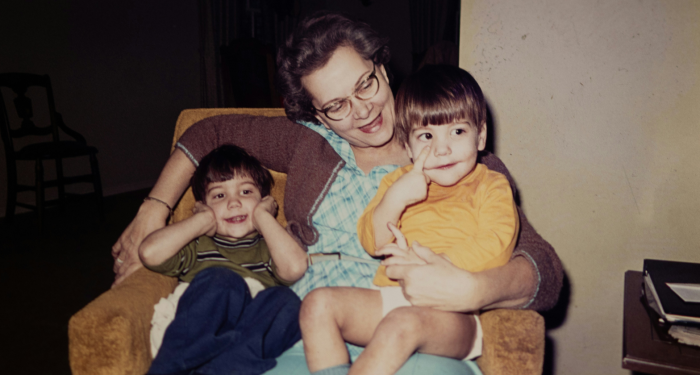
After decades of introducing herself as "a high school English teacher," she discovered the hardest part of retirement wasn't filling her days — it was answering the question of who she was when she could no longer define herself by what she did.

Add VegOut to your Google News feed. 
When I retired at 64, I spent the first three months reorganizing closets with the intensity of someone defusing a bomb. Every drawer got labeled, every bookshelf alphabetized, every photo album chronologically arranged.
My daughter watched me attack these projects with bewildered concern. "Mom, you're acting like you're preparing for a military inspection," she said one afternoon, finding me color-coding the spice rack.
She was right, of course. What I was really doing was desperately trying to prove I was still useful, still productive, still... somebody.
The truth that took me months to understand? I wasn't mourning the loss of my teaching career. I was mourning the loss of who I thought I was.
When your work becomes your identity
For 32 years, I'd introduced myself as "a high school English teacher." Not just what I did, but who I was.
Every September brought fresh faces, new challenges, another chance to make a difference. Winning Teacher of the Year twice only reinforced this identity – I was someone who mattered, who contributed, who had a purpose that got me out of bed each morning.
Psychology Today captures this perfectly: "Retirement, while often viewed as a period of well-deserved rest, can also be a time of significant identity loss."
That word – loss – is exactly right. It feels like grief because it is grief. You're mourning a version of yourself that existed for decades. The person who had deadlines, responsibilities, a place to be. The person whose inbox mattered, whose opinion was sought, whose absence would be noticed.
I remember standing in a grocery store six weeks into retirement, running into a former colleague. "How's retirement treating you?" she asked cheerfully.
I opened my mouth to respond and realized I had nothing interesting to say. I'd gone from discussing curriculum changes and student breakthroughs to reporting on my newly organized pantry. The shift felt seismic.
The productivity trap we fall into
Here's what nobody tells you about retirement: staying busy isn't the same as finding meaning. I joined a book club, started yoga, volunteered at the library. My calendar was full, but I felt empty. Why? Because I was still trying to measure my worth by how much I accomplished in a day.
Think about it – for decades, we've been conditioned to equate our value with our output. Performance reviews, project deadlines, quarterly goals. We internalized this equation so deeply that removing work from our lives feels like subtracting our worth as human beings.
I kept a to-do list those first months that would make you laugh. "Water plants" got the same weight as "reorganize garage."
I needed to check things off, to feel that satisfaction of completion. But completing tasks without purpose is like eating without tasting – it fills time but doesn't nourish the soul.
Understanding the emotional shift
What surprised me most about retirement wasn't the practical adjustments but the emotional intensity.
Some days I felt like a teenager again – moody, uncertain, questioning everything. Other days brought unexpected joy in simple moments, like watching birds at the feeder without checking the clock.
Gary Simonds describes this beautifully: "Retirement allows us to get back in touch with our emotional selves. To feel things more deeply. To experience life with more color. To cry more, but also to laugh more. Several report an emotional rebirth."
This emotional rebirth isn't always comfortable. After years of keeping feelings in check during professional hours, suddenly you have all day to feel everything. The sadness about paths not taken. The anxiety about aging. The surprising bursts of creativity. The unexpected contentment in silence.
Rebuilding meaning from scratch
So how do we reconstruct meaning when productivity no longer defines us? For me, the journey began with an uncomfortable question: Who am I when I'm not useful to anyone?
The answer didn't come quickly. It emerged slowly through small experiments in being rather than doing. Sitting with a cup of coffee without multitasking. Having conversations without agenda. Reading poetry not to teach it but simply to feel it.
Research from American Journal of Geriatric Psychiatry found that older adults who experienced more positive social interactions reported a higher sense of purposefulness, especially after retirement. This suggests that maintaining social connections can help retirees find new meaning and purpose in life.
But here's the key – these connections need to be authentic, not performative. Not networking, not maintaining professional relationships, but genuine human connection where you're valued for who you are, not what you can provide.
The unexpected opportunity in letting go
Abigail Fagan offers this insight: "Retirement is like a Rorschach test for aging: We project our fears and dreads onto it."
What if instead of projecting fear, we projected possibility? What if losing our professional identity isn't a subtraction but a liberation?
I discovered this accidentally when I began writing at 66. Not writing with deadlines or objectives, but writing to understand my own story.
Writing to make sense of the student whose suicide changed how I saw struggling kids. Writing about the six months after my second husband died when I barely left the house. Writing not to produce content but to process life.
This shift from external validation to internal exploration changes everything. You stop asking "What should I do today?" and start asking "What do I need today?" You stop measuring days by accomplishments and start noticing moments of connection, beauty, growth.
Research from Psychological Science indicates that retirement can lead to a renewed sense of purpose in life, particularly among individuals with lower socioeconomic status who were dissatisfied with their previous jobs.
This suggests that retirement may offer an opportunity for personal growth and fulfillment.
Final thoughts
That first year of retirement is hard not because we have nothing to do, but because we're doing the deep work of becoming ourselves without titles, roles, or external validation. It's terrifying and liberating in equal measure.
Now, several years into this journey, I still occasionally catch myself trying to justify my existence through productivity. Old habits die hard.
But more often, I find myself marveling at this person I'm becoming – someone who writes not for grades but for joy, who values presence over performance, who measures days not by what got done but by what got felt, noticed, savored.
The identity crisis of retirement isn't a problem to solve. It's an invitation to finally meet yourself.
If You Were a Healing Herb, Which Would You Be?
Each herb holds a unique kind of magic — soothing, awakening, grounding, or clarifying.
This 9-question quiz reveals the healing plant that mirrors your energy right now and what it says about your natural rhythm.
✨ Instant results. Deeply insightful.

Marlene Martin
Marlene is a retired high school English teacher and longtime writer who draws on decades of lived experience to explore personal development, relationships, resilience, and finding purpose in life’s second act. When she’s not at her laptop, she’s usually in the garden at dawn, baking Sunday bread, taking watercolor classes, playing piano, or volunteering at a local women’s shelter teaching life skills.
More Articles by Marlene