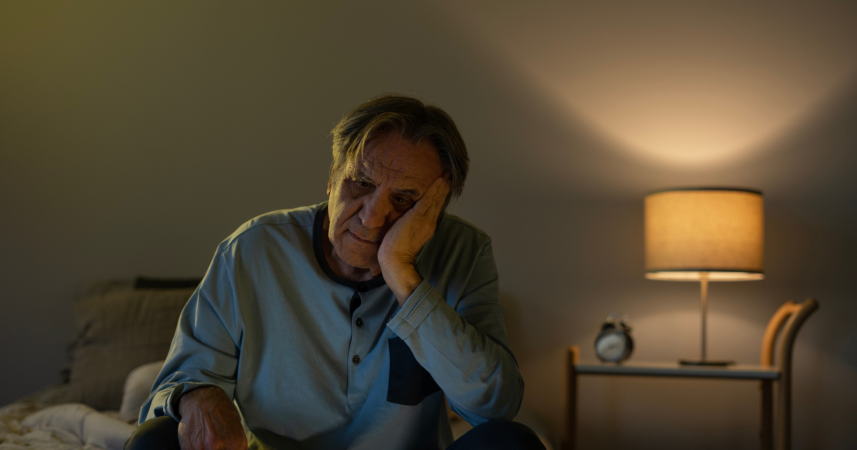
After decades of being indispensable at work, retirement's crushing loneliness stems not from empty calendars but from the devastating realization that nobody needs you to show up anymore.

Add VegOut to your Google News feed. 
Last spring, I ran into one of my former colleagues at the grocery store. She'd retired the year before, and when I asked how she was enjoying it, her face fell slightly.
"I love having time for my garden," she said, adjusting her cart, "but I wake up on Monday mornings and wonder if anyone would notice if I just stayed in bed all day." What struck me wasn't that she felt lonely—she had plenty of friends and family—but that she felt unnecessary.
After thirty years of students counting on her, she'd gone from indispensable to invisible overnight.
This conversation haunted me because I'd felt something similar when I took early retirement at 64. My knees couldn't handle standing all day anymore, but the physical relief was overshadowed by something harder to define. It wasn't solitude that bothered me; it was the silence where purpose used to live.
The difference between being alone and feeling unneeded
Bella DePaulo, Ph.D., Academic Affiliate in Psychological & Brain Sciences at UCSB, puts it perfectly: "The real pain of aging comes from feeling invisible, not just being alone." This distinction matters because it changes how we understand retirement loneliness entirely.
Think about your working years. Even on your worst days, someone needed you to show up. Your expertise mattered. Your absence created ripples. Whether you were teaching teenagers Shakespeare or managing a team or fixing engines, you occupied a specific, irreplaceable space in the world's machinery.
When retirement arrives, that space closes up like water after a stone is removed. The world keeps spinning without your daily contribution, and suddenly you're left asking: if nobody needs me, do I still matter?
During my 32 years teaching high school English, I learned that teenagers are far wiser than adults give them credit for. One student once told me, "Ms., you know what's weird? Adults always say they can't wait to retire, but my grandpa retired and now he seems lost." That sixteen-year-old understood something profound about human nature: we're wired to be needed.
Why work provides more than just a paycheck
Elaine Dundon, Founder of the Global Meaning Institute, notes: "Retired people have shared with me that they had lost their way, and perhaps even their sense of identity and self worth, without the structure of work and the social connections that work provides."
Work gives us three things we rarely appreciate until they're gone: structure, social identity, and daily evidence of our value. Every meeting you attend, every problem you solve, every colleague who asks for your input reinforces that you matter. It's not about the tasks themselves but about being woven into a tapestry of mutual dependence.
I remember mentoring dozens of student teachers over the years, discovering that teaching someone to teach is its own art form. Each nervous twenty-something who walked into my classroom reminded me that my experience had value beyond just delivering lessons.
They needed my wisdom, my reassurance, my practical tips about classroom management. That need gave my days weight and meaning.
The identity crisis nobody talks about
Have you ever noticed how we introduce ourselves? "I'm a teacher," "I'm an accountant," "I'm a nurse." We don't say "I teach" or "I do accounting"—we say we are these things. Our professions become our identities, so deeply embedded that separating the two feels like tearing fabric.
Nigel R. Bairstow Ph.D. reminds us that "Aging, an inescapable part of the human experience, is often accompanied by significant social, psychological, and physical changes." Among these changes, the shift from "productive member of society" to "retiree" might be the most psychologically jarring.
When I first retired, people would ask what I did, and I'd stumble over my answer. "I was a teacher" felt like erasure. "I'm retired" felt like admitting to irrelevance. It took months to find comfortable language for this new reality, and even longer to feel comfortable in the reality itself.
Building bridges before you cross them
David Ludden, Ph.D., Professor of Psychology at Georgia Gwinnett College, offers crucial advice: "The best way to avoid loneliness in old age, then, is to lay down a solid social network before you get there."
But here's what I've learned: it's not just about having friends. It's about finding new ways to be needed. The relationships that sustain us in retirement aren't just social connections; they're reciprocal bonds where our presence makes a difference.
After floundering for several months post-retirement, I started volunteering at a women's shelter, teaching life skills and interview preparation. Suddenly, Thursday mornings mattered again.
Women counted on me to show up, to listen, to help them practice answering tough interview questions. The need was different from teaching Shakespeare to teenagers, but it was real and urgent and mine to fill.
Redefining purpose when the old one ends
Interestingly, a research study found that retirees who voluntarily left dissatisfying jobs experienced an increase in their sense of purpose post-retirement, suggesting that retirement can offer an opportunity for renewed purpose, especially among those with lower socioeconomic status.
This finding challenges us to think differently about retirement loneliness. Perhaps the issue isn't retirement itself but our failure to imagine new forms of mattering. The workplace isn't the only arena where we can be essential to others.
I now mentor young teachers through a district program, and while it's different from having my own classroom, these beginning educators need what I have to offer. Their struggles with classroom management, their questions about reaching difficult students, their requests for lesson plan feedback—all of these remind me that expertise doesn't expire with a retirement party.
Edward Jones and Age Wave Research indicates that retirees who feel useful and maintain a sense of purpose report higher levels of contentment and happiness, highlighting the importance of having a role or purpose in retirement to combat loneliness.
Final thoughts
The loneliness that comes with retirement isn't really about empty calendars or quiet houses. It's about the fundamental human need to matter, to contribute, to know that our absence would be felt. Understanding this distinction is the first step toward addressing it.
We can't return to our old desks or classrooms, nor should we want to. But we can seek out new places where our presence makes a difference, where our experience has value, where someone needs what we uniquely have to offer. The challenge isn't filling time; it's finding new ways to be necessary in a world that no longer requires us to clock in.
If You Were a Healing Herb, Which Would You Be?
Each herb holds a unique kind of magic — soothing, awakening, grounding, or clarifying.
This 9-question quiz reveals the healing plant that mirrors your energy right now and what it says about your natural rhythm.
✨ Instant results. Deeply insightful.

Marlene Martin
Marlene is a retired high school English teacher and longtime writer who draws on decades of lived experience to explore personal development, relationships, resilience, and finding purpose in life’s second act. When she’s not at her laptop, she’s usually in the garden at dawn, baking Sunday bread, taking watercolor classes, playing piano, or volunteering at a local women’s shelter teaching life skills.
More Articles by Marlene