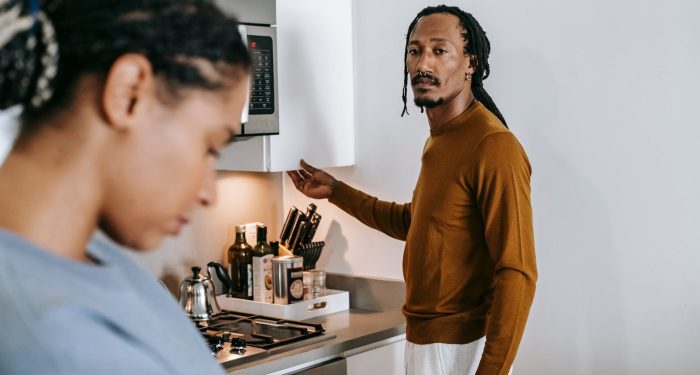
Watching a couple communicate entirely through their phones during their coffee date revealed a troubling truth: we've become so comfortable with digital intimacy that we don't realize we're starving ourselves of the real thing until the loneliness becomes unbearable.

Add VegOut to your Google News feed. 
Last week, I watched a couple at a coffee shop spend their entire date looking at their phones, occasionally showing each other something on the screen and laughing.
They barely spoke out loud. What struck me wasn't how disconnected they seemed – it was how comfortable they appeared with this arrangement.
We're living in an era where entire relationships unfold in message bubbles and read receipts. And while it's easy to dismiss this as the death of real intimacy, I think something more complex is happening here.
The comfort of controlled connection
Have you ever noticed how much easier it is to say "I love you" in a text than face-to-face? There's something about that screen barrier that makes vulnerability feel safer.
Dr. Sherry Turkle, Professor of Social Studies of Science and Technology at MIT, puts it perfectly: "Texting is a way to keep in touch without the messiness of face-to-face interaction."
That messiness she's talking about? It's the awkward pauses, the visible reactions we can't control, the tears we didn't plan on shedding.
Texting lets us edit our emotional responses. We can type "that's hilarious" while stone-faced, or craft the perfect response to bad news after taking ten minutes to process it privately.
I get it. I've been there. During a particularly rough patch a few years back, I found myself preferring text conversations even with close friends. It wasn't that I didn't want connection – I desperately did. But I wanted it on terms I could manage.
The illusion of depth
Here's where things get tricky.
When we text constantly throughout the day, it creates this ambient awareness of each other's lives. We know what our friend had for lunch, their random thoughts during meetings, their complaints about traffic. It feels like intimacy.
But Joseph Nowinski, Ph.D., a psychologist, offers a reality check: "Texting is merely a dab of icing, small amounts of relationship connectivity and affirmation, resting ever-so-lightly on the colossal cake of consistent in-person quality time, disclosures, desires, and emotions."
Think about your own text-heavy relationships. How many of those hundreds of daily messages actually reveal something meaningful? How many move beyond logistics and memes to touch on fears, dreams, or genuine vulnerability?
When convenience becomes a crutch
I've mentioned this before, but my partner and I went through a phase where we'd text each other from different rooms in our apartment.
Not because we were fighting – we just got comfortable with the convenience. Why walk twenty feet when you can just send a message?
Rita Watson, MPH, Associate Fellow at Yale's Ezra Stiles College, raises an important point: "Texting can also be a way to mask feelings or intentions.
While so many young people today say, 'I'd rather text than talk,' one must wonder if this is simply an excuse to avoid talking about a relationship problem."
She's onto something. How many times have we chosen to text about something important because we didn't want to deal with the immediate emotional fallout of a face-to-face conversation?
The paradox of constant contact
What's fascinating is that research shows texting isn't entirely disconnecting us.
A study on text messaging and connectedness found that increased texting in romantic relationships is associated with greater intimacy, suggesting that texting can enhance closeness between partners.
But here's the catch – and you've probably felt this yourself. You can text someone all day, every day, and still feel lonely when you're finally together in person. There's this weird disconnect between your digital intimacy and your physical reality.
Another study examining textual relationships found that while text-based relationships had lower quality compared to face-to-face ones, they still maintained above-average relational quality, especially in long-term textual relationships.
So we're not completely failing at connection. We're just... settling for a diluted version of it.
The emotional bandwidth problem
Can you really understand someone's emotional state through text? Surprisingly, research suggests you might.
A recent study on messenger-based assessments found that couples accurately perceive each other's emotions through text messages, indicating that texting can effectively convey emotional understanding.
But accuracy isn't the same as depth. Sure, I can tell when my friend is upset through their texting patterns – shorter responses, longer delays, fewer emojis.
But knowing someone is upset and being present with them in that upset are vastly different experiences.
The dating app generation
Theresa DiDonato, Ph.D., a social psychologist and professor at Loyola University Maryland, notes that "Texting is used early and often in dating relationships, and while it might be easier, it does have downsides."
Those downsides become apparent when you try to transition from text chemistry to real-world connection.
How many times have you heard someone say their date was nothing like their texts? Or felt that awkward disconnect when meeting an online friend in person?
We're building relationships on a foundation of curated messages and delayed responses. Then we wonder why the in-person dynamic feels off.
Wrapping up
Look, I'm not here to tell you to throw your phone in the ocean and only communicate face-to-face. That ship has sailed, and honestly, texting has its place in modern relationships.
But we need to be honest about what we're doing. When we conduct our closest relationships primarily through text, we're choosing ease over depth, control over vulnerability, and the illusion of connection over its messy reality.
The loneliness creeps in not because texting fails to connect us at all, but because it connects us just enough to remind us what we're missing. It's like subsisting on protein bars when what your body really needs is a home-cooked meal.
Next time you find yourself in a text conversation that's going deeper than surface level, ask yourself: Would this be better as a phone call? Or better yet, could we have this conversation in person?
The answer might be no, and that's okay. But at least ask the question. Because real intimacy – the kind that actually fills the loneliness – rarely fits neatly into message bubbles.
What’s Your Plant-Powered Archetype?
Ever wonder what your everyday habits say about your deeper purpose—and how they ripple out to impact the planet?
This 90-second quiz reveals the plant-powered role you’re here to play, and the tiny shift that makes it even more powerful.
12 fun questions. Instant results. Surprisingly accurate.