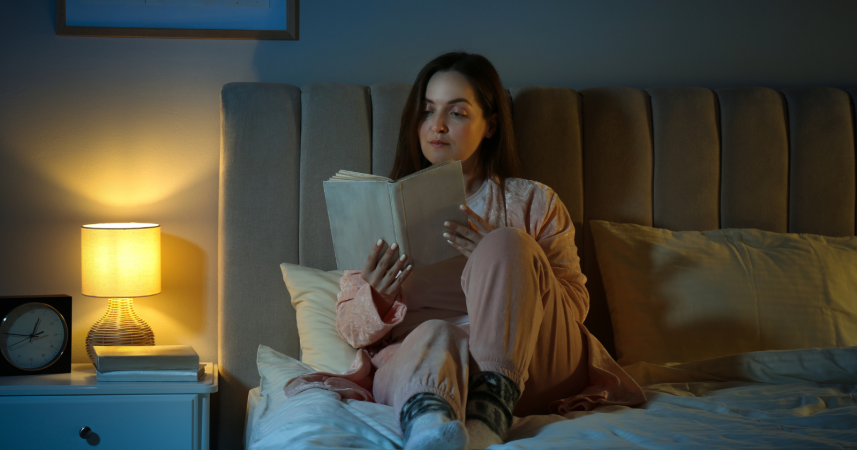
Turning off screens before bed is more powerful than most people realize. Psychology shows that these 8 advantages can elevate your mood, focus, energy, and overall quality of life.
Be honest. What’s the last thing you do before you fall asleep?
If you’re like most people I know, it’s scrolling. Emails. Instagram. One last YouTube video that somehow turns into four.
I used to tell myself it helped me wind down. Psychology says otherwise.
Over the last few years, as I’ve gotten more serious about my health, my work, and honestly just feeling better day to day, I started experimenting with one small habit: putting my phone away before bed.
No productivity hacks. No miracle routines. Just fewer screens at night.
The results surprised me.
And according to psychology, they’re not accidental. People who consistently avoid screens before bed tend to develop a handful of advantages that quietly upgrade every area of life.
Here are eight of them.
1) They sleep deeper and wake up clearer
Let’s start with the obvious one.
Screens mess with sleep. Specifically, the blue light they emit interferes with melatonin, the hormone that tells your brain it’s time to rest.
When melatonin gets delayed, sleep gets lighter, more fragmented, and less restorative.
Psychologists have been saying this for years, but I didn’t really feel it until I changed my own habits.
On nights when I read a physical book or just lie there thinking instead of scrolling, I fall asleep faster. I stay asleep. And I wake up without that groggy, half-burnt-out feeling.
Deep sleep is when the brain cleans house. Memories consolidate. Emotions regulate. The nervous system resets.
Better sleep isn’t just about feeling rested. It’s the foundation for everything else on this list.
2) They regulate emotions more effectively
Ever notice how everything feels heavier when you’re tired?
Small problems feel huge. Mild stress turns into irritation. A harmless comment hits like an insult.
That’s not a personality flaw. It’s sleep deprivation.
Psychology shows that poor sleep weakens the connection between the prefrontal cortex and the amygdala. In simple terms, your rational brain loses influence and your emotional brain takes over.
People who avoid screens before bed protect their emotional regulation without even trying.
I’ve noticed this in my own life. When I sleep well, I’m calmer in conversations. More patient at work. Less reactive when things don’t go my way.
Problems don’t disappear. They just feel manageable.
That alone improves relationships, decision-making, and mental health.
3) They think more clearly the next day
Good sleep sharpens cognition. That part isn’t controversial.
What’s interesting is how much mental clarity people gain simply by cutting screens at night, without adding anything else.
No supplements. No morning routines. No extreme rituals.
Just better sleep leading to better thinking.
Psychologists link quality sleep to improved attention, working memory, and problem-solving ability. When you sleep deeply, your brain processes information more efficiently the next day.
I write for a living. On well-rested mornings, words flow. Ideas connect. Decisions come faster.
After screen-heavy nights, everything feels like wading through mud.
Clear thinking compounds. Over weeks and months, it can quietly change your career trajectory.
4) They experience lower baseline stress

Here’s something I didn’t expect.
Avoiding screens before bed didn’t just improve my sleep. It lowered my overall stress levels.
Think about what most screen time actually is. News. Notifications. Messages. Content designed to trigger emotion.
Your brain doesn’t suddenly relax just because you close your eyes.
Psychology shows that mental stimulation before sleep keeps the nervous system in a semi-alert state. Heart rate stays elevated. Stress hormones linger.
People who replace screens with calmer activities give their nervous system a chance to fully downshift.
Over time, this leads to a lower baseline level of stress.
Life still throws challenges at you. You just meet them from a steadier place.
5) They build stronger self-discipline without effort
This one surprised me the most.
Avoiding screens before bed looks like discipline, but it actually creates more of it.
Psychologists talk about something called self-regulatory capacity. It’s your ability to control impulses, stay focused, and follow through.
Sleep replenishes this capacity.
When you’re well-rested, you don’t need as much willpower. You naturally make better choices.
People who sleep well are more likely to eat in line with their goals, stick to workouts, and focus at work.
I’ve noticed that when I protect my nights, my mornings take care of themselves. I don’t need motivational speeches. I just show up better.
Discipline stops feeling like a grind and starts feeling like momentum.
6) They improve their relationship with food and cravings
This one matters a lot if you care about food and health.
Sleep has a massive impact on appetite regulation. Poor sleep disrupts ghrelin and leptin, the hormones that control hunger and fullness.
That’s why sleep-deprived people crave sugar, refined carbs, and ultra-processed foods.
When you avoid screens before bed and sleep deeply, your hunger cues normalize.
You’re less reactive around food. Less likely to snack mindlessly. More in tune with what your body actually wants.
I’ve found that on well-rested days, I naturally reach for balanced meals. Protein. Vegetables. Foods that actually satisfy me.
It’s not about restriction. It’s about regulation.
Better sleep leads to better food choices without mental gymnastics.
7) They feel more present and grounded
Screens keep us mentally elsewhere.
Even when we’re in bed, we’re mentally in group chats, comment sections, or tomorrow’s inbox.
Psychology suggests that this constant mental displacement reduces present-moment awareness and increases anxiety.
People who avoid screens before bed spend more time alone with their thoughts. At first, that can feel uncomfortable.
Then something shifts.
You start processing the day instead of suppressing it. Thoughts slow down. Awareness expands.
Some of my best insights have come from lying in the dark, phone-free, letting my mind wander.
Presence isn’t mystical. It’s simply the absence of constant stimulation.
And presence improves everything from relationships to creativity to emotional well-being.
8) Finally, they create a sense of control over their life
Finally, this habit does something subtle but powerful. It restores agency.
Choosing not to scroll when everything is designed to pull you in is a small act of autonomy.
Psychology shows that perceived control is strongly linked to mental health, confidence, and resilience.
When you end the day intentionally instead of reactively, you reinforce the belief that you run your life, not your devices.
That belief carries into other areas. Work boundaries. Relationships. Health decisions.
I’ve found that protecting my nights makes me trust myself more.
And self-trust is one of the most underrated advantages a person can have.
The bottom line
Avoiding screens before bed isn’t about being anti-technology.
I love tech. I grew up with it. I use it every day.
This is about understanding how small habits shape our nervous system, our sleep, and our ability to show up fully in life.
Psychology is clear on this. People who protect their nights tend to sleep better, think clearer, regulate emotions, eat more intuitively, and feel more in control.
Not because they’re more disciplined. Because they’re better rested.
If you’re curious, try it for a week. No screens for the last 60 minutes before bed.
Read. Stretch. Journal. Or do nothing.
Sometimes the most powerful upgrades come from subtraction, not addition.
If You Were a Healing Herb, Which Would You Be?
Each herb holds a unique kind of magic — soothing, awakening, grounding, or clarifying.
This 9-question quiz reveals the healing plant that mirrors your energy right now and what it says about your natural rhythm.
✨ Instant results. Deeply insightful.